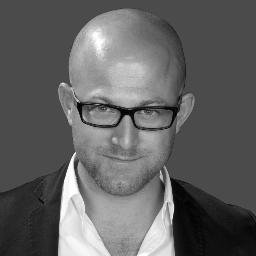
Enzo Vardaro
SVP & CCO, Artitalia Group · over 500 employees, about 1.2 million sq. ft. · Canada's Best Managed, Platinum
The man in charge of design, marketing and sales for a 500-person manufacturer, and on the road across North America, still calls himself a designer, and an artist: a former rock singer who found his way at a drafting table, learning to draw between shifts on the machines.
Watch · Episode 20
At a glance
Who is Enzo Vardaro?
- Built
- Artitalia's design, marketing and sales team, starting from a business card
- Scale
- Over 500 employees; about 1.2 million sq. ft. of manufacturing and warehousing
- Known for
- Custom fixtures and furniture for Walmart, McDonald's and IHG; smart parcel lockers
- Before this
- Singer in a rock band; part-time in the metal shop at 16; interior design at Dawson College
- Recognition
- Canada's Best Managed Companies every year since 2019, now Platinum
Profile
he booth was booked: 50 feet by 50 feet at one of the big trade shows. Then the market crashed in 2007 and '08, and the budget Enzo Vardaro had, about half a million dollars, dropped to $20,000.
"So I'm like, what am I gonna do with $20,000, right?"
His answer was roughly 1,000 inflatable Bozo the Clown dolls, the kind you punch and they come back up. Half his sales reps told him it was crazy, that clients would think they were being called clowns.
Many of those clients were losing their jobs in the downturn. The concept was that together, they would bounce back.
"Let's just do it and see what happens," he said. The booth won the award for best design. "And it was my cheapest booth ever."
Vardaro is senior vice-president and chief commercial officer of Artitalia Group, the Montreal manufacturer his father and his three brothers founded more than 40 years ago (1976, per the company's own milestone chart).
It has over 500 employees and about 1.2 million square feet of manufacturing and warehousing.
Its custom fixtures and furniture stand in Walmart and Target stores, McDonald's restaurants and IHG hotels. It has been named one of Canada's Best Managed Companies every year since 2019 and now holds Platinum status.
None of it was the plan. "I was pretty much a skateboarding punk for the most part," he says. He sang in a rock band, finished high school in 1995, and nobody in it applied for college.
"Our goal was to hit the road."
Then his father found out. Vardaro had been on the books since 16, working the metal department. Now he spent half the day on the machines and half learning to draw at a drafting table.
The student "barely making a C" in high school spent weekends awake on interior design projects at Dawson College. He finished in 2000 and started building a design, marketing and sales team.
"When I first came into the company, all we had was a business card."
The stretch he describes is 2020, when COVID hit. "All I know is that my business stopped and panic set in and we stayed home for 2 weeks."
He could not stay idle. He asked what Artitalia's essential-retail clients needed to keep operating, and within two weeks he drew 25 products. His team prototyped them from home and started selling.
One idea, an inflatable bubble to eat inside, went too far. He is happy, he says, that his team talked him off the ledge on that one.
The method shows at a table. Touching the solid-wood, live-edge top in front of him, he explains value engineering: a client wants this look for less, so Artitalia proposes veneer and finishes the edge to keep the feel.
Then the question he asks before anything is built: how many? "Quantity drives everything."
"Ultimately I'm selling time, right? What do I do? I buy raw material, I transform it, and I sell it."
He has shifted too. "For many years coming up in the business, I didn't want to be known as a designer." He wanted to be seen as a businessman, an entrepreneur.
"But now I know I'm a designer, and there's nothing wrong with that."
Before his first business trip out of college, with sales rep Jeff Kastner, his father pulled him aside.
His father told him, "you're not only traveling and selling for you and for Jeff, you're traveling and selling the company for all these employees we have, you know, whose families count on the business you're bringing in."
"That was something that stuck."
The clown booth was the same bet: an idea he believed in, against a room telling him no. "That line is where I love riding."
"Trust your gut. I think it's important." He says he is only realizing it now. "If something doesn't feel right, there's something wrong with it." And if it feels right: "Go all the way."
The step for a reader is the one he takes: sketch the idea, pencil or iPad, send the picture to your team, and ask them to tell you which ones will not work.
Ultimately I'm selling time, right? What do I do? I buy raw material, I transform it, and I sell it.
— Enzo Vardaro
Key Takeaways
You need problems in life. Every problem once felt like the end of the world and cost him sleep; now he sees problems as another thing to overcome, and says overcoming them is what makes you stronger.
Sell the idea, not the product. As a custom manufacturer he is not selling a chair or a display but the idea that he can produce one for you, which he calls much harder, and why trade shows and being in front of clients matter.
Ask why, then ask how many. Before a project starts, his lead designers sit with the client to understand why they want a given look, then ask the quantity, because the more you produce, the more the manufacturing process can bring the cost down.
Promote from the shop floor. Osmani Victoria came from Cuba in the early '90s, started in spot welding beside Vardaro, worked almost every department and is now vice-president of production; the company trains manual labourers into skilled trades with internal certificates.
Surround yourself with people who can say no. He tells his designers he needs their feedback because some of his ideas are not good, and a team that only says yes is a bad thing in any corporation.
About Enzo Vardaro
Enzo Vardaro is senior vice-president, chief commercial officer and co-owner of Artitalia Group Inc., the Montreal custom furniture and fixtures manufacturer founded by his father and uncles more than 40 years ago (1976, per the company's milestone chart), where he is in charge of design, marketing and sales. He started part-time in the company's metal department at 16, studied interior design at Dawson College and finished in 2000. Artitalia has been named one of Canada's Best Managed Companies every year since 2019 and holds Platinum status; Vardaro sits on the RestaurantPoint East advisory board.
Questions
On the record
Who is Enzo Vardaro?
Enzo Vardaro is senior vice-president, chief commercial officer and co-owner of Artitalia Group, the Montreal custom manufacturer founded by his father and uncles, where he is in charge of design, marketing and sales. He started part-time in the company's metal department at 16, studied interior design at Dawson College and finished in 2000, and has been in the business for the better part of almost 30 years.
What is Artitalia Group?
Artitalia Group is a Montreal-based manufacturer that designs and custom-builds metal, wood and plastic display fixtures for retailers, commercial furniture for restaurants and hotels, material handling carts for e-commerce and 3PL, and smart parcel lockers. Founded in 1976 with 1,650 sq. ft. and six employees according to the company's milestone chart, it reported sales over $100 million in 2018, has over 500 employees today, and opened a 200,000 square foot warehouse in Ontario, California in 2019. It has been named one of Canada's Best Managed Companies, a program co-sponsored by Deloitte and CIBC, every year since 2019, reaching Gold in 2022 and currently holding Platinum status.
What is value engineering in custom manufacturing?
Value engineering means taking a client's finished design and making it more cost-effective without changing the end result. Vardaro's example is a solid-wood, live-edge table: a client who wants the look at a lower price point gets veneer with the edge finished to give the same feel, and the cost drops quite a bit. Before any project, Artitalia asks why the client wants the look and how many units they need, because quantity drives everything.
How did Artitalia respond to COVID-19?
When business stopped in 2020, Vardaro drew 25 products in two weeks for essential retailers that needed to keep operating, and his team prototyped and sold them while working from home. In April 2020 the company diverted manufacturing capacity to protective safety shields and similar products for retailers, with Vardaro saying, "We have diverted our manufacturing capabilities to produce these custom products for our partners."
What are Artitalia's smart lockers?
Artitalia makes automated parcel lockers that let a customer pick up an online order by scanning a QR code or barcode, including lockers supplied to UPS stores. The Addobox line was announced in March 2020 with Parcel Port Solutions, and in August 2021 it was built into an unmanned kiosk for Denim Society at Carrefour Laval. Vardaro is now working on delivery lockers for fast-food restaurants, where third-party delivery orders left on counters are being stolen, and on lockers for metro, bus and train stops.
Full Transcript
The full conversation with Enzo Vardaro, transcribed. Lightly formatted for reading.
If you were to go back in time and then speak to yourself when you were in your early 20s, what would you tell the Enzo back then? Things will get better. It's not all that bad. This too shall pass.
Yeah, nothing's ever that bad. Things get better. Problems pass. And I think with age, you get more patient.
You start looking at problems as just another thing to overcome. And that's another thing, is that you need problems in life. You need issues in life, because when you overcome those, you become stronger. And what is your biggest fear in life, general?
Wow. Losing my sight, I'm gonna say, because my— or the ability to draw. And where do you see yourself in the next 3 to 5 years? Hopefully doing what I'm doing, hopefully in other industries.
You know, we're currently talking about expanding our business. And how do you stay disciplined? You know, when you create something, when you're creating something, you don't put a timeline to it, you know. What do you like about the city of Montreal?
Montreal? Wow, everything. The fact that we're multicultural, history too. And for us, it's not only about the wealth and the growth of the family, it's the wealth and growth of everybody in our company.
That's important. That's how you create a legacy. 100%. And if you could summarize this whole conversation, what you just said was pretty good, but if there was If you had some wisdom, other wisdom that could come out of you, what would you say?
A lot of time, especially in design, you have an idea and you believe in the idea. Even though some people don't, doesn't mean it's not a good idea. Because unfortunately, there's a lot of naysayers out there that'll take your idea and just step all over it just because they know that they couldn't do it, right? So trust your gut.
I think it's important. I'm only realizing this now at 46. Really trust your gut. Well, Enzo, I had a great time, you know, digging into your past, trying to understand the person that you've become today.
Okay, please introduce yourself and tell us who you are. Yeah, sure. So my name is Enzo Vardaro. I am a senior vice president of Art Italia Group.
I've been— I pretty much grew up in the business. So say that I've been in the business for the better part of almost 30 years is the truth. Okay, so jump into the company itself and you go with the flow, whichever one comes to you. That's fine.
So yeah, it's a family-owned business. My father and his 3 brothers started it over 40 years ago next year. And so, yeah, they were Italian immigrants, came here with the knowledge of business. And growing up, their father, which is my grandfather, was a businessman.
So he would pretty much buy and sell product. And how we got into manufacturing was back in the day, he would buy— or he would find and buy antique furniture, some of which needed to be repaired and resold. So the reparation work or the refurbishment of this antique furniture is really what got us into manufacturing. Right.
So in growing up, they took to having to repair antique furniture in various ways, whether it was metal and wood. And then, you know, unfortunately, you know, after World War II, for a couple of decades, you know, south, the southern part of Italy, like many parts in Europe and around the world, was really having issues with the economy. Economy was very, very low or very slow, for lack of a better, better word. And so they chose to come to North America for a better life, as most immigrants did.
Yes, exactly. And so they picked our wonderful city of Montreal. And I guess they first probably visited in the summertime, not the winter, because they probably wouldn't have stayed. But yeah.
And so that's how their life started. They immigrated here to Montreal and quickly started working for a small metal manufacturing company. Okay. Okay.
And so they were at first just employees. And then after a couple of years, they bought out that business and renamed it Artitalia. And so the company really started off as a metal manufacturing company, primarily at first manufacturing metal furniture. Okay.
Like metal chairs and tables and so on and so forth. And then over the years through just natural expansion and progression and also acquiring other businesses that they grow to who we are today. So myself, I started working part-time when I was 16 years old at the company. That's insane.
Right. So actually, I did start way before then. I'd follow my father to work when I was a kid. Right.
But officially on the books, we could say 16. Right. Not to get into child labor issues, but when it's a family business, it's pretty common. And so I started at 16 working part-time.
Besides working at the office, I also had other part-time jobs. I worked in other clothing stores and anything basically to make some money on the side. You know, I was very, very active that way. And yeah, so at that point I was pretty much working in the shop, in the factory, working in the metal department.
You know, back then we only produced metal. And then over the years, you know, we got into other materials and other businesses and other markets. But at first, as I mentioned, I'll go back. So One of our first markets was metal manufacturing in the furniture industry.
Then in the late '80s, early '90s, the whole phenomenon of, of, you know, importing from China started becoming a huge thing and we weren't there yet. And so we quickly shifted gears into producing metal products for the retail industry. So that's where we kind of split off and create our first 2 divisions, which is, you know, furniture and then retail. Okay.
Okay. So today we have over 4 divisions. So the first of which is retail. So we specialize in designing and manufacturing custom display fixtures in metal, wood, and plastic for the retail industry.
In that business, we do business with some great companies throughout North America. I assume that. Yeah, we do business with Walmart and Target and CVS and Macy's and a slew of huge accounts across Canada and the United States. Second division is furniture for restaurants and hospitality.
So there we specialize in manufacturing custom commercial furniture for large retail chains— sorry, restaurant chains, I apologize— like McDonald's, Starbucks, Subways, and so on and so forth throughout, again, throughout Canada and the US. And within that division, we also do hospitality, which is hotels, right? And so there we do business for the IHG Group and a slew of other hotel chains throughout North America. Our third division is material handling.
So we manufacture material handling carts mainly for e-commerce and 3PL. But, you know, the company changed progressively. Of course. Over the years.
So I was first, you know, a lost soul as a teenager. You know, I jump around back and forth, but it'll make sense towards the end. That's perfect. That was actually my next question.
We want to know who you were back then. Okay. Okay. So, you know, when I was 16 or when I was growing up, you know, I was a product of the '90s.
You know, I was pretty much a skateboarding punk for the most part. Didn't really— I wasn't really planning on what the future was going to bring and hold. I was just pretty much in the moment in the '90s, you know, graduated high school in '95, was very entrenched in music. I was actually a singer in a rock band for many, many years back in the day.
So you thought your future was going to maybe go that way? Yeah. You know, I really thought I was going to become a rock star back in the day. I'm not going to lie to you.
So, you know, my friends and I had formed this really tight-knit group and a great band back then. And, you know, after high school, none of us applied for college. You know, our goal was to hit the road. And then my father found out what my plans were.
Things changed a little bit, you know. And so he helped me redirect my— the vision for my future, I'm going to say. OK. I always loved art.
I would always love drawing. I would always love painting. And being in the factory, I really took to the technical side of manufacturing, which is technical drawing. So back in the day, we had a small team of designers and engineers.
And that was the beginning of AutoCAD, which is computer-automated design. But for the most part, everything was drafted on drafting tables. Mm-hmm. And so I took to that.
So I would spend half my day in the shop working on their machines, basically, and the other half of the day learning how to draw. And I started really taking to that and really liking that because I always had a, I guess, a love for the arts, right? Even growing up, I really appreciated it. What about your dad?
Is he like that as well? Yes, but actually, yeah, he did. He did. Okay, so maybe because they grew up in the antique world, antique furniture, they got a real sense.
Exactly. Got a real sense of art. Okay. Which leads to our name, I guess, Art Italia.
But my father too was a singer. So my father, actually, my father and my uncle were singers. Okay. They sang for Italian wedding bands back in the day.
Yeah. So they were pretty well known within that community. I guess that's where my love for music came to. Okay.
But it's all within the arts, right? My older brother Nicholas is a pianist. He plays piano. My younger brother Joe plays drums.
So we're a very musically inclined family. Artistic family. Very much so. Very much so.
I played guitar for a little while, but I loved singing, you know? And so art was a big part of our lives growing up. I understand that. Okay.
More than anything else, you know, we, we definitely loved music and art more than, let's say, sports or soccer, which we're fairly known for loving. Right. Our family wasn't into that really. We're more into, into music and art.
Got it. So, yeah. So I took to drafting and then, yeah, my path or my vision of what I want to do for my future started opening up. And I said, okay, what do I want to do within this world?
And at first I wanted to become a painter and an artist and a sculptor, right? That was my— I'm like, okay, that's— I'll go towards that route. But unfortunately, you know, you do want to progress in life. And, you know, so I started looking at design.
And at first I thought industrial design was going to be my path. But I started saying, you know what, I really am affected by my surroundings. You know, like even here and here being in here today and being in the office, it gives you a certain feel. And I love that.
I love the idea that you can create an environment that would change the people feel. And that's what furniture does, right? Furniture, besides being— I'm going to say an ergonomic part within an environment you sit on— the look and feel is very important. Yes.
How do you feel sitting in this chair, eating at this table, or standing by this wall? Or how do you feel when you walk into the room? And so I really took the interior design because within interior design, you could design industrial-type products in the sense that, you know, designing a chair, for example, furniture design is known as the bridge between industrial design and interior design. Why?
Because it's got to be produced industrially, but it sits within an interior. So I really took to interior design, and that's basically my path. I started, you know, studying interior design at Dawson back in the late '90s. Mm-hmm.
And I really, really took to it, you know, from a student that was in high school, you know, barely making a C, I guess, earning in the 70s, hardly interested, hardly ever doing homework, to really entrenching myself in the world of design and literally spending every waking moment, you know, working on design or designing or studying. I really loved it. I would spend weekends awake doing projects. I really, I really propelled myself and drove myself to that.
Very impressive story, actually. Thank you. Because at first I thought that you— I didn't know about the part that it was a family business. Yeah.
Yeah. So I really like that. And I like the fact that your dad kind of like, you say, hey, come, son, let's, let's figure this out because maybe He was a musician. He wanted to go that route and maybe it didn't work out.
So he already knew what was best for you. So that's pretty fascinating as a story. Yeah, it is. And right now, what is your position at RTT?
So I became a co-owner of the business 5 years ago. So that was always my dream, was to become an owner of this business. And so a couple of years ago, 5 or 6 years ago, my uncles had planned to retire. Okay.
Okay. From the business, because they had spent, you know, 40 years building this wonderful business with my father. They retired and my father gave us a chance to buy into the business and become a co-owner in the business. But my path really started, I'm going to say, when I finished college in 2000.
So I graduated college. Back then we did, I'm going to say, create some products for resale. Okay. But not to the scale that we are doing now.
So I really brought that design and marketing aspect to the company. Okay, so design is really a big part of what drives our company today. Definitely. We're very much based around innovation.
That's innovation, whether it's in design or manufacturing. And so, you know, the company really started growing when I came to, to the company and when I established team in design, marketing, and sales. And from there, we really grew organically. And we also did acquire other businesses throughout, you know, growth.
But that really helped propel the company to the next I guess, phase of our growth. So you buying into it, was it your brother as well or is it just you? Yeah. Yeah.
So it's still 4 owners today as it was when they first started. So it's my father who's the, the president CEO, my brother Nicholas, who's the vice president of accounts. There's myself who's SVP and my brother Joey, who's also vice president of operations. That's great.
Your father didn't just hand you the key to say, hey, Enzo, this is for you. No, unfortunately. You had to work for it. You had to work for it.
Yeah. Pretty good. And your creativity has landed you many awards. Like, I saw a whole list of them.
Do you remember how many? A few. Yeah. And the company as well.
Yeah, the company as well. Yeah. We, again, you know, our manufacturing is really what makes us stand out and adding that creative design element really makes us stand out. And together it's really a winning strategy, I'm going to say, in our industry.
I mean, you do find, you know, metal manufacturers and wood manufacturers and plastic manufacturers and Separate design firms, but we really try to bring it all in together under one umbrella, which is what makes us unique. Okay, from the competition. Exactly, exactly. Creativity is very important.
I was watching this podcast; it's called CEO of a Diary, and they were interviewing the co-founder and the owner of Airbnb. Oh yeah, and he was saying that how creativity today has been squashed in the corporation world. Like when you look at all the 500 Fortune companies, how many of them have a CEO or people? Reporting to the CEO that have a creative mind or the way they see the world.
And then he was saying that how it's something that he wishes like people wouldn't undervalue so much in the corporate world. Yes, numbers are important, but creativity is also very crucial. Super. I mean, and creativity isn't only designing.
I mean, creativity is everything, right? Exactly. You got to be creative in marketing. You got to be creative in sales, especially sales, right?
You definitely got to be creative in design. You got to be creative in finance and HR. How do you get new employees or skilled employees? So you got to be creative in almost every aspect.
Thinking outside the box. You have to think outside the box in everything you do. And that's, that's really what has made us who we are, is thinking outside the box in every aspect of our business. And for somebody— I know it's a family business, but if somebody wanted to, like, they start at the bottom and then they envision one day maybe to be part of the company, to become a partner, for example.
Yeah. What are some of the tips? And know that although we're a family-owned business, right, most of the top-tier positions are taken over or managed by non-family members, which is a good thing, right? Yes.
And we have had a lot of growth within our 40 years of business. So next year marks our 40th anniversary. That's huge. Yeah, it's huge.
Right. But just to say that, you know, we've had so much growth internally. We promote internal growth, you know, not only for our family but also for other families. We do have a lot of team members and associates that have brought in their family members.
So we have, you know, fathers of families that brought in their children, have grown with our company. Right. How many are you today? How many people work?
We're over 500 employees. That's a lot of people. It's a lot. It's a lot.
But it's great, though. It's great to see. It's great to see everybody prosper. You know, it's great to see everybody work together.
It's great to see that, you know, although we have a very unique business and it's hard to go find employees or associates that have been trained from other companies. We train our employees internally, you know, and we give them the chance to grow within the company. So if we do have employees that come from off the street that have no, no experience, um, we'll sit with them and say, okay, you know, you show promise, right? What do you want to do with your career?
What do you want to do with your life, right? Do you want to grow? And with a lot of them, we had them start really at the bottom and work their way up. Like, one of the, the success stories we have is our VP of Production, Osmani Victoria.
He's a Great, great gentleman. He was a Cuban immigrant. He immigrated to Canada in the early '90s and started working for a company really in the spot welding department, in the metal department. I remember because I would work with him side by side feeding the machines the spot weld pieces.
And he was a great individual, very much caring about the company, very much caring about quality output. And slowly, slowly, he made his way up. You know, he went— he almost did every department, understood the process, understood the organization, and every chance he got, he excelled. And to where today he's actually VP of production, which is huge.
Let's get into the nitty-gritty parts. Yeah, sure. In order for him to move up, what did he have to do? Like, what type of value did he have to— like, what are some of the things that he had to do?
Definitely has to be self-driven. Self-driven. Proactive. Yeah.
Okay. Some foresight is very important. You know, and what we do, there's a lot of variables, you know, a lot of variables. And just yesterday I was listening to the Joe Rogan podcast and he had Elon Musk was on and he was talking about how car manufacturing is probably one of the most difficult manufacturing processes that exist.
Right. And although we don't manufacture cars, I'm going to tell you that, you know, minus the motor and everything else, what we do is pretty complex. For sure. Because you have so many different types of materials and parts and pieces that have to come together at the end to produce a product, that the whole process has to be very well driven and very organized.
So he helped bring some organization to it as well. Mm-hmm. Now, mind you, he did study management in Cuba, business management. So he already had— he came with that idea of organization.
Okay. Although my father and my uncles pretty much ran the business and did create a good organization, it was good to have somebody from the outside Come and say, okay, you know what? You're doing this right, but what if we do this and try this way and see how it goes? So, you know, ultimately being open.
He's a great communicator. He's a great communicator, and I think that's very important, right? I think he had a clear vision of where he wanted to go in his life and where he thought the company could go and how they could do it together. And he made it happen.
He made it happen. I think again being proactive and being a communicator, I think is problem solving. Oh, hundred percent. And problem solving.
Yeah. And then show that you want to move forward with the company for sure. But I think you nailed it. I think problem solving is is key in our in our business.
Anyways, because every day there's problems, whether there's a problem with an employee not showing up or a machine breaking down or material that's late or anything, you know, you got to solve problems because everything we do is based on time. Yes. You know, ultimately I'm selling time, right? What do I do?
I buy raw material, I transform it, and I sell it. But it's all based on time. I'm selling time, right? And if you're organized, that's the only way to do what we do.
You can't go into it haphazardly and not be organized. You have to plan it correctly. And as, as to where back when we first started, the organization was pretty much done manually, I'm going to say today we have a great system that runs our entire business. It's an ERP system called Visual Manufacturing that we've taken and added to and modified to fit our needs because we produce different products every day.
I see them on your feed. Yeah, it's, it's crazy what we do. 2 million square feet. That's a lot.
Of manufacturing and warehousing. But the manufacturing part is about 750,000 square feet. And what we do out of that factory is tremendous. I'd love to invite you and your team members to come visit us one day and see how we do what we do.
But it's very impressive. I mean, the products we produce and the things we do is great, you know, and it's pretty much, I'm going to say, the result of all the hard work we put in the past 40 years. You know, this is where we are today. It takes a long time to build something great.
It does. Unfortunately, it does. And patience is a big part of it. You know, I was just talking about this morning with a friend of mine how I was never patient growing up.
Never. I always wanted to be— I wanted everything now, you know. But now that I'm the age I am, without saying my age, looking back, I realized that, yeah, patience is key. You know, anything you want in life doesn't come right away.
You know, it takes time to get it because if it came right away, you take for granted, right? That's true. But the fact that you're, you're patient and you go at it and you're constant on something, anything, right? Consistency gets you to where you want to go in life.
And sometimes you're in the middle and you question yourself, am I headed down the right path? Are we doing the right thing? But then when you get to that point and you look back, you're like, okay, yeah, we actually did pretty good. You know, we did pretty good.
All the challenges we had to go through. Oh yeah, yeah, yeah, yeah. And then the questioning, right? Yes.
Because when you're on top of a company and you make decisions as to where you think the company needs to go or the products you think you need to go at, it's scary halfway through because there's always that question of, you believe it's going to work, but is it really going to work? Yeah, you don't know. But that line is where I love riding, you know? Like every time we did a trade show around the world, right, I'd always design booths that were— I'm not going to say scandalous, but that were very— they attracted a lot of attention because of whatever it was.
Like, for example, back in 2007 and '08, you know, the market crashed, right? And so, you know, we had this huge booth booked at one of the huge trade shows, and it was a 50-foot by 50-foot booth. And, you know, all of a sudden the budget I had, which was, I think, half a million back in the day, went down to like $20,000. Oh, wow.
So I'm like, what am I gonna do with $20,000, right? So thinking, thinking, thinking, I'm like, okay, you know what we're gonna do? We're gonna buy like 1,000 inflatable Bozo the Clown dolls. You know, the ones you punch and they come back up?
Remember those Bozo the Clown dolls? They were inflatable. I know it probably predates you, but anyway, you're probably— you're too young for that. But anyway, the concept was that together we'll bounce back.
Because what was happening, unfortunately, is a lot of my clients were losing their jobs because of the downturn. Oh, man. But the concept of the show was together we're going to bounce back, right? Together the market's going to come back.
We're going to be fine. And we ended up winning awards. But I was walking a very fine line because half of my reps were saying, This is crazy. It won't be well received.
You're calling our clients clowns. They won't like it. I'm like, let's just do it and see what happens, right? And lo and behold, we ended up winning the award for the best design booth.
And it was my cheapest booth ever. You know, typically when we do shows, we put on a show, you know, because again, I'm not selling a product. I'm selling the idea that I could produce a product for you, which is much harder. Okay.
And then you're in charge usually of that? I'm in charge of all that. Yeah. Anything design, marketing, sales related to All that stuff I'm in charge of.
But what do you have to the internal conversation with yourself? You said, okay, I don't know if this is gonna work, but this is what my instinct is telling me or my intuition. Okay, now I know it's my instinct and intuition. Okay, so I finally learned how to trust my gut feeling.
Okay, I thought that was just a saying, but looking back now, a lot of it is your gut feeling. Like, how does this make you feel inside? Right, and the excitement that it might go terribly wrong is a part of that high too, unfortunately, because the the I guess the The fear of the unknown always drove me. You know, let's do this and we'll see what happens.
You know, like, for example, during COVID right? COVID hit. We didn't know what was going to happen. Nobody knew what was going to happen, right?
All I know is that my business stopped and panic set in and we stayed home for 2 weeks. And I, I, I, I have ADHD. I, I do have ADHD. And so I have to continuously move forward.
I have to continuously do something. And I couldn't stop. Not doing anything. I couldn't be stopped not doing anything.
And some so I started saying, okay, COVID hit. We have clients that need to operate because back then you know essential businesses were operating, right? And I said, what could we do to help them operate? And so that's when we started coming up with all these different products.
And within two weeks, I came up with twenty-five products. You came up with twenty-five products? Yeah, yeah. I drew up twenty-five products that I then gave to my team.
We all worked from home for a little while. We developed it. We prototyped it. Then we started selling it.
And then lo and behold, I mean, we we had to go back to work anyways because we're considered. Essential as well. Exactly. So we were providing essential retailers with products anyway.
So we went back to work quickly. But a lot of my clients that weren't considered essential weren't working because they didn't have the, you know, the PPE and all that kind of stuff. And so we helped them get to that point. Right.
Okay. So just to show you that, you know, we're a company that turns around really quick, you know, we're solution providers. Whatever the solution is, I can provide it. I'm impressed.
Did you say 27? 27 products? 27 products. Yeah.
Wow. You didn't sleep much. I didn't, but my mind's always working anyway, so, you know. Wow.
That's impressive. Even being here talking, I'm thinking about some other projects that I have to be working on and thinking about. But how do you take something from like in your head to putting it on paper and then to passing it on to your, to your team? Yeah.
So I love drawing. I told you drawing is my passion. You know, I love drawing, whether it's products or anything artistic or anything that comes to mind. And so really it's translating the thought to the paper.
Okay. It's drawing, sketching, a lot of sketching, right? I either do it literally on paper, pencil and paper, or on my tablet, my iPad, right? Yeah.
Then I'll scan it or take a picture of it, send it to my team, and then have a kickoff meeting, a call. And a lot of times, because I do have a great team of designers, you know, that's another thing. I don't do everything myself. I have a great team of designers and engineers.
All right. So right now I think we're about 6 designers and about 15 engineers in the company. And so I'll sit down with my lead designers and we'll brainstorm. Say, listen, this is the initial idea to get the project started, right?
But I want their input because sometimes my ideas aren't good. But I want my team to tell me, hmm, I don't know, this one is not good. I don't think this one's going to work. Like, for example, at one point when I was designing all those, those products for COVID, right, I ended up designing this like almost like a this bubble, right, for people to eat in.
So imagine being here at this table, having an inflatable plastic bubble that would inflate around us to protect us. You know, it got a bit too extreme, you know. So that's, uh, I'm happy my team, uh, talked me off the ledge on that one. But it's good that you have people that can say no.
Yeah, yeah. And I tell them all the time, guys, I, I need your feedback. Yes, that's important. Because being, you know, you said it, right, um, having yes people around you Like in any corporation, if you're the CEO, if you have yes people around you, it's not a good thing.
Yeah. You need people to say, hey, hold on a second, you know, what you're doing might not be good, you know? So it's, again, it's, you know, it's a process. And especially design is a process, right?
And things change and evolve all the time. Sometimes the idea you had, the end result will be completely different than what you sketched out. Or sometimes it's exactly that, you know, but it changes all the time. Right.
And because we're custom manufacturers, ultimately I can come up with a solution, but we custom manufacture it to fit your needs. So that's what you do for the clients? 100%. Okay.
So somebody comes to you and gives you an idea of what they would like. They tell you the end result. Yeah. And then you come up with the solution.
Well, yeah. So, so it varies tremendously, right? Either The client comes to us with a design already done and engineering drawings already done, and they want us to either value engineer it and produce it. Value engineering basically means that, you know, the client had a design produced or done of any product, right?
Then they come to us to produce it, but their budget isn't really what the design called for. Okay. So, we're going to bring value to it by making it more cost-effective without changing the end result. What that means basically is, okay, you know, like this table, for example, that we're sitting at today, right?
It's solid wood. It's got a live edge. Beautiful. I'm actually touching it and feeling it right now.
See what kind of a beautiful finish it has. But unfortunately, maybe some clients can't afford this. Okay. And so they'll say, okay, you know what, I want this look and feel, but at a reduced price point.
So what we'll say is, okay, you know, instead of having solid wood, we could probably use veneer. Okay. Right. Which can give you more or less the same look.
And then we'll finish the edge in a specific way to give you that, that feel. Right. And so it drops the cost down quite a bit. Right.
So that's the idea is bringing value to a project and, and working with the client to fit their budget and their need. That's another thing is, you know, maybe the client doesn't need to last 5 years, maybe they need to last a year or maybe they need to last 20 years. So then you ask all these questions. 100%.
So any project before we start, we— there's a discussion. Again, communication is key, right? So the discussion that's had with our clients and that could be through the sales rep, but mainly directly to the clients with our lead designers. And what we'll do is sit down with them and try to understand what their needs are.
Okay, why do you want this look at table? What's the whole point of this? What's the concept? Is it because it's going into an interior that has to talk about reclaimed products?
Like, this is a reclaimed table because it's got a live edge, right? So it's actually cut from a slab. So maybe the client's idea is, you know, we use— I'm just saying anything, you know. Yes, of course.
Recut lumber, to make these tables because our products that they sell are reusable or sustainable, for example. Okay. So imagine that this goes into a— imagine this is a display table for a cosmetics brand that is promoting sustainability and eco-friendly products. Then it makes sense.
But if it's going into an ultra-modern store, for example, electronics, it wouldn't make sense because how does this say electronics? No, you want something that's more hardline and sleeker and shinier, something that really represents the product, right? So it really starts there. It's questioning why the client wants it and needs it, right?
In, in obviously a nice way, because there's merit to the idea. And then it's, uh, asking the, the other important question when it comes to manufacturing: what's the quantity? How many do you want to produce, right? Because quantity drives everything.
Yes. Right? The more you produce, the, the better we could make the manufacturing process to help drive down the cost. But if the quantity is small, Then you have to find other ways to produce it, but the price won't be as cost effective.
Right. So there's a lot of questions in play as to what the— I'm going to say the end result is. So there's a consulting aspect to what you do as well. 100%.
And then from there we create a path. Okay. The path is basically a schedule, right? So we get all the information from the client as to what their wants and needs are.
A lot of times we have to redraw it or redesign it for them. You get their approval and then we have to prototype it. And at the same time, price it out. So the prototype tells you, okay, look, feel, shape, size, everything, form follows function, everything works well.
Let's go ahead and produce this in volume. And really what we are is a volume producer. That's our really raison d'être, you know, is that we're a volume producer. But ultimately, sometimes projects are bigger, sometimes they're smaller, but we're manufacturers, right?
Got it. And in the industry that you're in, what are some of the challenges that you face, especially to find skilled Yeah. So besides skilled labor, which unfortunately as the years go on gets less and less. Okay.
But as I mentioned, we have great training programs internally to help train the next generation of skilled workers, which is going very well for us. You know, we have manual laborers that come into the business and, you know, we help push them into specific trades. You know, a lot of times we'll talk to them, have a discussion, say, hey, do you want to stay as a manual laborer or would you like to potentially become a skilled laborer? And do better for yourself and your family, right?
And so once we ask them that question, we leave them some time to also work in different departments and see and shadow other skilled laborers, whether it's a metal worker, a welder, a mill worker, a woodworker, cabinetmaker. So we have them shadow and be an apprentice to those trades. And once they achieve that, they're tested. And once they're tested, then we give them an internal certificate and then we'll have them work in that department.
That's That's great. Oh, for sure. 100%. The problem is that as the years go on, a lot of the younger generations don't want to work in a factory.
That's the problem. You know, although we run a very nice factory, a very modern factory, the idea of working in a factory, unfortunately, is less and less. Right. But how do you deal with that?
Well, we're investing a lot more in robotics. Okay. 0. 0.
Yeah. So what that basically means is using AI and automation to produce products. Okay. So we have a lot of robotic and automated machines.
You know, every year we reinvest our profits in our manufacturing process because ultimately we're a manufacturing company. Of course. Right. And so we started doing this for the more, I'm going to say, mundane manual tasks.
We're adding what's called cobots to existing machines. So cobots are robotic arms that feed the machine products and then remove it from the machine. Okay, so it's basically a robotic arm that puts a piece in the machine. I'm trying to visualize it.
Yeah, yeah. So, uh, well, we're actually, uh, we're implementing our cobots in the next couple of months, and when that's done, we're gonna be video— we're gonna be filming. Excuse me, could you say filming anymore? I don't think so, right?
We're gonna be doing a video. I don't think filming is a thing anymore, but I'm dating myself. We're gonna be doing a video of these cobots working with the machines, and then, uh, we'll be, you know, marking the fact that we've been investing in technology to, uh, to augment not only our capacity but also decrease the costs. Okay.
So then you just mentioned the video aspect. So whenever you have a new product— Oh yeah. This is how you— how do you make people aware? Oh yeah.
We have a great internal marketing team, which I helped build. You know, when I first came into the company, all we had was a business card. You know, that was, that was pretty much it. And it was word of mouth.
But over the years, because we did so many trade shows, I built an amazing marketing team and they're very well aware of our manufacturing process, but also what our investments are. Okay. Because ultimately what we're doing is, yeah, you know, we're solving our own problem. We're coming up with a solution to our own problem, which is in the next couple of years, you know, manual laborers will become less and less.
And so how do we get away from that? Or how do we become better at getting over it? And so a lot of that's investing in technology, investing in machines, investing in AI. And so we have to show this to our clients because ultimately what we're doing is that's going to help us increase our capacity, decrease our lead time, and decrease our cost.
Because our, our industry is based on 3 fundamental things, right? It's obviously quality, you know, because if I produce a product that's a bad quality, I won't be repeating that order, that's for sure. Uh, timing— if I can't ship an order on time and if I can't get a store or a restaurant open on time, then I definitely won't be getting another order from that client, right? And third is price.
If I'm not competitive, I'm not getting the project to begin with, right? So our business is really based on those 3 things, and that's how we lead the business throughout all the different steps. Yeah, that's nice. That's how we plan everything.
And your marketing team, so now they— how do they, I don't know, produce the content? A lot of it's done internally. Sometimes we reach out to different, you know, marketing companies to help us out, you know, content. So do you do ads or— A lot of it's through LinkedIn, really.
Yeah, we used to do a lot of ads, but we kind of pulled back from that a little bit. You know, a lot of it's through social media, through LinkedIn, through direct emails. A lot of it's through demos. A lot of times I'll do a demo of a product or I'll do a live shop walkthrough for our clients.
Okay. You know, and yeah, so it varies, but a lot of it's trade shows, a lot of it's travel, you know, a lot of it's being in front of the client and showing them what we're doing, you know. So it varies. You travel and then say, hey, I have this new thing.
Yeah. Are you interested? Yeah, exactly. So I'm going to say that that's important to get in front of a client and to show them what we're doing.
I think it's ultimately very important. And although nowadays technology helps because, you know, we have all these, you know, different types of tools and apps like, you know, Zoom or Teams or whatever. So that helps a lot. But ultimately, if you're showing a product or a detail of a product or a new material, it's good to show them physically what we're doing.
Okay. That's why trade shows are fairly important for us. So that's a big part of your— Big part of how we get in leads and sales. Yeah.
That's great. And you have a huge following on LinkedIn. How did you build that? Through time, a lot of traveling, a lot of trade shows, that's for sure.
And yeah, just, you know, getting connected in different organizations or associations in every market that we work in. You know, for example, in the retail industry, you know, we're part of the Shop Association, which is a great association that helps link both retailers and designers and manufacturers, you know. So we're part of that. whole network.
And also within the hospitality and restaurant industry, we're part of Hospitality Design, which is another network, another association that allows us to obviously, you know, and ultimately it's to get contacts. Exactly. But a lot of it is great because you get to network with, you know, your competitors as well, you know. And, you know, I'm going to say that we, we also have some pretty good competitors out there that keep us going.
You know, keeps you on your toes. Keep us on our toes. Exactly. I think it's important, right?
So competition is important, but getting out there and really putting your fingers on the pulse of the industry and the multiple industries we work in is very important. Yeah, for sure. And when I was reading your bio, it says that you, you were the lead in some of the most ambitious and innovative projects. Wow.
That's what it says. So I don't know. Okay. Yeah, I am.
I am pretty much the lead I'm going to say I don't want to throw flowers at myself. Oh, it's okay. We know you're doing really well. Okay.
So yeah, I definitely am. I push for innovation. I love coming up with ideas. I love executing the ideas.
You know, I love testing the ideas. I love seeing the client test our ideas and seeing how it works. And then I love seeing it be produced and roll out. And then I love seeing you know, their customers interacting with our ideas.
I love that whole process. What was your latest project? Or maybe what are you working on now? What am I working on now?
A couple of different things. Primarily, I'm working on creating smart lockers for restaurants and hospitality. Restaurants. Okay.
So we currently do produce smart parcel lockers. Okay. For the— I'm going to say the parcel and e-commerce industry. Okay.
And also for logistics companies. So for example, our company provides UPS stores with parcel lockers that helps them get, you know, their clients' products to them. Okay. So these are automated lockers, smart lockers that would allow their clients to have any purchase that they would do online be able to be picked up in their store.
So what happens is that you would produce or— sorry, you would purchase anything online, uh, you'd be given a code, uh, and a location as to where you should go pick it up. And hopefully it would be in a UPS store. And then, uh, you'd get a notification, which is either a QR code or a barcode. You go to that location, you scan your QR code, the door will open up and your parcel's there.
Okay. Okay. So that's, that's for the— I'm gonna call it the e-com and logistics world. Now we're kind of like rotating, not, not getting away from parcel by any means, but also looking at other industries that might be— In need for the same technology.
Exactly. Need for the exact same technology. And so what we're doing now is looking at convenience— not convenience stores, excuse me, but QSR fast food chain restaurants. So you obviously— everybody orders meals either on Uber, SkipTheDishes, or DoorDash, or Grubhub, or whatever.
And so what's happening now is that, you know, restaurants are getting these orders. preparing them, putting them on a shelf or on a counter. In comes your delivery, picks it up and leaves. The problem is now what's happening is that people are stealing these orders.
Oh, really? Yeah, unfortunately. And so although we do produce shelves for these orders to sit on, we are now trying to get into that industry and sell them parcel lockers, or, or I'm going to say delivery lockers, where the order could be secured within these lockers. Okay, so that's another area I'm working on right now.
Perfect. And for in the parcel industry, do you— have you seen a lot of success or how has the market responded? Well, the market responded very, very well. You know, ultimately it's about 2 things, right?
Security, right? Making sure that the parcel is secure in the locker. Right. And also contactless system.
Right. So it's really easy, very contactless. We're looking to potentially introduce these smart lockers at different areas, for example, in public transport, the metro system, bus system, train system, airport. So for example, if you're taking the metro every day, you know, instead of having a parcel delivered to your door— and unfortunately sometimes they get stolen— yeah, well, they'd be delivered to your metro stop, right?
Really? And then once you get that product out and take a look at it, and let's say for example, you know, you look at it and they— you made a mistake buying it, you want to return it, you could actually return it back in the parcel locker. Which is very convenient and time-saving. Okay.
Yeah. Let's talk a bit about what you do on a daily basis. I know you're very creative. You're thinking about new projects all the time, but how do you keep things in check?
How do you prioritize what you do? Well, I mean, I always create a list at the beginning of the day of things that I have to do, right? And I always look at the list from the day before and the day before that if I didn't accomplish them. For the most part, unfortunately, I'd love to be drawing all day, but for the most part, I'm on emails and meetings.
all day long, right? Killing your creativity. Yeah. Well, you know, well, sometimes when there's pauses during the meeting, I'll be sketching for sure.
But, but, you know, we have great managers in our company. You know, we have great team leads in our company. And so, you know, besides just macro management, yeah, I'd say a lot of it is just brainstorming with our teams, brainstorming with my managers. And that could be for anything, whether we're creating a new product or getting to a new market or trying to get a new client.
A lot of it's brainstorming and just trying to find ways, right? How do you keep everybody aligned under the same vision for the company? It's like you have the same— how do you maintain the culture that you have at the moment? Again, communication is important, making everybody understand where we're at.
You know, we're very open with our employees as to, you know, where we're at in terms of sales or where the market's at. Like right now, unfortunately, there's that quiet recession that everybody's talking about, you know. So instead of ignoring it, you know, we talk to our employees and say, hey, You know, unfortunately, there's a situation right now. We're busy right now.
We don't know what the future has to hold. We never do. But let's start getting prepared. You know, what can we do to overcome this?
You know, luckily, because we're a large format manufacturer, we do have a lot of commitments from our clients that usually last a year or two. So we're able to usually ride the wave over certain recessions. Okay. But, you know, being that we've been in business for 40 years, we've seen quite a few.
Recessions come and go, you know. So again, foresight's important, right? So having foresight and communicating with our employees is important, you know, cutting back on unnecessary spending, for example, or, or trying to find ways to save on steps, save time. Again, I sell time, right?
How can we save time to save the company money? Of course. Globally, that's, that's the idea, right? So, uh, going back to your question, I think it's really, uh, being open.
Being honest, communicating, right? Having regular meetings with key people and entrusting that they also get that down to their staff. Okay. Which I know that our managers are very good at.
You know, I think our managers have very good relationships with their team members and they do a lot of team building exercises too, you know, which is important. That's why people stay longer. Yeah. Yes, definitely.
Definitely. You know, we've had employees that have been with us since the beginning. You know, some have retired and unfortunately, well, I'm not going to say unfortunately, but have come back. Oh, really?
Some of which just because, you know, over 40 years they built friendships that last a lifetime there. Yeah. Others, unfortunately, because of the state of the market now, you know, cost of living is going up. And so some of them have come back.
But it's great to have them back because who better to train our next generation of, you know, skilled laborers than the guys that have been there for 40 years? Right. That's a great perspective. 100%.
100%. Yeah. So not only you have schools to teach the ones that— the new ones, and you have the Older generation as well, teaching them as well. Yeah, I mean, that is great.
So delegation is well put in your company, all the systems you have in place, and how to make sure everybody is on the same page. Correct. Amazing. And what is your, for example, advice on how culture is important within any organization?
What would you say? I'm going to say that, you know, employees actually, I don't like using employees, associates. For me, they're associates, okay? They're family members or team members.
Team members, I think, is important, right? I believe that they need to know almost every aspect of the business in the sense that they need to know and see what's to come in the future, you know, what's going on. Uh, being open, honest with everybody, I think that's very important. But also interdepartmental, uh, um, I'm going to say work is important too because we have multiple departments.
Right? So yeah, we do metal, wood, and plastic manufacturing, and in each one of those manufacturing departments, we have multiple divisions, right? So for example, in the metal shop, you have at least 7 or 8 different departments, right? So rotation's important.
We try to have our employees rotate, okay? And that does 2 things. Obviously, you know, it makes the job less boring. Yeah.
Sometimes some tasks are mundane, and that's just manufacturing because you're making the same part day in, day out. But also it helps open their eyes to other areas of the business, right? And helps sensitize them to the final quality of the product too. Because if you're doing the same thing day in, day out and you don't see what the final product is, you know, ultimately everybody wants to know that whatever they're doing is leading to something important, right?
Yeah. And that's what rotation does. So we rotate our employees a lot in different departments, right? And plus, you know, it makes the company less reliant on one employee.
That's another thing. That's a great key. Sometimes, you know, people come and go. It's understandable.
Or they could be sick one day or a week or whatever it is. But you have to make sure that you have somebody else to back them up. Right. So contingency plans is very important for us.
But in terms of culture, I would say that— and I know it's been said time and time again, but I think, you know, treating everybody like family because you are a big family. Listen, you spend most of your time with your colleagues than you do with your own family members. So why not, you know, Have that that family culture within your business. I know a lot of people disagree with that nowadays, but really, yeah, people do.
They're like, you know, well, no, it's just business, and and it shouldn't be just you know it shouldn't be about anything about family. It should just be about output, and we're not that's not us. You know, it's to do what we do sometimes unfortunately takes a lot of convincing. You know, because sometimes you have an idea, and everybody's against it.
You know, like for example, when I wanted to venture into this, uh, parcel locker, the smart locker world, they're like, oh, it's out of our realm, it's not really for us. And I'm like, no, it is, it is for us. You know, I mean, look, we produce products for retailers and restaurants to operate, whether it's a chair, whether it's a cart, whether it's a display, whether it's a sign. Well, a parcel locker is part of their operation nowadays, and it's going to become more and more.
Right? How are they going to get their products out to their clients? If a client buys a product online and wants to pick it up in store, where do they pick it up? Well, they'll pick it up in a parcel locker, right?
So for me, it's just another avenue, another product for them to operate and do their business. So a lot of times I would say for us it's trying to find solutions to clients' problems, right? But ultimately, I think when it comes to culture, we have a great culture. You know, we've had a lot of people come and go.
But we've also had a lot of people come and come, go and come back. Right. Which is huge. Yeah.
And I love seeing that, you know, because, yeah, ultimately everybody has their own life to live and everybody has their own dream to achieve. But when you see employees come, stay, leave for whatever reason, then come back, it's a nice thing. It really— it proves to me that what we're doing is something good and we're doing it right. Yeah.
They've tested the waters and they're like, you know what? Yeah, I was better off staying. Exactly, exactly. I was better off staying here.
And what is the best success story that you've ever received or heard? Wow. Or advice? Doesn't have to be a story.
Oh, okay. In general, you mean? Yeah, in general. Oh, general.
Not us. You mean in general? Like generally speaking, in life? In life.
Give me a sec. Let me think about that. Sure. It's a tough question.
We can move on to the next one. Let's move on to the next one and we'll get back to that one because I'm sure there's a lot that you Just trying to find the right one. If you were to go back in time and then speak to yourself when you were in your early 20s, what would you tell the Enzo back then? Things will get better.
Things will get better. It's not all that bad. This too shall pass. I heard that online somewhere.
But yeah, nothing's ever that bad. Things get better. Yeah. Problems pass, you know.
And I think with age, you know, you get more patient, you know, and, uh, you start looking at problems as just another thing to overcome, you know. And that's another thing is that you need problems in life. You need issues in life because when you overcome those, you become stronger. That's true.
When I was younger growing up, for me, I'm gonna say in the business anyways, every problem was the end of the world, you know. And I sometimes I'd stay up And I'd have sleepless nights thinking about, oh, you know, what happened? How did that happen? How can we not make it happen again?
And yeah, definitely you learn and you put things in place so it doesn't happen again. Mm-hmm. But the problem is with, with manufacturing is that those pro— some problems do reoccur and it's outta your control. Mm-hmm.
But it's in how you act on it and how proactive you are at solving it that makes you who you are. Because in manufacturing, I'm telling you, anything could go wrong at any point. Anything. To be expected.
It's to be expected. Exactly. It's to be expected. Exactly that.
Yeah. And what is your biggest fear in life generally? Well, I don't know. Losing my sight.
I'm going to say losing my sight because my— or the ability to draw, you know, losing, losing this arm here. Because this is part of who you are. It's part of who I am. Yeah, it's part of who I am.
You know, it's funny, for many years coming up in the business, I didn't want to be known as a designer for whatever reason. I want to be known as a businessman, as an entrepreneur, you know. But now I know I'm a designer, and there's nothing wrong with that. A designer entrepreneur.
Yeah, you could say that. But, but I'm a designer. I'm a designer. And, and actually, on top of that, another thing I would hate saying, or one of the things that I would never label myself as, was an artist.
For some reason, I don't know, it's like there's connotation where being a designer and an artist and being a businessman was 2 different avenues. But yeah, you're right. I am, I think, all three, you know. But I think overall I'm an artist because I'll make art out of anything.
You know, Steve Jobs was also an artist. Yeah, 100%. Definitely. I think.
But he was an innovator for sure. But he was an artist with his words because what did he do? Right. He took an idea and he wasn't really, I'm going to say, a technically trained artist or designer.
But he made those ideas come to life by explaining and communicating and articulating what he wanted. That's huge. That's, that's huge. Yeah.
What he did is he's definitely one of my, I'm going to say, inspirations for sure. Yeah. Yeah. And where do you see yourself in the next 3 to 5 years?
Wow. Hopefully doing what I'm doing, you know, hopefully in other industries. You know, we're currently talking about expanding our business maybe through acquisition. So, you know, mergers and acquisitions.
So we're probably looking at buying other businesses that either relate to what we're doing or not at all. Right. So we're looking at different avenues to help grow the company. That's great.
And how do you stay disciplined? Yeah, that's probably one of my biggest issues. So that's the problem with being an artist is the discipline part of it in the sense that, you know, when you create something, when you're creating something, you don't put a timeline to it. Yeah, you know, you don't say, okay, I'm this one hour, in this one hour I'm gonna sketch something, because maybe the inspiration isn't there.
And I used to schedule in my daily schedule, I used to schedule an hour or two of drawing, but sometimes the hour or two would come and I just had nothing to give, like nothing would come out of me, you know. And some other times I'd start sketching and I'd sketch for the whole day. Yeah. You know, or I'd see something, I'd get inspired by it, and I'd start researching, okay, how do we build that, how do we do this, right?
What do you like about the city of Montreal? Montreal? Well, everything. You know, the fact that we're multicultural, you know, definitely it's a big part of it.
I love the fact that it's very much a city that does promote art and design in every aspect, right? Whether it's through, you know, comedy or music or literally art, sculpting, whatever it is. Right. So I love it about that.
So And, you know, history, history too, right? History for me is important. You know, looking back and seeing how things were done back then and seeing how the city's changing on a regular basis, you know, but, but always holding on to its roots, I think is very important. Yes, for sure.
Yeah. Kind of like our company, you know, we, we still, you know, hold on very tightly from where we came from. You know, we're still very humble people, you know. And for us, it's not only about the wealth or the growth of the family, it's the wealth and the growth of everybody in our company.
That's important. Yeah. That's how you create a legacy. 100%.
And I'm happy you said that because for our 40th year anniversary, we're going to be talking a lot about legacy and what we've created. You know, it's very important for us. And so I'll never forget, you know, when I, when I first started traveling, actually, it's probably going back to your comment about the best advice you ever got, right? Yeah.
So when I first started traveling for the business, I was in my early 20s. I just came out of college and, and my father sent me on a business trip with one of my sales reps who's actually still with us. And actually, This guy Jeff, who's an amazing man, Jeff Kastner, his father worked for us in sales back in the— I'm going to say late '80s, early '90s. Then Jeff came with him and now his son Josh is working for us.
It's 3 generations of salespeople. Anyhow, so when I was coming about, you know, I was pretty much trying to promote and grow the design department when I first started straight out of college. And so I took a business trip with Jeff. And before we took this business trip, my father pulled me aside and he's like, Just know that, you know, when you're traveling and selling for the company, you're not only traveling and selling for you and for Jeff, you're traveling and selling the company for all these employees we have, you know, whose families count on the business you're bringing in, right?
So all of a sudden it opened up my eyes. It's true, it's not only about me. No. You know, it's about everybody else.
And that's what it is to be a leader. It's not only about yourself and being selfish, it's about taking care of the people that work with you. Right. And making sure that they're taken care of.
Yeah. You know, so that's— that was something that stuck. Yeah, I like that. Something that stuck.
Yeah. Yeah. And if you could summarize this whole conversation, which— what you just said was pretty good, but if there was some wisdom, other wisdom that could come out of you, what would you say? What can I say?
A lot of times, especially in design, you have an idea, right? And you believe in the idea. Even though some people don't, doesn't mean it's not a good idea, right? Yeah.
Because unfortunately, there's a lot of naysayers out there that'll take your idea and just step all over it just because they know that they couldn't do it, right? So trust your gut. I think it's important. And I'm only realizing this now at, uh, 46.
Really trust your gut. If something doesn't feel right, there's something wrong with it. Something's telling you something. Your body's telling you something, right?
But if, if it's telling you it's right and you believe in it, go all the way. Go all the way, you know, because ultimately it's not about the reward at the end, is in the sense that it's not about the financial reward at the end. It's really— it really is the journey, right? Yes.
And you're going to learn so much this journey, and that idea you had may change 10 times, right? But the fact that you had that idea and that you started working on making it become a reality, that's what it is. That, that's, that's the path to success, right? And again, success, that's another thing.
Success is not financial. It's not. Yeah, it really isn't. Success is being happy in your own body, right?
Being true to yourself and being happy with the people around you, you know, and making sure that you have a good, close-knit group of friends or people or family members that you could talk to and be open with. I think that's very, very important. And that for me is success. Beautifully said.
Wow. Well, it was nice to have you on the show. And so a pleasure. Thank you so much for inviting me.
Until next time. All right.
Sources
- Title: senior vice-president and chief commercial officer, and co-owner of Artitalia Group The Globe and Mail, Best Managed feature photo caption; his own LinkedIn headline
- Over 500 employees; about 1.2 million square feet of manufacturing and warehousing; about 750,000 square feet of manufacturing; about six designers and 15 engineers In conversation with The Vault MTL
- Over 500 employees and sales over $100 million (2018); clients including McDonald's, Walmart, Target, IHG Retail Insider, September 2018
- Founded 1976 with 1,650 sq. ft. and six employees; company milestone chart Artitalia Group, About us
- Founded by his father and his three brothers; started as a metal furniture manufacturer; clients Walmart, Target, CVS, Macy's, McDonald's, Starbucks, Subway, IHG; lockers for UPS stores In conversation with The Vault MTL
- Canada's Best Managed Companies every year since 2019, Gold in 2022, Platinum currently; program co-sponsored by Deloitte and CIBC The Globe and Mail, Best Managed feature; Artitalia Group blog
- 200,000 square foot warehousing facility in Ontario, California, October 2019 Artitalia Group press archive
- Addobox smart-locker partnership with Parcel Port Solutions, March 2020 PRNewswire / Newswire.ca
- Unmanned kiosk for Denim Society at Carrefour Laval, August 2021 Retail Insider press release
- Manufacturing diverted to protective safety shields, April 2020, with his quote Retail Insider, April 2020
- RestaurantPoint East 2026 Advisory Board member CPMG Events, advisory board page
- Dawson College education His own LinkedIn profile
- Started part-time at 16; rock band and high school graduation in 1995; interior design at Dawson, finished 2000; built the design, marketing and sales team; in charge of design, marketing and sales In conversation with The Vault MTL
- 2007–08 trade show booth: 50-by-50-foot booth, budget from about half a million to $20,000, roughly 1,000 inflatable Bozo dolls, best design booth award (his account) In conversation with The Vault MTL
- 27 products drawn in two weeks in 2020; inflatable eating bubble idea; team feedback In conversation with The Vault MTL
- Osmani Victoria's rise from spot welding to vice-president of production; internal training and certificates; Jeff Kastner and three generations of Kastner salespeople; his father's advice before his first business trip (his account) In conversation with The Vault MTL
- Restaurant delivery lockers and transit lockers in development; expansion through acquisition under discussion; cobots and Industry 4.0 investment In conversation with The Vault MTL
More from The Vault MTL
The Dispatch · The Vault MTL
A monthly record of Montreal’s most consequential founders.
Once a month. No fluff.