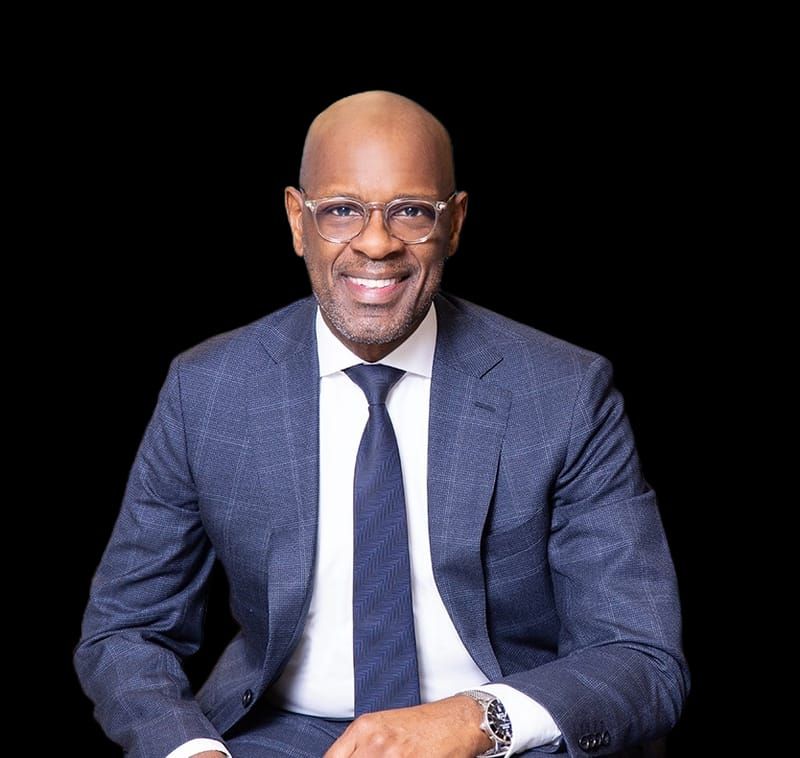
Colin Worrell
Senior Managing Director, Colliers Montreal, at the time of the conversation · led leasing of about 6 million square feet at Allied Properties REIT · Concordia music degree
Ask him about downtown towers and you get a self-taught pianist who played R&B in bands and still tells his kids about the theory teacher who taught him to listen.
Watch · Episode 30
Chapters
At a glance
Who is Colin Worrell?
- Led
- Strategic growth of Colliers’ brokerage operations in Quebec; joined as Managing Director of the Montreal office in November 2019
- Scale
- Directed leasing for Allied Properties REIT's Eastern Canadian portfolio of approximately 6 million square feet, and led the integration of over 2.5 million square feet of new leasable area
- Known for
- Making the case for diversity in what he calls a hidden industry, including original data he compiled for Espace Magazine
- Before this
- A consultant at Colliers in 2002, senior roles at Sotheby's and GVA Devencore, seven years at Allied Properties REIT, and years as a working pianist and choir director
- Gives back
- Mentored interns in the Project Destined Summer 2022 Internship Program; his Colliers team raised over $7,000 of the $190,000 total at the 2022 Let's Bond Derby for mental health
Profile
olin Worrell walked into his first theory class at Concordia certain he knew how music worked. He had taught himself piano as a child, played R&B in live bands and worked in studios.
The teacher looked at a room of young jazz players who were wondering what he could possibly teach them.
"I'm gonna show you what you like," he said.
At that point, Worrell says, it was very clear to him that maybe he didn't know everything and maybe he should listen. "Maybe somebody knows more than I do."
How does a self-taught pianist end up deciding who gets into what he calls "a hidden industry"?
At the time of the conversation Worrell was at Colliers, responsible for the strategic growth of the firm's brokerage operations in Quebec; Colliers listed him as Senior Managing Director, Montreal, Brokerage in November 2023.
Before rejoining Colliers in November 2019, he spent seven years at Allied Properties REIT, directing leasing for a portfolio of approximately 6 million square feet.
"Anything east of Toronto," he says.
He was born in Montreal to parents from Barbados who arrived in the late '50s. His father was pastor of a church in the city, and Worrell grew up one of three children in a musical household with a piano.
"That deep faith in God is something that I think permeated my upbringing."
Growing up in the '60s and '70s, the people he saw who looked like him were musicians, entertainers and athletes. The sport in Montreal was hockey, with few people who looked like him, so he gravitated to the piano.
His parents did not push medicine or law. "My parents basically told me, you do what you love to do."
He earned a music degree at Concordia, played live, did studio work and directed a choir for the English Montreal School Board. "I think I learned my discipline through music."
Then he looked at older musicians and saw how few options they had. He had kids by then, and wanted more options himself.
"It's really a sad thing, but it's reality."
He started with what was close, residential real estate, and by chance met people in commercial brokerage. He had no idea that business existed, he says, and he certainly was not alone in that.
The harder moment came as a young broker. "Cold calling is the life's blood of generating business in brokerage."
He would talk a company into a meeting, then arrive with a colleague who was not Black. Often the person they met would go and shake the other broker's hand.
"Just in their mind's eye, they didn't see me."
He calls it unconscious bias, innocent and real. People in the minority, he says, have to work for the majority "to see us the same way they see themselves."
Now he is the decision maker. For an upcoming presentation at one of the larger universities, he is bringing someone from marketing and someone from the evaluations group.
He is also bringing two brokers, one a woman of colour and one a young man in his early twenties, so students can relate. "We want to span the gamut."
Some of the things needed to be a good broker, he says, shine through in how someone first approaches him. "Persistence is one of them. And so sometimes it may take a while to reach me for that reason."
"There's probably many who have stopped just too soon."
What changed in him was his sense of what he deserved. He watched who succeeded and asked why, and found it was not only competence.
"This person truly believes that he deserves it. He deserves anything. He deserves everything. And he goes out and he gets that. That's the differentiator."
A book, As a Man Thinketh, guided him. "Maybe it should be As a Person Thinketh." His parents were confident and worked hard, "but they didn't dream the way others dream."
"I still fight the demons, and I think all of us do."
His aim at Colliers is simple. "I want to leave it better than I found it."
He still tells his kids about the theory teacher, all the time. Listening came first. Believing the room was made for him too came later, and slowly.
Asked what he would say to someone who believes people like them never reach the position they want, he needs one sentence.
"It's not who you are, it's what you do."
His first step for anyone curious: join a university real estate club, where firms like Colliers come to speak, run case studies and hire summer interns.
It's not who you are, it's what you do.
— Colin Worrell
Key Takeaways
It's not who you are, it's what you do. His one-sentence answer for anyone who believes people like them never reach the position they want.
Maybe somebody knows more than I do. The lesson from a Concordia theory teacher who told a room of confident young jazz players, "I'm gonna show you what you like."
Persistence shows before the résumé does. He says the traits of a good broker appear in how a candidate approaches him, and it can take a while to reach him for that reason.
Everything in this world is made for everyone. He believes too many people do not think they deserve things, and that shifting that belief is what changes the results they get.
Be a specialist, not a generalist. The really good brokers today, he says, own a niche such as data centres or student housing and can speak to an institution with expertise.
About Colin Worrell
At the time of the conversation Colin Worrell was at Colliers in Montreal, responsible for the strategic growth of the firm's brokerage operations in Quebec; Colliers listed him as Senior Managing Director, Montreal, Brokerage in November 2023. He began his commercial real estate career as a consultant at Colliers in 2002, held senior leadership roles at Sotheby's and GVA Devencore, and spent seven years at Allied Properties REIT directing leasing for its Eastern Canadian portfolio before rejoining Colliers in November 2019. He holds a music degree from Concordia University and wrote "Diversity and Inclusion – Changing the Face of CRE" for Espace Magazine.
Questions
On the record
Who is Colin Worrell?
At the time of the conversation Colin Worrell was at Colliers in Montreal, responsible for the strategic growth of the firm's brokerage operations in Quebec; Colliers listed him as Senior Managing Director, Montreal, Brokerage in November 2023. He began his commercial real estate career as a consultant at Colliers in 2002 and returned to the firm in November 2019 after a seven-year tenure at Allied Properties REIT. Before real estate he earned a music degree at Concordia, played piano in bands and directed a choir for the English Montreal School Board.
What is Colliers?
Colliers is a commercial real estate services firm offering brokerage, property management, project management, valuation and advisory services. At the time of Worrell's 2019 appointment, Colliers International Group described operations in 68 countries, 14,000 people, 2018 corporate revenues of $2.8 billion ($3.3 billion including affiliates) and more than $26 billion of assets under management. Worrell says it is the only Canadian-owned brokerage, with ownership in Toronto.
What is commercial real estate?
Commercial real estate, as Worrell defines it, is buildings or land intended to generate profit, either through capital gains or through rental income. The industry is made up of investors who buy it, the players who service those investors, and the people who use the space. He describes tenant representation, helping companies find and rent space for a fee, as one facet of a much broader business.
How diverse is commercial real estate in Montreal?
Not very, according to data Worrell compiled himself for a 2020 Espace Magazine article. Among six of Montreal's largest full-service commercial brokerage firms, 41% of all brokerage sales, support and management staff were identified as female and 9% as People of Colour. Among sales staff, brokers and advisors, those numbers dipped to 19% for women and only 3% for People of Colour.
How do you get into commercial real estate without connections?
Worrell's first suggestion is to join a university real estate club, since most Montreal universities now have one. Firms like Colliers speak on panels at those clubs, work with students on case studies and hire summer interns from them. He says the industry needs people from business, finance, engineering, project management, accounting, marketing, research and data: "Virtually, there's a place for everybody."
What has Colin Worrell said about Montreal's office market?
He has been quoted as a market authority on downtown Montreal office investment. In a November 2021 Storeys article, he said there had been about $600-650 million worth of office sales in downtown Montreal in the previous quarter alone, slightly below the $750 million benchmark reached in the first quarter of 2020. On downtown's return after COVID he has called revitalization a long game, with trends stubbornly in favour of urban centres.
Full Transcript
The full conversation with Colin Worrell, transcribed. Lightly formatted for reading.
Was there ever a time that you thought differently, or were you always like that you were deserving? Like, yo, this is where I'm going. And then my thinking evolved over time. As I said before, few people understand what commercial real estate is and all that it entails.
The things that happen to you are the result of the way you think. And I think too many people do not think that they deserve things. Those that believe right now that this is not for me, that I could never achieve that, like maybe the position that maybe they want, or people that look like me don't never make it to that position, what would you say in one sentence? It's not who you are, it's what you do.
Well, Colin, it's a pleasure to have you on the Montreal Entrepreneur Podcast (now The Vault MTL). Pleasure to be here. It's an honor to finally meet you. I'm really happy to be here with you, Kathy.
Great. And for those who don't know what you do, please Tell us a little bit more about yourself. Well, I currently work for Colliers International. We provide brokerage and other services for commercial real estate.
It's fun. And how long have you been working at Colliers? I've been there since 2019, so just over 4 and a half years. And my position is I'm responsible for strategic growth of our operations here in Quebec.
And what did you do before that? I've always been in commercial real estate, or I should say I've been in commercial real estate for the last 23 years. Prior to Colliers, I was working on the land I was on the landlord side, so working for a company called Allied REIT, and I was responsible for leasing for that firm anything east of Toronto. Well, very experienced in the industry.
I've been here for a little bit of time. Yeah. And for me and the audience, for us to understand the person that you've become today, like the successful man that you've become, take us back a few decades and give us a little glimpse of who you were in your— I don't know, maybe in high school or in your early 20s. Well, maybe I'll take you back a little further than that.
So I was born here in Canada to parents who were from a small island in the Caribbean, Barbados. So when I say small, because compared to some of the other islands that most people know, it was a small island that was colonized by the British. And my parents grew up there and came to Montreal in the late '50s. And I was born here with 2 other siblings and grew up in the '60s and '70s here in Montreal.
Grew up to immigrant family, English, Caribbean, with all of the characteristics they bring to that. And what was that like growing up in the '60s? And you say '70s, right? '60s and '70s.
That's right. Well, you know, it was the civil rights era and whether I knew that or not at the time, those were the things that I was seeing around me and the Vietnam War in the '70s and that sort of thing. But, you know, I was a young Black child in Quebec, in Montreal at the time, and an Anglophone as well. So there were not a lot like me here, but we had— there was a small community here in Montreal.
So, you know, again, I grew up to an immigrant family with all that they bring. What were some of the mindset that taught you? from a young age? There was— my parents were very religious.
My father had a church that he's the pastor of here in Montreal. That deep faith in God is something that I think permeated my upbringing. While I'm not particularly religious, some of the tenets that they talked about, they lived by, I think are deeply ingrained. It was about being principled but being practical, of course.
My parents were of modest means. They worked hard, but they were, I think, successful in the way that they wanted to be. And you were two other two other two siblings. Okay, that's right.
And it's a lot of great values that I'm from an immigrant family as well, so I do understand. You would know. Yes, and I wasn't born here, so it's it's a little bit different the the culture for sure from Haiti and the Québécois culture or the Canadian cultures. Pretty much understand working hard as a family.
It's I think it's in our DNA. Certainly is. Yeah, yeah. And I was listening on a podcast that person mentioned that you were in music.
That's what you did. You studied at school. How did can you elaborate on that? Sure, I was I wasn't.
particularly a studious young fellow growing up, but I was drawn to music. And somebody asked me, why music? And clearly, I just loved music. But also, I think at that time, a lot of the images that I saw, people that looked like me were musicians, entertainers, athletes, that sort of thing.
And I guess maybe sports wasn't where I thought I fit, so gravitated to music. You didn't want to play basketball? And the other thing is that I was here in Montreal, so limited You know, in terms of what you could play. So even the sports that were here in Montreal were hockey, right?
So not a lot of people that look like me in that either. So I gravitated towards music. Obviously, I love music. I loved playing piano.
Okay. But did your parents, did they encourage you to pursue that path? My parents basically told me, you do what you love to do, what you want to do. Unlike a lot of, I think, maybe the profiles that we sometimes think about when we think about immigrant parents, where they insist you go here or there, you know, be a doctor, be a doctor, be a lawyer.
My parents weren't like that. They really said to us, do what you think you want to do and encourage that. Happy about that. That's pretty interesting.
Yeah. And how did you transition to commercial real estate? Because when I think about, you know, you being in music, so that takes a lot of, I see creativity, you know, a lot more fun. But then commercial real estate is a little bit more, you know, I don't know, more serious, I would say, in terms of the industry.
Well, certainly. I'll just say this about music. I think I learned my discipline through music. I studied music.
I was at Concordia, did a degree in music. and needed to, to work hard at that because prior to that I was self-taught, transitioning from what I did. And not only self-taught, but played live in bands. I was working in studios.
So you played the piano for the band? Played piano, yeah. We had a musical family. We really did have a musical family.
And so there was a piano in our household, and I played that from the time I was small. But again, self-taught. So when I did go to school, I had to sort of shift my thinking. Some of the things that I experienced there follow me.
And I remember, again, as many musicians like me, we thought we were on the cutting edge. We knew how it should be. And I remember, because I played R&B and other things, going to, to study jazz, study theory. And I remember going into class with the theory teacher, and he was a classical poser.
And so we were all sitting there that first class, again, a bunch of young musicians studying jazz, and we thought, what can he teach us? And he said to us, very deliberately, he said, I'm gonna show you what you like. Mm-hmm. And so it stopped being about, you know, the rules out there, what you like.
You don't even know what you like. You don't know why you like what you like. And I'm going to explain that to you. I'm going to show you that.
And with that, you'll understand how then to manipulate things. At that point, uh, it was very clear to me that maybe I didn't know everything and maybe I should listen. Maybe somebody knows more than I do. And I, you know, and so that I repeat that to my kids all the time, that story to my kids all the time.
That was a big lesson for me. That's pretty interesting. But I could picture you in jazz because I was thinking, okay, what style of music does he play? I think jazz.
Yeah, you seem like the type that would play jazz. There you go. So I guess, right? No, but jazz is beautiful.
I like jazz. Okay, so now you're in music, you're at Concordia, you graduated in music, and then you came out of school thinking maybe you're going to follow, I don't know, continue playing with the band, but then you made a decision to switch. Yeah, I mean, I continued playing, you know, live and then did studio work, that sort of thing. I directed choir for the EMSB, did some, some work teaching there as well and whatnot.
What became clear to me over time is simply looked at other older musicians, and what became clear to me is some of the options that were there for them were limited. And I thought, you know, I want to be able to— and around that time, I also had kids. Okay. And so I thought, I want to be able to have more options.
And I started to look outside of music. It's really challenging because music, one, is a beautiful thing. Two, it's a craft that takes a long time to learn. Many of the people that are very good at music have been studying much longer than lawyers who are practicing, than engineers who are well paid, than, you know, And other people, but they don't make a lot of money and it's challenging.
So it's really a sad thing, but it's reality. And so I had to make a decision and I decided to look outside of music. And then hence commercial real estate. Yeah.
And through, you know, a series of, I guess, coincidences, I decided really first on what was close and easy, which was thinking about real estate, but then met people in real estate that were in commercial real estate. And so just by chance discovered that. And knowing what you know now and your journey from being a musician all the way to the present, what were the changes that you would make if you were like, if you could go back, what would you do differently? So I, you know, would always say that whatever was to be was to be.
And certainly that's what brought me to the very satisfied and contented place I am today. I don't know that I changed a lot. I changed that I could perhaps be a little more intentional in where I was going and what I was doing. Okay.
So, and, and I think, uh, the only way you can do that is with a little bit of more clarity. Like, I was, I was young. I was— did what I loved to do and simply, simply that. I think that's normal for a young, you know, person to explore a lot because at first you don't know exactly where you want to go.
Yeah. You have to try and test, fail a few times, and find your way. Find what you like. Yeah.
I'm a strong believer in that. Absolutely. And you'll be dealing with your kids as they grow too. So you need to— we all have to understand that, certainly.
Yeah. Probably I'm gonna be like, no, no, no, No, don't try that. It's not going to work. But then you have to let them try on their own.
I'm far from, from that time, so I don't think about it. It comes faster than you think, Athi. Holland, you're a strong advocate for diversity and inclusion, especially in commercial real estate. Why is that?
Well, I'm a proponent of diversity everywhere, really. I think it offers more rounded perspectives when people in the room are diverse and they have different, different experience. Specifically to, to real estate, as I said before, you know, it is a, it's a hidden industry. People know what residential real estate is.
Few people understand what commercial real estate is and all that it entails. As a tenant representation broker, so that meant that I represented tenants who wanted to rent space, so large companies, small companies. And so as I walked down the street and looked up at these big buildings with tenants in there, I didn't realize there was a whole business of helping them find that, and there was a fee paid for that as well. Who knows?
Who knew? You know, certainly I didn't. That's a hidden, I think, a hidden industry in itself. Now, it turns out that commercial real estate is so much broader than that, but that's just one facet of it.
And it's quite hidden. And I think that not a lot of people know about it. Those who do know about it are, are there because they're connected to somebody who was in it already. And so as a result, the, the population within real estate, the same.
And so there's not a lot of representation outside of the typical, you know, white corporate world. But would you say that it's a small group? It's a small group too. It's a small community.
Exactly. Exactly. So that too. And so, you know, my opportunity now as a decision maker is to affect change in that, in that way as well.
The other thing that I recognize as well is that it's a great opportunity to create wealth. And I think that's what we or diverse people need to do. Understand. Certainly to understand, but for generations going forward as well.
You just mentioned that commercial real estate, the term is broad. And how would you define it so that more people can comprehend? Sure. Well, what it means?
Well, commercial real estate really is real estate buildings or land intended to generate profit. either through capital gains or through rental income. So the commercial real estate industry really is filled with either investors who buy it or actors, players who service those investors, and people who use commercial real estate. So for instance, in, in our company Colliers, we provide brokerage services, but as we're a full-service company, we also provide property management, project management for people who want to build space out, evaluation for people who want to understand what the value of their building is, you know, advisory services.
in various areas, etc. And if minorities or Black people, they want to join or learn more about the industry, what are some of the steps that they can take to start working their way? If a young person is in university, most of the universities here now in Montreal have real estate clubs, and I suggest they seek those out, join them. Good opportunity to meet with other people who are very— or who are interested as well, but also then to meet some of the companies who often engage with those universities too.
So you're saying that some of the commercial real estate companies, they do engage with the university? Oh yeah. In which capacity? So they have clubs.
Again, the clubs will have events, and so they'll have panels where we go in and talk to them and explain to them the industry opportunities within the industry. They often do case studies and they want us to come in and work with them on those. And so, and then we also sometimes hire interns during the summer, and so we'll pull those from universities as well. That's pretty interesting.
It makes hiring, just like I was thinking, easier. Yeah, exactly. That's pretty good. And for the Black people or the minorities that are at university, this is a great way for them to start exposing themselves to the industry.
Yeah, absolutely. Why is there reluctance, you find? I don't know that there's reluctance as we require some education in that regard. I've got a series of meetings with Black students in various universities specifically with the intention of talking to them about commercial real estate, what it is, exciting them about it, because it really is an exciting field.
If you talk to anybody who really is in commercial real estate, they're motivated and they're motivated for various reasons. I know for myself, commercial real estate means that you have a bit of a stamp, you know, in what goes on around you, whether it's helping a company go from one part of the city to another, whether it's understanding, you know, the next building that's going up on this corner, and maybe you know these things 2 years ahead of everybody else, and maybe you're part of that deal. Whatever it is, you're part of the fabric, the making of the city. It's an exciting thing.
And of course, for those of us who are deal junkies, we love to do deals, means that we're going out there and trying to get the best deal for our clients. And at university, what field do they have to be in to— in order to gravitate towards real estate? That's a great question too, because so again, now I'm responsible for our brokerage business here in Quebec, and so the profile of a broker spans a wide spectrum. Now, okay, I came out of music.
I know. So you can imagine, but you know, people skills go a long way. So for me, that was helpful. We have folks that come out of business, certainly out of finance.
You need to— when you're commercial real estate, you're speaking to private individuals, you're speaking to corporations, you're speaking to institutions and you're talking to them about their real estate, often they're— you're speaking to them about that in financial terms. So the ability to do that is an asset. And we do work, whether it's public infrastructure, institutional infrastructure, that's project management. So that is, many folks from there are coming from engineering and project management, etc.
And then there's a backend. So whether that's accounting, the people who organize the backend, marketing, research and data. Virtually, there's a place for everybody. A lot of the times when people think about commercial real estate, they think of the broker, the the signs they see on the buildings.
That's the first thing that comes to mind. Yeah, right. Yeah. And they think, oh, it is.
We don't want to do that. I can't do that. Or yeah, or I don't want to do that. Yes, it's a lot of work.
Sales is not easy. Yeah, that's the perspective a lot of people have. And you're absolutely right. I do remember years ago, there's somebody who said, "Wow, I see those signs on industrial buildings.
I'd hate to do that. Signs are always there. " If you speak to some of our industrial brokers, you'll understand the passion which they operate, the networks that they have, the excitement that's in within that industry. It's really quite something.
So do they also go to the universities and then share that passion and show what they're doing? They may. I'm responsible for the growth, so if I pull people in, yes, we will go. And they don't do that individually, but certainly, I guess, a service to Colliers and to help with the growth of that, then they become involved.
Because I'm imagining if I can like see, foresee like what they're doing now and then put myself in their shoes. Oh sure, they're excited, so maybe there's something that I wasn't Sure, absolutely. Yeah. So, so for my next presentation, which is coming up, one of the larger universities, we'll be going there with somebody from our marketing group, with 2 brokers, one female of color, another young male who's in his early 20s.
The idea is so that folks can relate to them as well. Somebody from our evaluations group. We want to span the gamut, make sure that they understand that it's varied. That's interesting.
And what differentiates Colliers from the other ones? You know, if you speak only for Colliers, we are the only Canadian-owned brokerage. We're a global firm, but but the ownership is in Toronto. It really does differentiate us.
We have real strength across Central and Western Canada, and we're growing presence here in Quebec as well. And on a daily basis, I'm sure you speak with a lot of brokers. You're in charge to make sure that the ideas flows on how you're going to develop Quebec. I don't know, give me some ideas here.
What do you do on a daily basis? Well, first of all, we hire really good brokers who are out there every day developing business, and thankfully for that. But my job really is to, one, pave the way for them. There's all kinds of problems and challenges that come up.
And so I'm in the center trying to make sure that some of those challenges are eradicated. So one, to pave the way, to talk to them about, you know, inspire them, ideas. How can we go? Where can we go?
What is the niche market for you and how do we pursue that? So based on their personalities and what they like, they can go into different— And based on opportunities within the market, what are the— direct them throughout our network, our Colliers network. Again, we're a global network, so we've got presence across not only Canada but the world. Is there a niche industry that they want to explore?
Is it, you know, data centers? Is it student housing? Do they want to be a specialist? Often what we want is folks— there was a time when brokers were generalists.
They did a little bit of everything. Nowadays, the really good ones are really good specialists in a particular area. And so they can go and talk to an institution about that, about their specific focus with expertise. With your experience now, when you see a broker like a new one coming in or I don't know, can you tell if they will succeed in the industry just by speaking with them for a few minutes or an hour or so?
Some of the things needed to be a good broker I think shine through initially in their approach to me. Persistence is one of them. And so sometimes it may take a while to reach me for that reason. Maybe a little, obviously clarity of thought, being realistic about how hard this industry is, really how hard business is in general.
If you're not realistic about that, then you're probably not going to be able to stand the test of time, which is often the thing that differentiates those who make it and those who don't. There's probably many who have stopped just too soon. Yeah. business as well.
It's the same because basically they are an entity as a broker, like they are an entrepreneur, right? Yeah, exactly. They're running their own business. And I don't know, maybe in the next 5 years or so, what do you foresee?
Like, what legacy are you trying to, uh, you want to leave at Colliers? I think as in anything, I, I want to leave it better than I found it. That's a good philosophy. From my perspective, that means that I've had a hand in increasing people's awareness that, again, people of color that bring again another sort of creativity or, or layer on top of what's there and bring different perspectives, both through hiring others that demonstrate that and me myself bringing that to the table.
Did you ever encounter— because you're a Black man in the industry— was that ever a factor in you climbing corporate ladder? People aren't so brazen in Montreal as to tell you their dispositions, but I've told the story before of being a young broker and being on the phone and calling companies and trying to get meetings. Cold calling is the life's blood of generating business in brokerage. And so I would call them and I would be successful in talking them into meeting with me.
And often those meetings, we'd meet in pairs. So we'd bring— it'd be myself and another broker. And so we'd arrive and the other broker was not black, was not like me. And often the person we met, perhaps because I don't think I have an accent anyway, or a discernible accent other than a Canadian one, they would go and shake the other person's hand, not the white person's hand simply because— and completely innocent.
I certainly understood what it was. Just in their mind's eye, they didn't see me. They didn't expect that. And so they went and shook the other person's hand.
And so, so it just shows that unconscious bias. It's a real— I think, I think it's a real demonstration of something very innocent, but something that, that is there, right? I think we all have to, as people that are in the minority, have to work for the majority, the people that are not like us, to see us the same way they see themselves. themselves.
And what advice do you have for— it could be minorities, it could be young Black professionals, like they want to climb in the corporate world or the commercial real estate industry. What are some advice maybe you want to give them based on your experience? Yeah, well, and it can be women as well. Yes, for sure.
You know, again, when I talk about majority and minority, there's the gender divide as well. But I think it begins, you know, one, one book that has been something that has guided me along the way is a book called As a Man Thinketh, and maybe it should be As a Person Thinketh, right? But, but it's As a man thinketh. And it is— and it simply says that you are, you know, the result— the things that happen to you, the things that are the result of the way you think.
I want to take out all of the things that happen to you because, because you're a woman and people have bias and that sort of thing. But certainly the way that— we can't control the way people deal with us, but we can certainly control the way we deal with situations and people and that sort of thing. I think too many people do not think that they deserve things. And I think as a result, you see then the results that they get, because deep down they don't understand that everything in this world is made for everyone.
It's made for you. It's made for me. Anything in this world is certainly made for you. And so as a result, when you shift your thinking and understand it's mine, this is all mine, it can be mine, whether it is material, whether it is experiential, whether it is a job, that sort of thing, I think begins to shift your thinking, and then things begin to occur for you.
Great perspective. Was there ever a time that you thought differently, or were you always like that? You were deserving, like, yo, this is where I'm going, and then you go? No, I think it evolved over— my thinking evolved over time, certainly.
And how did that happen? Mentorship, or— Certainly over time, observing, you know, and trying to understand why is he successful and why is she successful and why aren't those other people and why am I not? And is it truly competence? It's not only that.
Is it confidence? There's that. There's many things, but I think it's, you know, you sort of understand, wait a minute, this person truly believes that he deserves it. He deserves anything.
He deserves everything. And he goes out and he gets that. That's the differentiator. And would you say that's why you're where you're at today in your position?
I still fight the demons, and I think all of us do. And certainly, again, as a, as a Black man, that wasn't what was given to us, certainly not by the media. And I think there were limiting beliefs also as a growing up immigrant Caribbean family as well. They were confident, they worked hard, they, they were successful, but they didn't dream the way others dream simply because the world a smaller place for them.
I understand. Yeah, I like that, uh, what you just said there. So your message would be those that believe right now that this is not for me, that I could never achieve, uh, that, like maybe the position that maybe they want, or people that look like me don't never make it to that position. What would you say in one sentence?
It's not who you are, it's what you do. Well said. I'm gonna leave it at that. Yeah, yeah, it says it all.
Time is not going to allow us to ask more questions, but I have one last question for you is, what do you like about the city of Montreal? I have many friends who have left Montreal. So growing up again in the '60s and '70s, of course you would understand that, that I had many friends. My best friend, many families left Montreal and went to Toronto for, you know, for opportunity, that sort of thing.
Um, I stayed in Montreal. Um, I'm not sure if I stayed in Montreal because I loved Montreal, because it was where I lived and where my family was and that sort of thing. But in retrospect, I would have been so sad had I left Montreal. Montreal for me is a— physically, it's a beautiful place everywhere from, you know, the mountain to the canal to the Mile End to— yeah, just, you know, it's, it's a beautiful place.
The bike paths that go from— Yeah. I live on the South Shore. I ride to the West Island and, you know, and back and that sort of thing. So physically, a great place, but I think also Montreal has a— you know what it's like in the summer, it comes alive and the joie de vivre here.
And I think there's a creative flair that exists here in Montreal as well. When I speak with my Toronto counterparts in our various meetings throughout the day, I think everybody recognizes that Montreal has just something a little little different than everywhere else. It is different. Well, it was really nice to have you on the Montreal Entrepreneur Podcast (now The Vault MTL), Colin, and I wish you all the best.
Thank you, Cathy. Nice chatting with you. Nice to be with you. Thank you.
Until next time. Until next time.
Sources
- Senior Managing Director, Montreal, Brokerage; named on the winning Montreal MyREM Campaign Execution Team, 2023 Spirit of Colliers Awards Colliers Canada, Announcing the 2023 Spirit of Colliers Awards winners
- Joined Colliers as Managing Director of the Montreal office in November 2019; began his career as a consultant at Colliers in 2002; senior roles at Sotheby's and GVA Devencore; seven-year tenure at Allied Properties REIT directing leasing for an Eastern Canadian portfolio of approximately 6 million square feet and integrating over 2.5 million square feet of new leasable area; Colliers International Group's 2019 figures (68 countries, 14,000 people, $2.8 billion revenue, more than $26 billion of assets under management) Colliers Canada, Colliers Bolsters Leadership Team With New Montreal Managing Director, Colin Worrell
- 2019 appointment and 2002 start covered by trade press Which Mortgage, New Montreal managing director for Colliers International
- Diversity data from six of Montreal's largest full-service brokerage firms (41% female, 9% People of Colour overall; 19% and 3% among sales staff); his move from a career in the arts into real estate; by-lined Espace Magazine article Colliers Canada / Espace Magazine, Diversity and Inclusion – Changing the Face of CRE, by Colin Worrell
- Featured in Colliers' two-part diversity and inclusion roundtable, February 2021 Colliers Canada, Understanding, Nurturing and Celebrating Diversity and Inclusion at Colliers – Part 1
- About $600-650 million of downtown Montreal office sales in a quarter, against a $750 million benchmark in Q1 2020 (his figures) Storeys, Investors Ride Tailwinds of Quebec's Nation-Leading Economic Recovery
- Colliers team raised over 7k of a total $190,000 at the 2022 Let's Bond Derby for mental health; his view that downtown revitalization is a long game Colin Worrell, LinkedIn post
- Mentor for the Project Destined Summer 2022 Internship Program LinkedIn post by a Project Destined intern
- Current responsibility for strategic growth of Colliers' brokerage operations in Quebec; responsible for Allied REIT leasing 'anything east of Toronto'; parents from Barbados who came to Montreal in the late '50s; father a pastor; two siblings; music degree at Concordia; played piano in bands, studio work, directed a choir for the EMSB; the theory-teacher story; the handshake story; university outreach; all quotes In conversation with The Vault MTL
- Colliers is the only Canadian-owned brokerage, with ownership in Toronto (his account) In conversation with The Vault MTL
More from The Vault MTL
The Dispatch · The Vault MTL
A monthly record of Montreal’s most consequential founders.
Once a month. No fluff.