Machine-generated transcript, lightly edited for readability. It may contain transcription errors.
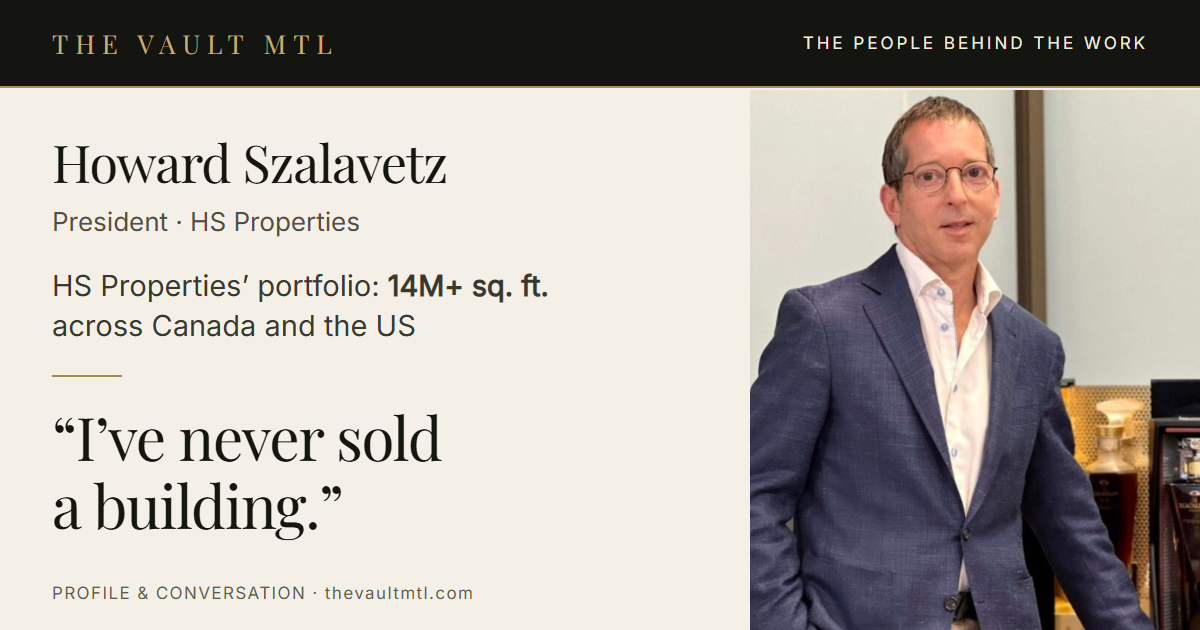
HOWARD: I have every building I've bought with my father or partners since 1992. I've never sold a building. CATHY: So what's the strategy behind that, the not selling it? HOWARD: Somebody once told me you could become rich buying and selling buildings, but you become wealthy by keeping buildings.
5 million square feet with roughly 40% occupancy. It was the largest single buy of my life. CATHY: What is one principle that you'll never compromise on, no matter how good the deal I'm HOWARD: not willing to risk everything I've built for the next deal. My father came from Europe.
He came penniless. He was a survivor. Always said a handshake is your bond. Be honest, be good with people, and honor your word.
CATHY: And you talk about micromanaging. I think you said that 3 times, 3 or 4 times. HOWARD: I'm getting better at it. CATHY: If tomorrow all the buildings were gone, the company, the title, the dollars, what part of you, Howard, would still make it?
Or make you successful. HOWARD: Thank you for inviting me. It's a pleasure to be here. CATHY: Many people, they know the buildings you own, the businesses that you've been involved in, but very few know the man, the person behind the brand.
So please introduce yourself and tell the audience. HOWARD: I've been in real estate actually as of June, it's 34 years. Uh, my real estate career started when I was in my late 20s. I decided to move out of our family house, and my father said, let's buy a building together.
And it started there, and then we bought another building and another building, and we had a good run for several years. Um, my father was my best friend, My mentor taught me about a lot of things, and eventually my father— age got up with him and he had Alzheimer's and dementia. And then our, our acquisition mode switched to he was no longer buying, so I ended up partnering with other people. CATHY: Okay.
HOWARD: And I took it from there. CATHY: And you said you were 26 when he purchased— when you both purchased the first building? HOWARD: 26. Yeah, we started looking when I was 26, ended up closing roughly 26.
CATHY: What was that like, buying a property with your dad? What type of building was it and where was it? HOWARD: Our first buy was in Côte-Saint-Luc. It was 98 units.
It was June. CATHY: Oh wow. HOWARD: I remember the dates of most buildings I've bought. It was June 1st, 1992.
CATHY: Okay. HOWARD: And I ended up moving into the building. Shortly thereafter, I guess I was determined to move out. CATHY: Yes, HOWARD: I stayed home longer than most of my friends, so the impetus to move out was to find a building, close on it, and move in.
CATHY: And you still have the building today? HOWARD: I have every building I've bought with my father or partners since 1992. I've never sold a building. CATHY: So buy and hold.
HOWARD: Don't sell our children, don't sell our buildings. CATHY: So what's the strategy behind that, the not selling it? HOWARD: Somebody once told me you could become rich buying and selling buildings, but you become wealthy by keeping buildings. That stuck with me.
CATHY: And then you just keep on doing that. Amazing. And how many years after, since the first building, that you purchased the second one? HOWARD: On those days, I was actually on a 3-year cycle.
It was June '92, December 21st, '95, June 1st, 1998, 2001 December. And it was basically every 3 years it was buy a building, fix it up, get your house in order, and then start looking for the next one. CATHY: Amazing. And you did that with your dad, just the two of you?
HOWARD: We did that together. The first 800 residential units we bought together. CATHY: 800. Amazing.
And what were some of the values that your father instilled in you that you still follow those principles until today? HOWARD: My father came from Europe. CATHY: Okay. HOWARD: He came penniless.
He was a survivor, and he had very good European values. He was hardworking. He worked 7 days a week. Always said a handshake is, is your bond.
Be honest, be good with people, and honor your word. CATHY: Yeah, these are great principles. HOWARD: Yes, CATHY: for sure. And these are the things I'm assuming that with your kids you're passing those down as well.
HOWARD: It's very important to pass down to the next generation CATHY: because some people, they believe that it's just money. But at the end of the day, we all realize what's in the head. HOWARD: Yeah, money is not success. CATHY: Exactly.
HOWARD: Money, as I tell people, is just the yardstick The measuring stick of whether you did something and you were successful. It's not the end goal at a certain point in time. CATHY: That's a good thing for people to kind of grasp and understand that because chasing money is not the end goal. HOWARD: Chase, chase success, chase doing something good, chase being honest, chase doing your best, giving it 110%, work hard, and the rest will follow.
Not lead. CATHY: Well, follow. And at what point did you realize that buying one building was not just something, a one-time thing, that it was going to become your legacy, so to say? HOWARD: I loved what I did.
And it was once you get a building running and functioning, I needed more. It was always a challenge. It was a— it was in me. I wanted to grow because I believe that if you don't grow in life, you stagnate.
And if you stagnate, you fall back. So it was personal goals. CATHY: And at that time, were you going to school? HOWARD: Uh, when I started, I was just finishing up my CA.
CATHY: Okay, HOWARD: I'm a CPA. CA, CPA, we all have that chip on our shoulder. CATHY: What's that chip? HOWARD: Of being a CA, not a CMA or a CGA.
All, all, all the orders merged at one point in time. So I did the CA program, I did my 2 years of articling. Um, I was working nights, running a family, a business that I bought with my father during the day. CATHY: Yeah.
HOWARD: And hard work never killed anybody. CATHY: Makes you stronger. HOWARD: Yes. CATHY: More resilient.
And most CPAs, they do not become business owners or entrepreneurs. But did you know that, yes, you were a CA, that you would eventually— HOWARD: I was destined to drop out of university. I did not like school. I started doing a Bachelor of Science major in biology, was not really interested in pursuing a career in school or getting a degree.
But that was actually— my father was very adamant. Okay. Coming from his background, he felt like I should have a degree. That's something to fall back.
It's always a plan B. And I figured, okay, I like numbers, I like business, so I'll get a degree in accounting. CATHY: Okay. So you always knew that you would fall into entrepreneurship for sure?
HOWARD: Absolutely. CATHY: Okay. HOWARD: Never questioned. CATHY: And what is something that you find entrepreneurship taught you that no school could ever teach you?
HOWARD: School teaches you how to look at numbers, how to, how to analyze things, and Somewhere along the line, one of my partners said to me, well, I looked at a building, it was this, it was that, and my sixth sense told me it was a deal. And that's something you can't really explain. You look at the property, you analyze the numbers, you could read the leases, you could check everything, the physical condition, but either you feel it or you don't feel it. CATHY: So that's your— HOWARD: You see the potential.
CATHY: Okay. But do you have a particular framework on how you choose apart from the numbers? HOWARD: I choose— I get a lot. I mean, inbox is full of different leads.
I could look and analyze a building in 15 minutes and decide whether it's for me or not for me, whether I see the value add. I choose on value add. I prefer an ugly duckling that needs help and needs restructuring than something that's in perfect shape and paying for somebody else's work. CATHY: So what are you looking for when you walked in, like when you go into the building?
HOWARD: What it could be. You look at the potential. Don't look at— look at the 4 walls, but forget everything else. What do you see in it?
What do you— how do you see you could add value to the property? And hopefully you see something that everybody else doesn't see. CATHY: Okay. And then you see like new, maybe new investors, they have not gotten the reps that you've had.
So when they walk in versus you going in, there are things that you see that they cannot. See either. HOWARD: Well, every building, in my opinion, has its highest and best use. Mm-hmm.
It might not be the use that it's currently being used for. CATHY: Okay. HOWARD: And if you see that little edge, then you see the value you can create. CATHY: Okay.
HOWARD: And it motivates you to become interested and pursue it. CATHY: And then you see many per year. How many do you do per year versus like in terms of percentages, how many you receive and how many do you actually do? HOWARD: Oh, I could see hundreds of listings a year.
or that I go through, and some of them I just go through for my educational purposes. Competing properties, see what everybody else is doing. You don't necessarily have to buy the property to learn something. You can learn a lot from looking at somebody else's property, not necessarily a direct competitor, but you get insight.
CATHY: I see what you mean. And in terms of investing, what is one principle that you'll never compromise on, no matter how good the deal actually looks? HOWARD: I mean, you need to be secure in your purchase. Leverage is, as one of my accounting teachers said, leverage is a double-edged sword.
And if you over-leverage, the knife will cut you just like it will cut through. So you have to be very careful. And I guess with age I've become more careful because I have more to lose. So I'm not willing to risk everything I've built For the next deal.
CATHY: Yeah. So you have to be secure. You have to really know what you're doing. HOWARD: Yes.
CATHY: I understand. And can you think of a time where your instinct was wrong? Like you thought something, but then it turned out to be something else, good or bad? HOWARD: Uh, most deals, I guess.
Uh, it's hard. You have an instinct. And I always say I've never met a building that beat me. Uh, some took longer.
We've had all had our deals where we thought it was great, and we just— you just work harder and you just have to reinvent yourself. 5 million square feet with roughly 40% occupancy. CATHY: Okay. HOWARD: And of the 40, there were a couple that needed to leave too.
So, but I saw a vision for the area. I believed in the area because I had a building in the area since 2014. And I remember I did an interview with André Dubuc from La Presse Plus. Mm-hmm.
And he said to me, what's your vision? What's your game plan? I said to him, you know what, life and business is like hockey. You, you have a vision, you put your goalpost in a certain space.
Mm-hmm. If the pucks are going right, right, you move your goalpost quickly to the right. If they're going left, You move. It's not what I want, it's what the market wants.
And you have to be in tune with that. You have to listen to what people want and the product you're offering and adjust accordingly, adjust quickly. CATHY: So would you say at that time the portfolio didn't look so good on paper? Like you say, 40%— HOWARD: Numbers-wise, numbers-wise.
But I felt like there was a huge opportunity. And we're 9 years later and yes, it was a great opportunity. It was the largest at the time. It was the largest single buy of my life.
CATHY: Wow. So that was a great bet. HOWARD: Yes. CATHY: Congratulations on that.
HOWARD: But it is a bet. CATHY: Yes. HOWARD: Calculated or not. CATHY: Calculated risk, definitely, because of experience and you know what you're doing.
Yes. Not just anybody could go, just go and do that. HOWARD: It was tough at the beginning. It took a couple of years before it turned the corner.
But I knew that going in. CATHY: Of course, at the beginning you have to put in the— a little bit of more investment in there. Elon Musk once said that building a business is like staring into the abyss and eating glass. Would you say, based on your experience, would you say that's a true statement?
HOWARD: Oh, definitely. I mean, whatever Elon Musk says is true, right? Uh, and also, actually, what's it called, uh, Warren Buffett once said he credits his success to 90% luck and 10% intelligence. And if you'd ask him he changed the 10% for more luck in a heartbeat.
Somebody told me that, so I'm not— I'm quoting somebody who quoted him. But you need— it's timing. Yeah. I mean, I forget which book I was reading recently, and they were talking about like the greatest successes of the world, like Microsoft, Bill Gates.
And it is— it's intelligence, but it's timing. CATHY: Yeah, because sometimes you could have the intelligence, if your timing is wrong. HOWARD: Yeah. CATHY: It's bad as well.
Yeah, definitely. And, uh, was there a time that it was so hard that you even questioned whether you were gonna make it, or maybe a building or a transaction? HOWARD: No, I don't think I ever questioned our existence. We were always from the get-go.
I was never going for 95% leverage. I, I needed to feel secure and I needed to sleep at nights. Peace of mind. You need peace of mind.
Yes, that's important. If you do less but put in more, you're better off in the long run. CATHY: If you do less, what does that mean? HOWARD: Less— if you buy less and you put more money into your buildings when you're buying them, okay, I think you're much better off than buying more buildings and putting less because it's less risk.
Yeah, it's the accountant in me that's risk-averse. CATHY: Definitely. How Does that, like being an accountant, prepare you for this? Like what are some of the— because you have a— how could I put it— leverage?
It's not leverage, but like an edge compared to maybe a competitor doing the same thing, but that do not have the skills that you possess. HOWARD: Well, you don't have to rely on somebody else. The difference is somebody has to go have somebody do— check out the numbers, ask a third party or ask an employee. I evaluate every property that comes across my desk.
CATHY: Okay. HOWARD: I have an analyst, but I don't use the analyst. I feed it off to them as opposed to CATHY: them HOWARD: asking them for their opinion. CATHY: Yeah.
And you still do it till today? Till today, definitely. And what are some of the things that the last 10 years have taught you that the previous 20 years couldn't? HOWARD: Being in real estate for 34 years, I wish I had the connections, the people, the, the credo, The, the all, all that I had when I started.
But you have to work hard and you have to build those relationships. The vendors have to know that you're a serious buyer, that you don't put offers in and then go look for the money. Okay. Or you close on deals.
You don't come back for cuts in price after you agree to price. So it's reputational and that only takes time. That's only built by time. CATHY: Okay.
It's not something that you can speed up. HOWARD: No. CATHY: Okay. And right now, do you invest mostly in Quebec or are you— the buildings?
HOWARD: So my decision years ago was I'm here, I'm still very much a micromanager and I visit my buildings regularly. CATHY: Okay. That's important. HOWARD: Biweekly, I visit every building and in between I see them again.
So I'm usually in each building once a week. CATHY: Wow. HOWARD: Scheduled tour every second week and once a week haphazardly. CATHY: Okay.
Okay. HOWARD: So it just— I could manage them. I could. It's very nice to have a picture on Zoom or conference call, but you're not there.
CATHY: So that's why it's a little bit more difficult to have them further away. Makes sense. Everybody has their niche and You respect that, and it's great because not everybody like go around and take a look at their properties and see how they, they're doing. HOWARD: Yes.
CATHY: All right, now let's— we're going to segue into, uh, family. I know family is something that's very important to you. Please tell us why. HOWARD: Family's first above all.
Family's first. I'm married for 20— sorry, I'm married for 23 years. I have 2 daughters, 20 and 22. both studying in the US.
Great students, great kids. And it's the reason why I get up every morning. I love what I do, but I do it at this point, I guess I do it for my family and for legacy. CATHY: Yes, definitely.
Because do you hope that one day they will take over? Are they interested in real estate? HOWARD: My older daughter just got accepted to optometry in the US. So I doubt that it's a natural fit for her.
My younger one's in special education also in Florida. Um, I have 2 nephews with me in the business. CATHY: Okay, HOWARD: so CATHY: you have 2 nephews at least. HOWARD: Or maybe a son-in-law that might come to Montreal.
I don't know. CATHY: That's true. That's true. HOWARD: I don't have— CATHY: Okay, but most people— well, not most, but some of them, they don't like working mixing business and family.
But for you, it has worked really well with your dad. HOWARD: It's trust. It's above all, it's, it's not always easy. CATHY: Yes.
HOWARD: Because you could have an argument with somebody that's not family, but when it's family, then they pull in the family card. I mean, but it has its benefits too. The trust benefit and knowing that they care just as much as you care. But we have an incredible team in my office.
Uh, I have to say that we're not a huge office. Our head office is about 27 people, but we're a family too, and that's what's very important. CATHY: And that is success. HOWARD: That is success.
What you leave behind— we all pass, we all— people come and go, but what they leave behind is the memories of the people you worked with and your family, people you touched in your life. CATHY: And how would you like these people to describe you like, I don't know, 20 years from now, or maybe when you and I are not there anymore, like, what would you want them to say about Howard? HOWARD: That's a hard question. I mean, the, the, the sign on my door, which everybody in the office put on, says workaholic.
Um, I'm human. It's about human, you know. It's like you could pay somebody to work for you, but you can only earn their soul and their respect. And it's very important that we care about each other.
We're more— you spend more time with your work, your work friends, than you do sometimes with your family. So it needs— it's important. We, we invest a lot in our team, or our family as we call it. CATHY: Yes, because like you say, it's, uh, you see them every day, they share their pain sometimes.
And yeah, you have to also like the people that you're working with because otherwise it's HOWARD: a long day. CATHY: Otherwise, a long day. And in terms of when hiring, you're hiring new talent, what are some of the characteristics that you see or you seek to before you bring them on to your team? HOWARD: So I do less in— even though I'm a micromanager, I do less in HR.
Uh, lots of things could be fixed, but the basic person can't be. You want a good person. You want a person that cares. You want a person that you could deal with.
You want a person that's pleasant, cuz so much can be taught. CATHY: Yeah. HOWARD: The basic personality of a person cannot be taught. CATHY: It's true.
HOWARD: If that makes sense. CATHY: Yes, it definitely does. And you talk about micromanaging. I think you said that 3 times, 3 or 4 times.
HOWARD: I'm getting better at it. CATHY: In what area are you like that and why? HOWARD: So I've been working with a business coach for about 3 years because I realized as we grow, my, my micromanaging is out of control, was out of control. And unless we had an 8th day or a 28th hour in the day, uh, it wasn't sustainable.
And I've learned to let go, but I'm very involved. I do Most of the leasing, definitely all of the high-value leasing, operations, construction, purchasing. I have my hand in everything. I mean, we have meetings.
I have one-on-one meetings with key people every Monday. We have all-teams meeting on alternate Fridays. I'm in the know. I'm in the loop.
CATHY: I mean, you have to know. HOWARD: I mean, 150, 200 emails and texts a day. I know what's going on. I make it my business to know what's going on.
CATHY: Of course. Of course. Do you have a COO as well, or— HOWARD: Yes. No, I have— we have a good staff.
I mean, I've been over the past couple of years, it's a matter of putting infrastructure into place. It's not like I'm going anywhere, but I mean, you can end up sick and in the hospital for a couple of weeks, so it can't be a one-man show anymore. So we have COO, we have internal legal, we have HR, we have different tasks. And I'm very much into my reading and trying to systemize things and put infrastructure into the business.
CATHY: That's amazing. And you mentioned about the business coach. Are you still working with that person? HOWARD: Yes.
CATHY: And what are some— what have you learned apart from delegation? A little bit. Yeah. What else that you found valuable?
HOWARD: how to let go, how this delegation— well, it's, it's part and parcel because that was a big one. And also time management. CATHY: Okay. HOWARD: And deciding what's important and also trying to embrace more technology.
I was very much a very paper person. I still am. It's old school. CATHY: But yeah, yeah, because it worked in the past.
It worked. Yes. HOWARD: But No, it, it was a very difficult transition to get out of my banker's boxes of papers. We still have plenty, but a lot less.
CATHY: And who— was it your decision to go seek the coach, or somebody, a friend mentioned? HOWARD: Well, originally I hired a business consultant to come in as a third party and evaluate our business and see what we can do better. And he suggested I meet with the business coach, and he introduced me. And she's worked actually with me, my COO, with key people.
And just, you know, it's little things that add up. It's the 80/20 rule, right? 20, you do something small and it has a snowball effect. CATHY: Definitely.
So now there's more technology and now AI is coming. You're— are you— HOWARD: Yes, I love that. CATHY: Okay, because you read a lot and, uh, yeah, that's gonna help. HOWARD: Also, you can't attend every meeting.
And you can't rely on the notes, somebody, a person to take notes. And you can, but I'm saying it's not as efficient. It's a waste of time in this with technology today. CATHY: So now is it giving you like, now you have a summary of every what happens in all the meeting and you— HOWARD: Yes.
Read AI, Claude, all these different things. I mean, they're valuable. They save time. If you could save time, you're, you're more efficient and you spend more time on what's important.
CATHY: Exactly. Very good, Howard, because some people, they don't believe that, you know, hiring a business coach is important, that they know it all or they have to figure it out all on their own. So even somebody at your level seeking, getting help for certain areas is— HOWARD: I was— I realized it just if I want to grow more, I have to let go of things and I have to just— it was hard trusting that somebody will do it. Yeah, 100%.
Yes. CATHY: So I HOWARD: had to learn that. 100% is not always necessary. 98% is good CATHY: because sometimes you cannot find that person that will give you the 100% like you.
HOWARD: But it was also like, I worked things that I offloaded. I worked with people till I felt comfortable CATHY: to let go. Yeah, that makes sense. HOWARD: And then I'm able to let go.
Yeah, first thing I let go was more— was harder, but now it's— CATHY: What was the first thing you let go? HOWARD: I was doing major projects, contract management, just the organization of these things. I was doing budgeting, I was doing cash flow analysis, I was doing collections, I was doing everything. I had my hand in everything and I realized people can do them.
CATHY: Yes. Yeah. Collection. Somebody can, can do that for you.
Yeah. HOWARD: I do high level. Like, it just, you know, I have a meeting with my CFO And at the end of the month, we have a high-level meeting of where we take it. The same thing with contracts.
I discuss it once a month and then I just let it go. CATHY: I have another hard question for you. If tomorrow all the buildings were gone, the company, the title, the dollars, um, what part of you, Howard, would still make it or make you successful? HOWARD: Success is not money.
Success is not a nice car, as I once said to somebody, or a big house or stuff. Success is being happy with what you're doing, enjoying what you do. Money is fluid and business is fluid. And if you don't respect what you have, it can easily go away.
CATHY: Yeah. HOWARD: But it's inner happiness. If you love what you do, success will follow because you will work hard. And if you work hard and you're honest and you're caring, I believe that the rest will follow.
CATHY: I agree with you as well. Is there something that you would like to impart to the younger generation? I know success— they have a lot of people, you know, have it mislabeled. People use it in different ways depending on their circumstances.
What else would you like to impart? to those listening? HOWARD: Today I was on the plane back from Boston and just struck up a conversation with somebody that was sitting behind me in the plane. And he was young and he was asking me about success.
I said, you know what, I think the problem is— I'm not trying to single out generational, but it's patience. It takes time. You need to build something with a solid foundation, just like building a house. Start with the foundation and the rest comes up a lot quicker.
Everybody like everything today, but if you build a solid business and you are patient, not everything's gonna be a home run, not everything's gonna be quick. Yeah. You have to work at it. And just family, like I said, family first.
Above all, it's, it's family, and then it's your personal credo. You have to be honest with others, be honest with yourself. You have to give 110%. You have to work hard.
If you say something, do it. If you don't— as my late father said, if you don't want to do— if you don't want to do it, don't say it. Don't make empty promises. CATHY: Okay, that's very good.
I like that. Your, your yes means yes and your no means no. HOWARD: Nobody's forcing you to say yes, but so many people say yes because they're in this situation in front of somebody and they just want to get rid of them, so you say yes. CATHY: It doesn't work.
Yeah, yeah. And what's next? What are some of the vision that you have for the next, I don't know, 5, 10 years? HOWARD: Well, we're still in acquisition mode.
As long as I'm living and breathing, I think I will be in acquisition mode. It's— COVID was a turning point where it became very easy to deal with vendors. CATHY: Oh, HOWARD: I mean, I kind of say it's like in high school, I read The Tale of Two Cities. It was the best of times, it was the worst of times.
CATHY: Yeah. HOWARD: I liken COVID to that. We went into COVID very strong and very solid. We didn't need help from our more— our lenders.
We paid all our bills, which helped us with the banks moving forward after COVID, and Then there was kind of a fire sale on buildings for the past couple of years. CATHY: The offices. HOWARD: Offices, retail. I started— I, I looked at the first retail deal in 2020 during COVID I looked to buy my first enclosed mall.
CATHY: Okay. Because you stayed away from retail up until that point. HOWARD: I just never got into it. And I felt like retail was not dead.
Online will grow, but people still need people. People need that interaction. People like to touch their purchases. You can't.
People like to go to the grocery store, the pharmacy, the dollar store. There are services, and it's morphed, it's changed. A lot of retailers have gone. Fashion is particularly difficult, but the retail I looked for was service-based.
CATHY: Okay. HOWARD: If you have a grocery store, the rest follows. CATHY: Yeah, banks as well. HOWARD: Bank will follow grocery store.
Dollarama will follow a bank. CATHY: Okay, there's a pattern. HOWARD: There's a pattern too. CATHY: Interesting.
And then, so you retail, then offices as well. You purchased a few? HOWARD: Yes, we purchased the offices. We purchased the offices.
One of the office properties that we purchased was for a, for a development project. It had excess land, and we're currently building 3 towers, 554 units on the site of one of the, one of the office buildings, which we tore down. And the other building is still standing. So there was a plan B going into it.
It wasn't to keep all the office component. It was to downsize and make use of the excess land. CATHY: And okay, so now you have a few offices and now looking back, was that a good decision you made? HOWARD: I think it was.
I mean, especially the offices that were building residential was a great decision. CATHY: Amazing. HOWARD: Um, but you have to be very careful. CATHY: Yeah, HOWARD: you can't just put the shovel in the ground today, build an apartment building, and think you're going to hit a home run.
CATHY: Definitely. HOWARD: You have to build in selected areas. We're also building in Boisbriand. We bought a house to tear down to put up 150 units with another, with another partner.
And it's like I said, it's, it's become more— you have to find areas which need, which are lacking in residential. And not just saying, okay, I'm going to build a residential prop building because there's land. CATHY: Okay. HOWARD: And the need needs to be there.
CATHY: So in order for you to be able to capitalize on what happened during COVID you had to be in a very good standing when it comes to cash flow. HOWARD: And the banks. CATHY: And the banks. So hence, you know, that— HOWARD: Because I think banks also changed a little bit of attitude that they were more eager to lend to their good clients than taking the risk with somebody new.
So we paid everybody and we paid everybody on time and suppliers too. Yeah, staff. Everybody's afraid when COVID hit. I said, nobody's getting furloughed, nobody's getting laid off.
I don't care. CATHY: It HOWARD: was tough transition to work from home. We weren't set up, we weren't technologically capable of doing that. CATHY: That pushed you guys a little bit.
HOWARD: It helped. CATHY: That was very nice, Howard. We could have continued this conversation even more because it's very easy to talk to you. I like your demeanor and during the conversation, and I'm sure we'll have plenty of time.
Maybe you'll come back again. HOWARD: I appreciate you inviting me. It's my first podcast. It was a little bit difficult for me.
It took me a while to say yes. I'm, as we discussed before, I'm shy by nature, but you're easy to talk to too. CATHY: Yeah, likewise. So it was a true honor and I really appreciate you.
HOWARD: And thank you very much for having me. CATHY: Until next time, Howard. HOWARD: Thank you.
 Colin Worrell
 Ian Quint
 Zack Colavecchio
 Zvi Shapiro