Machine-generated transcript, lightly edited for readability. It may contain transcription errors.
My mission is to spread good energy around the world and show people that you can win by being yourself every day. Before 25, who were you back then? I was just trying to follow society's pressure, and I was a class clown in high school, and I actually was being myself. I was killing it.
I was throwing water balloons at a professor. I was having so much fun, but I was failing academically. When I came to graduating, I was the only one not going to graduate. And in that moment, I'll never forget, my mom's eyes were so sad.
$250,000 In our first year. And I was like, there's no chance. That's your job to build the hype. And I was like, I was like, yeah, I could do that.
In my head I was like, I could, I can't do that. And then next thing you know, I think our year one, we did $1 million. Once I saw that, I was like, hey, there's something here. When you actually have methodical thinking and execution from good operators and you have a brand that can actually resonate, there's no limit, right?
And it's basically, there's no ceiling on top of you. This year we're hoping to do $30 million. Nothing's impossible. And people at the beginning would say, there's no chance you're gonna make it.
And they're like, there's so many chocolate bars, there's so many brands and it's so expensive. But being an entrepreneur, and if you have the appetite for risk and you believe in yourself and you have conviction, you can do anything. Well, Jake, welcome to the Montreal Entrepreneur Podcast (now The Vault MTL). It's an honor to have you here.
I had fun actually researching you, all the angles I could take this conversation, but I know time constraint, so we'll try to keep it, you know, concise a little bit. But, uh, I'm very happy that you're here. To begin with, for those who don't know who you are, please introduce yourself. Well, I'm 29 right now.
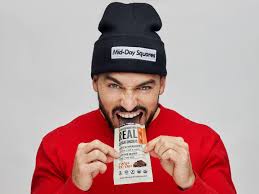
I'm 30 in less than a month, so I'm turning dirty 30, which is kind of scary. But my name is Jake, and I'm one of the co-founders of Midday Squares, which is a chocolate bar company. But I'm also the chief rainmaker, and I think that that's something really unique that a lot of companies don't have, or they call it new business development, which I think is too corporate of a name. Um, and I love reading, I love playing pickleball, and most importantly, my mission is to spread good energy around the world and show people that you can win by being yourself every day.
And I wasn't myself till I was 25. So 25 years of my life, I lived kind of in this societal cage. Not a real cage, like a mental cage. So elaborate a bit on that.
So before 25, who were you back then? I was just trying to follow society's pressure. And I think that the system that we have right now in place— school is great, and I'm a big fan of school, actually. I'm a big fan of learning.
And When I was there, I was a class clown in high school, and I actually was being myself. I was killing it. I was throwing water balloons at a professor. I was having so much fun, but I was failing academically.
And I got a lot of attention from people because they liked me as a prankster. But when it came to graduating, I was the only one not going to graduate. And my parents were called into the principal's office. " I had to get my, I had to get my, in quotations, shit together and take life seriously.
And that was the moment I said, screw it, I'm gonna, I'm gonna change. I don't want to be the class clown anymore, even though it was who I was and it was authentically me. I decided to go be like everybody else, do well in school, get a job, have a family, and that's life. So I studied, I studied in business in Marinopolis, and then I went to Western University to study to be an actuary, which is deep statistics and math, and I hate that.
But why I did it was to show everyone that I'm now a smart person. So I did that for 3 years at university, and I realized in my third year, what am I doing? Why am I breaking my back, crying all the time, failing to do something that I don't want to do? And I'll never forget, I applied to every investment bank that summer, the third year of the summer, and not one investment bank allowed me past their first interview.
And it could have been the way I dress, because I dress like a funky guy. I don't wear suits and stuff. But no, I think it was just because, like, academically I was horrible, and I felt insecure about that. And I was sitting on my parents' couch one night, I'll never forget, and I put my feet on the table, and I was sulking like a baby I didn't get a job.
All my friends had jobs. I was failing in school. And I said to myself, what do I do? Like, I'm a loser.
Like, you kind of look at yourself in quotations as a loser, like a failure, right? And Shark Tank was on and I was watching Shark Tank and I was looking at this guy. He was pitching his dream, like literally 50 years old, killing it. And he had 2 mortgages on his house.
He had 3 kids, I think. And yet he had so much responsibility and accountability, but he looked so happy and free. He looked like he was being himself, even though he had so much on the line to risk. And me, I'm sitting at my parents' house where I can get my laundry done, my food on the table, and I just don't have a job.
And that's what I'm complaining about. I'm complaining that I'm doing things that I don't want to do. And that was the moment I said, I'm done with this. I'm done with following whatever society guidelines is.
I'm going to try to be me for once in a very long time. And that was when I started my entrepreneurship journey. And I said, I need that freedom. It wasn't about making money.
It was about I need the freedom to be myself every day. Wow. And then fast forward 4 years of that, I learned slowly every day to be more and more myself. And when I turned 25, I officially became like, I'm done with this.
And I'm fully going, as they say, guns blazing, being myself unapologetically. So what first business did you start? But wait, the first question, did you actually graduate? So I graduated university.
You did. Not with an actuarial science degree. So I dropped out that year after that Shark Tank thing. I dropped out of actuarial science.
I was okay with dropping out. I was like, I'm killing it. And I went into econ, graduated with an econ degree, economics. And I was just doing that to make my mom proud, to be honest with you.
Otherwise, I probably would've dropped out. The school is great. Western University, amazing space. I met all of the people that I kind of work with today through that network.
Okay. But I also think school's important 'cause you bring together people to actually get stuff done. So you actually have serendipity from meeting people, right? You're put in a zone where you're with a ton of people your age or a little bit younger or older, and people are trying to do cool things.
So you get to meet a ton of folks if you take that. Networking, basically. It's the greatest networking game in the world, but most people don't realize that. I realized it was a powerful networking game, and I started going out a lot, having friends over, organizing parties.
And the reason why— I wanted to meet more and more people. So I think that was a great lesson from college, and I'll never take that back. And I think that was the greatest thing I could have taken from the 4 years being there. And I think, remember, you have— you started a business.
I think it was in clothing. Fitness first. Did very well. I actually was like— I was jacked at the time.
Now I'm not as jacked. I still have some muscles, but No time to work out. Yeah, no time to work out as much. I'm trying.
But I basically did an outdoor boot camp fitness, you know, gym, let's call it. And I would train people outside and run classes and take my shirt off, go on Snapchat, show it, and everyone loved it. And they wanted to be there. And I was making like $70,000 cash each summer, cash.
So the government didn't know. So I was like making $150,000, right? And I was crushing it, on top of the world. But then after 3 years of that, I kind of lost passion for fitness.
And I was like, I lost the love I had for it to want to help people. And then I was like, I don't want to do this anymore. So I closed that and I launched a clothing business that was also linked to throwing parties on college campuses to basically get people together to know the brand and then try to sell them clothing after. And it failed.
And I went bankrupt on that. I lost $86,000. And then my sister, my brother-in-law approached me in July of 2018 and they said, we want you to be our third partner in this chocolate bar business, Midday Squares. We need you to blow it up.
You're good at building brands. We're good at operations. If we come together, together. We built a very successful business, and I joined July 5th, I think it was, 2018, and we launched August 4th, 2018.
So you joined July, and in August you launch. They were working on the product for like a year before that, minimum. So like, they were actually developing the product for a while, but they needed somebody to help them build the noise, make, make the brand relevant. And that's what I'm good at.
Like, they thought of you like, oh, they're like, Jake— not even because I'm their— my sister's brother. It was, this guy is a machine with building community and being able to make noise in an crowded industries or crowded spaces with no budgets. So they're like, this wizard needs people that are good at operations, and we're not good at building brand, but we're really good at operations. If we put those together, it equals a strong tripod.
Exactly. So that's why we partnered together and we went into business, and, and we said, screw it, we're gonna blow this up and build the next biggest, hopefully, chocolate snacking company of this century or decade. So the idea of building something big, was that from the beginning you got all of the three of you got together and said, you know what, we want to make something big, huge. Like, like, so I, I, I didn't— I was just like, yo, this is a great time to kill time.
I have no job at the time. And I was like, I closed that business and I was like, I need something to keep me busy. And my ex-girlfriend at the time actually broke up with me out of nowhere, so I was kind of depressed. So I was like, I need something to keep my mind shared.
And I was like, they kept on telling me this could be massive. Lesley and Nick were like, my partners were like, this can be a big opportunity, it's going to be a massive shop coming. I was like, oh, okay, whatever. And I'll never forget, they said, we're going to do $250,000 in our first year.
And I was like, there's no chance we're doing $250,000. We're not selling that much chocolate. No one knows us. We're not popular.
We're average folks, you know? And like, they're like, well, that's your job to build the hype. And I was like, yeah, I could do that. In my head, I was like, I can't do that because that's a lot.
And then next thing you know, I think our year one, we did $1 million. In year one? Yeah, or like $900,000. And I was like, once I saw that, I was like, hey, there's something here that actually has, you know, when you have methodical thinking and execution from good operators and you have a brand that can actually resonate, the sky's the— like, there's no limit, right?
And it's basically, there's no ceiling on top of you. And that's what happened. Fast forward to this year, we're hoping to do $30 million. So we've come a long way.
And then we hope to jump to $60 or $70 and just keep growing. And again, nothing's impossible. And people at the beginning would say, there's no chance you're going to make it. And they're like, there's so many chocolate bars, there's so many brands, and it's so expensive.
But being an entrepreneur, and if you have the appetite for risk, and you believe in yourself and you have conviction, you could do anything. Yeah, because that was my next question. Like, how do you know— there's so much competition out there in terms of the industry for the chocolate. How do you know you're going to make an impact, a significant impact at least, you know?
Great question. So in food, there's 40,000 products on a shelf in a typical Walmart, let's call it, right? So there's 40,000 different products that you're competing with for space on the shelves. There's limited space.
And then on the top of the 40,000, you have many other hundreds of thousands of products that just aren't in that store, right? So there's limited space, there's so many products, there's so many brands out there, and you get lost in the mail. When we built this product, the product was— it was very good. So the product actually made sense in the sense of it had product-market fit.
So that's the most important thing for any business. You can't build a business without product-market fit, or you might be able to start a business without it, but eventually over time it will collapse. So my partners actually made this product many, many years before that. They worked on it and they knew from data that it actually had potential to grow because chocolate's a big industry and the health bar market's huge.
So that That was number 1. Number 2 was we told a great story. Our whole idea was if we could build deep, great storytelling, then we can garner the attention of the consumer at a way less expensive cost than, let's say, Hershey's does, right? And what we need to do is just tell a story that emotionally connects and relates to the consumer.
And what I told my partners was, this is my whole pitch, I was like, we can do 2 things. We can either do the typical marketing, sell our chocolate bar, tell them it's vegan, gluten-free, delicious, that garbage marketing, in my opinion, that just is not real content. Or we can basically make a reality show on entrepreneurship. And they looked at me like, what does that mean?
I'm like, well, let's take the Kardashians meets Shark Tank meets Elon Musk. And what I meant by that was let's take the drama from Keeping Up with the Kardashians because we're a family business. We don't have the posh life of like the Ferraris and the Rolexes and all that stuff, but we do have the family drama. If we take Shark Tank and we take the idea of building a business, but we show people not just raising money and that stuff.
We actually show people how we build the business. They never see that, right? Yeah. So they'll already want to see it because Shark Tank was so popular.
So people obviously loved entrepreneurship. And then I looked at Elon Musk and I said, he's one of the most prolific figures of our last 20 years, let's call it. And his social media following is cult. The reason why it's cult is because he's unapologetic.
So he's himself. People either love or hate this guy. The good thing is, is you don't need everybody to love you. He needs, you need a certain base.
49 chocolate bar. So I told them this whole pitch and I said, we're going to document and share the good, the bad, the ugly of how we built this business, showing you everything as the consumer so that you feel like you're part of the journey. That way, when you go to Walmart and you see, go to the grocery store, IGA, Walmart, Target, wherever you are, and there's 40,000 products on the shelf, you don't see a chocolate bar. You see a brand that you care about, that you feel like you're buying from a friend, a neighbor, or a family member.
And that's how we decided to launch our marketing. It wasn't costly. It wasn't that we were spending more money. It's that we were telling a story that related to human nature.
We told the story of David versus Goliath. We told the story of the underdog. We told the story of 3 millennials hustling their asses off to make a dollar a day, just to bang it out, and that relates, and you want to get behind that brand. And I think a lot of mistakes that happen in CPG, which is consumer packaged goods, the food and beverage world specifically, is brands have trouble connecting to consumers.
Consumers are going to the grocery store with the idea of buying on price, function, or taste. They're not buying on emotional connection with the brand. So I introduced this fourth thing saying, what if we had all the price, the function, and the best stuff, but what if we just had the emotional connection too? Slowly we started doing that.
Next thing you know, we didn't just have one space in the store, we had two spaces, three spaces, and our sales just kept going up and up and up. We never had to pay for that visibility. It's amazing. All we were doing was investing in our own content and our storytelling.
But I'm impressed on how did you figure out, okay, we're gonna tell a story. And I think you're more like out there than Leslie and Nick is your brother-in-law. They're more like introverts, I would say. So then they agreed to embark on this journey with you.
Oh, they were skeptical. Like, they're still introverted. Like, they're on camera now a lot, but at the beginning they said, absolutely not, we're not doing this. But I said, this is why you brought me in as a third partner, was to build a crazy idea.
And what did I do? I did that. And you're telling me no now? They're like, we're not going to show our private life.
We're not going to be on camera. It's weird. It's uncomfortable. People are going to judge us.
And I said, just give me 3 months of your time. If you don't like it after 3 months, I'll leave. That was the whole comment. Or we'll hire a CMO.
And they start doing it slowly. They start to see how consumers start to relate deeply to the content, even if it was unfiltered and raw and not so great. People loved it. Next thing you know, they're on camera every day now.
5 Years later, they're literally obsessed with the camera. So it's not that they act different. It's that they just got to realize that who cares about what people think? If you are just yourself, then you are your best version.
So then you are showing the world your best version. That's not to say you're not going to cry on camera. You're not going to say stupid things. Things we do.
But that's real, that's authentic. And authenticity is the, the key to relatability and trust. So they now believe in it hardcore, and I'm grateful that they gave me 3 months to try that out at the beginning. You mentioned that authenticity, vulnerability, and transparency, like, this is the future currency of any industry.
So that's what you mean by that? Show everything, everything open. But what is— what if an entrepreneur, like, they're having that roadblock? They don't want to open, they don't want to show their family, they don't want to show the bad side, or they're even an introvert, they're very shy.
How do they go about getting out there like that? So the way that we do it, the unfiltered, raw, like really share everything, is not for everybody. And not every brand should do that, or entrepreneur, or marketing company. And the reason being is because if it's not authentic, it's going to come off weirdly.
And I would never tell someone to force them to figure out how to, to do that. I think what's important is to understand what's authentic to who you are. If it's about sports and you want to talk about sports, talk about sports. Don't show therapy sessions and breakdowns like we do.
If it's about, you know, a fintech company and you're helping people make money, let's just call it, or saving them time, tell that story, but tell it in a real form. Don't tell the, you know, the typical commercial that you see. Oh, we're going to make you money. That's boring.
People don't relate to that. It's not transparent. Show a little bit of the journey, but don't go into the same thing that Midday Squares is doing, because what Midday Squares is doing is it's in our DNA. It's who we are, and we accepted that authenticity.
But if we were to try to be like, like Mars, it wouldn't work. Or if we tried to be like, you know, Nike— I love their storytelling, but we're not telling that same exact story. We're telling a different story, still very principle-oriented on core values that are similar, but the story is different. I think that you ought to find your authenticity.
Once you click at your authenticity, start sharing that story. And it doesn't have to be about your personal life. It could be about anything that your business means authentically to you and to, to what you stand for. Did you have to go through maybe some kind of a coaching a little bit to guide you on your messaging, on what you wanted to put out there?
Are you just—. No, no coaching on messaging. Coaching on communication in the sense of between us as partners. So we see a therapist once or twice a week as partners, and the reason why we go together is to over-communicate and understand each other at a very deep level and go through very hard conversations that we have to have.
So I think that that's where I believe in, you know, the power of a business is in its communication, the strength of its communication, because if you don't have good communication, everything will fall apart. Exactly. You know, if you build tension between each other as partners, eventually you're going to want to, you know, leave each other, or you're going to want to break the company because you're not going to be able to deal with it anymore. So for us, that was the best investment we've made to date, was to hire a therapist, um, like I said, mandatory, once a week, in good or bad times.
And even if things are going amazing, we still go. And the reason being is because we're committed to the partnership. We're also committed to staying family members. So that actually helps us.
But from a coaching standpoint of what we post on social media and our lives, there's no coach. It's just what do we like? Does it make us feel a certain way when we watch it? Even if it's a bad thing, like a failure we're talking about, what does it make us feel?
And if it makes us feel an emotion, we then let it out because somebody else is going to feel an emotion from it. Very nice. So that way you were able to create a fan base. So for those who don't know what that means exactly, how would you describe a fan base?
We like to say our thesis is build fans rather than customers in our business. So focus on making somebody care a lot about your business. And a customer might just buy your product and eat it or put it on, and they don't care at all. They're just buying it for the sake of it fits their lifestyle.
A fan cares. A fan is emotionally connected to you, your brand, or whatever your product. And they will go a long way for you. They will get you into— in our case, they've gotten us into retailers.
They've gotten us investors. They got us articles in the news. All because they just want us to win and they want to be part of that winning. And I think that that's the difference between a fan and a customer.
One's valued, in my opinion, at 5x than a customer. Don't get me wrong, customers are great too. You need them both. But I think at the end of the day, if you could build a lot of fans, your company is worth a lot because it's almost impossible to build a true fandom in this world.
But how do you do that? What if we're in a boring industry? How can somebody in a boring industry— or because chocolate, it sounds like fun, you know, chocolate, everybody loves chocolate— but in a boring industry where the client, there's a big disconnect, how can an entrepreneur build such a fan base? You got to think about how you can make someone feel something.
The moment you get an emotion, you access an ability to build a fan. And it could be an emotion that, let's say you're doing a car business, I don't know, a car mechanic, It's not that interesting. But what if you were that, like, cool shop? What if you were the shop that people enjoyed coming to?
Like, instead of just dropping off your car and leaving, they actually enjoyed staying. They enjoyed having fun. They love the stories that are shared there. They love the service, the way that people talk to them.
Like, there's so many other ways to share a story and build a fan. It's just you got to find it. With chocolate, it's obviously a little easier because Willy Wonka's a thing and, like, it's good vibes and you could be a little crazy and excessive. But with other B2B businesses, if you want to do a B2B business, you just need to find what is a differentiating factor and what's a differentiating emotion that you can build through your story.
Once you find those two, you're guaranteed to give yourself the best chance at building a fan. It doesn't guarantee you're going to build a fan. But I know that there's a place called Gordon's Tires and it's a tire shop in Montreal. They have one in Montreal.
They have a bunch of them all over. And I went there one time and the experience was just unbelievable. And I went after and I called my parents. I said, you wouldn't believe how good this experience was.
Because I've had poor experiences in other cases. So I talk about Gordon's. I'm a fan. I go there.
Think about it. They turned me into a fan just by the way that they treated me and the way that the whole place looked and the way I walked in. It was very easy. They wanted to help me.
They wanted to buy. It was just the ambiance, the environment. I became a fan of that. That's a boring industry.
But they managed to build a fan. They didn't go on social media, show the behind the scenes of building the business. No, they just made me feel a certain way. And same thing goes for a lot of other companies.
I think cosmetics does a really good job of building fans and companies like Nike. Nike, you buy the shoes for $150, $200. They cost $20 to make, maybe less. But the story that Phil Knight and his team has told for the last 40 years has been the underdog story, the motivational story, the idea that they bet on LeBron, they bet on Tiger Woods, Michael Jordan.
Some of the greatest athletes of all time, but their stories weren't so linear. They went through hardships to get to where they are, moments of adversity, but Nike gets behind them on those adversity moments. It makes us as consumers say, "I love this brand. " That way too, but you're never going to please everybody, so stop trying to if that's the case.
Yeah. It's a lot of fear, I would say, that a lot of entrepreneurs, they feel, or maybe they don't even know how to get that messaging out there. That's why I think a lot of coaching, I think they're trying to help people on how what's the message? Did you have to go through a lot of testing to see what works?
So that's something that entrepreneurs have to bear in mind. I think we test with a lot of other things. With content creation and storytelling, no. Um, I— the, the only speedometer that we use, I guess, to look at things is does it make us or our team feel something?
That's it. Well, that's very good. So the content can go all over the place, and again, it stays true and genuine and real. And as long as it's part of our core values in terms of what we believe in, then we release it.
And we might get 10 views, but the next video might get 5 million. And that's what we kind of learned, was what made us feel a certain way and did it do well. If it didn't do well, then what went wrong? What, what maybe wasn't the right, you know, caption, maybe it wasn't like title, maybe the music was wrong, all these other things.
But in the end, we always go by the Spelmer— does it make us feel something? If it does, then we release the that. Okay, now let's talk a little bit about the finance. The financial, uh, first year you made almost $1 million, right?
Not profit, but yes, sales, revenue. Yes. Uh, then you decided— is that when you decided to raise capital, or—. Yeah, we needed capital.
And the reason why we needed capital was because we built our manufacturing plant here in Montreal, and we're super proud of that. That's something that not a lot of food companies do. A lot of food companies go to co-manufacturers, so they have third parties do their manufacturing. So for us We tried, and 26 co-manufacturers were unable to make our product, and the best ones in the world, actually.
So we had an option: either change our product like everyone else's product, make it like everyone else's and just do good marketing and branding, or build our own factory, take the risk, and build custom machinery that could actually do this at scale. And my sister chose that at the time, and she had to go build out the factory and get machines from all over the world. Took 3 and a half years, and then now we are in our factory. But at the time, in order to grow, we needed growth capital.
To continue to grow because if you didn't grow, then what's the point of having a factory? It just burns money every day if you're not using it, right? So at the same time as we're building and figuring out our margin, we needed to get growth capital to pump our sales and our revenue and our marketing because if it doesn't grow, then we're burning way too much money and our business will close even if the factory's not at operation. So we had to raise money from venture capital out in the US who helped us.
5 million on our first round. 5 million, then $10 million. 1 million from debt financing for the facility. Wow.
So a lot of people are wondering, like, you guys are so young, like you're in your 20s, almost 30. My partners are 33, 34, I think. How do you figure all this out? How do you know, okay, you know what, we're burning money here, who do we need to speak with in order to raise capital?
So I think two things. I think we eat dog shit every day. I think it looks glorious sometimes from the outside. Midday Squares is becoming a very successful brand.
I think we've had a lot of growth, you know, and like I said, like, you know, this year we'll probably sell more than 15 million bars just this year. Like 15 million, well, like actual bars will go out. And then the year after that, hopefully 30 to 40 million actual physical bars, not revenue, more than that. But The problem is, is we're doing this against the odds.
And we deal with a lot of problems every day. And it's literally a roller coaster up and down. And a lot of the problems are firsthand problems we've never seen. So we just try to figure it out.
And I think with the raising money, what I learned was building out loud, sharing your journey publicly on social media, on LinkedIn, on Instagram, TikTok, you know, Twitter, whatever you want to call it, all that, all the platforms, you give ability, you give an ability for people to get a glance into your company, a glimpse into your company and see what's going on. And that way it's never a cold intro because they've seen what you're doing. They've either appreciated or not appreciated it, but at least they know you. So when I build out loud all this stuff, I share some of our financials, I share some of our, you know, wins, some of our losses.
People are like, oh, I want to meet this person. And when we raised money, it was very easy because we had a ton of groups be like, yeah, we're interested to talk. So then we just had to pick the group we liked. So that was really something powerful.
I think going forward for any business is if you have the ability to build out loud and it's authentic, then go do it. Elon Musk has been building out loud for 20 years. His companies are worth a lot of money. He is a marketing engine just himself.
Yes. They don't pay for marketing, Tesla. No, he is the marketing. So I looked at that and I said, can we do the same thing?
And that was it. I said, what if we're marketing engines? And we're not famous like Elon, obviously, but we're getting, we're getting closer, closer every day, a little bit more, a little bit more fans here. If we expand that in 15 years, we'll have a massive fan base, like to the point of millions of people.
And, you know, I always say to people, we were average people that started a business that just wanted to work hard and build something special. But we're showing you what it looks like to eat dog shit. And I say dog shit every day. I just keep saying it.
It's an analogy because there's so many adverse moments and hard moments, but we show you those. So you kind of feel like, wow, how can I not respect or cheer on this company to want to win? That's how we're building the true fans. So you were able not only to attract the investors, you had like not just one but many for you to choose from.
Yeah, and we still do. Yeah, like every day I'm on the call at least 2 to 3 times a day with new funds just to, just to make friends. Um, we're about to go probably raise— we don't know the exact number, so if, if it's a different number in the future, apologize— but between $20 and $40 million. And what you want to add Yeah, on top of the 17, I think.
On top of 17. So we want to add. And the reason why we need to add is to go and really grow fast and put the gas on the pedal. But that's only going to happen in 12 months.
But already what we're doing is building out loud. And people that can fund that journey are seeing what we're doing. So they're getting a very big part of our journey. And when we do talk to them, they're like, oh, we know a lot about you already.
So they're fired up. They're excited to meet us. I think that that gives us an advantage. But if you're a solo entrepreneur, it's really hard to do all of these.
These things. And that's why my partners and I, we all do very different things. So we, we have the ability— I have two other partners, so they're focused on ops and I'm focused on building out loud. Exactly.
So my whole job is to just make friends and build out loud. I spent 24 hours of my day thinking about doing that and executing on that. Not everyone has the luxury of that. Yes.
So, uh, based on your experience now, the way— the fastest way to grow a company, it's through that. Raise capital and then just put the accelerate. I don't think you need to raise capital. Some businesses do.
And trust me, once you dance the venture capital route, it's dangerous. You are on a treadmill because those venture capital gives you money with the hopes that you're going to return them big money in a short period of time. So they give you growth equity, growth monies. They take equity in your company and they give you growth to go pump up your growth.
But if you don't hit it, guess what? But it's not so beautiful for everybody. And in time, some people sign terms where they give up their board control. They give up all these things, which is dangerous because then you can get fired from your own company.
So if you're going to take VC money, don't take it because it's hot and heavy and you get to be put in the press and the media and all that stuff. No, take it because it's the last resource or it's the resource that's the least expensive, in your opinion. For us, banks wouldn't touch us at the beginning. They still probably wouldn't touch us.
But the venture capitals were open arms and they were ready to play ball. But my partners negotiated crazy terms that benefited Midday Square, like the company, rather than just benefit the venture capital funds. And I'm all for venture capital. It's what drives our, you know, the world forward faster, to be honest, in terms of business and sometimes a lot of failures as well, unfortunately.
And now you're on your way to make $100 million. That's your goal. That's your next goal in terms of revenue. How long do you think it's going to take you before you get to that amount?
If all goes as planned, between the next 2 and 3 years—. 2, 3 Years—. 2 To 3 years from now, we should be able to get there, as long as everything goes as planned. Like I said, there could be major setbacks that I don't know about, but if we stay focused, execute, and keep building the way we're building, $100 million isn't far.
Looking back a few years, do you believe that you're talking about $100 million like it's not a big deal? Did you, like, let's say when you were 25 or 26, let's say, did you think about that? Like where you are today and where you—. No.
If you were to tell me $100 million 4 years ago, I would say you're out of your mind. I would say that's not even possible. That's for only like elites, elites, elites. Like I thought that was like for the Elon Musks only of the world, right?
They're in the billions and trillions. But I started to believe it as soon as I started to see our operation come together, as soon as I see the fandom start to build and I start to see all the hard work that everyone on our teammates are putting in. And how much effort everyone's working. And when you put that together, the magic is created.
It's not guaranteed. And tomorrow we could fail and the business can close. But, and I've accepted that, by the way. And I think it's important as an entrepreneur to accept that there is a possibility of failure.
But I think to not harp on that is a really important thing. And for me, I've already learned anything I wanted to learn in life through the last 5 years, the hardships I've gone through, what I've seen, the dirtiness of the world, the corruption in certain major, groups that I'm not going to get into today, the way that people raise money, the way that people market, I start to see a lot of it because I'm experiencing it. So I've already learned the lessons, the greatest lessons I probably could learn that you can't even learn in school. So I'm grateful that I'm privileged to have been on this journey.
And wherever it takes us, whether it takes us to a billion-dollar business or takes us to zero, I have learned a lot. And it, no matter what, will be a win. That being said, I'm gunning for the unicorn business, 100% to go, 150% full throttle to get to the top. But we will, we have a chance of dying on the hill, but in order for us to die and close this business on the hill, you're gonna have to drag us off.
So we're clawing no matter what. And I think that that's an important trait for entrepreneurs to understand is that failure is possible and not to fear it. Because the moment you fear failure, you change your actions and you go into defense rather than offense. Offense is really important as an entrepreneur, solo or multiple entrepreneur.
To build a business. Amazing. So now it took you about 3 years to build a factory, the plant. So now it's finished, right?
It's 90% automated, I believe. So we still got 10% to go, but it's functioning. It does 50,000+ bars a day. What does that mean, automated?
So it means machine— everything's done by machines. There's humans? No, there's humans. There has to be humans.
Amazing. Our teammates are amazing. Our production associates are awesome, and I love them dearly, and they're, they're the reason why we have chocolate bars leaving our facility. But The machines scale it quickly.
They produce the product fast and at the right quality and scale that we need and margin profile to be a sustainable business. So automation would mean that like nothing's touched by the hand. If you get 100% automation, it's never touched by a human hand. It's only maybe packed or put in a box, but it's not— the bar doesn't get touched.
That's where we're going. Perfect. Once you hit 100%, I mean—. Yeah, because then the whole business makes sense, right?
Then the risk we took made a lot of sense, and our margin hopefully will be very high, higher than other competitors, because we decided to take on the risk of building a facility rather than co-manufacturing. And what is the typical margin for the industry? So we're in the refrigerated bar category. I'd say between like net margin 40% max, 30 to 40.
At scale, I believe we can get to 60%. That's pretty good. 58% To 60%, which is way higher. It's 18 points, 20 points higher than the competitor.
Okay. Right now, we're at 50% gross margin after trade spend, not including outbound freight. So we're close. But we still have about a year and a half of work to do to get to that margin profile that we want to get to.
When you raised the first $10 million, you said something in a video that you had to raise $10 million in order to hire a $1 million dream team. You know, your team that you hired. Were you involved in that process of hiring, putting that team together to be able to sustain the growth? I was.
I helped them. I helped the team find. I didn't really do much work with that. My partners did a lot of the hiring.
They found—. They're the operations. Yeah, because they deal with— they have to deal with those executive positions. So they work with me.
I'm like very independent of Midday Squares, my company. But my focus is to make friends for myself, which then being brought to the brand. So whether that be retailers, investors, journalists, I build those relationships and eventually my team needs them. So they ask me for them and I bring it to them.
And then it's in a very genuine circle and it builds a circle of trust as well. And so for me, hiring these executive positions is like, yeah, I could have given— I gave my opinion on certain things, but at the end of the day, they were working with my partners tremendously. So they had the final say on that. We hired a bunch.
Some were really, some were really wrong hires. And then today I believe we're getting closer and closer to the right hires. And we've done a good job and the current executive team is phenomenal. And they're very experienced people.
We paid an arm and a leg for them, but they deserve every penny because they're amazing. Are you guys the youngest in the company? All the executives, they're like older than you? I'm probably one of the younger ones in the company, but we have some like 24, 25-year-olds, maybe a 21-year-old at a time, you know, but most people are between 28 and 40.
We have some people in 60, but mostly 28 to 40. It's common now these days, you know, in companies, a lot of younger people. But we like the experienced people. Yeah, we actually do.
And then they like, they like us because we're whack jobs and energy. It's like an energy drink every day. And talk to us about you guys, MDS, going to international. Yeah, goal is event.
So right now we're— right now we're 50% Canada, 50% United States, around. Hopefully by end of this year we'll be about 64% US to Canada and then eventually 80/20. But at the end of the day, we want—. Our goal since day one has been to build a global company, not a just a Canadian or American brand.
And that means that we're going to go across many different countries after we've completed the United States and Canada. That takes about 3 to 5 more years of work till we enter a new country. And when we enter a new country, the thing is we have to figure out manufacturing, and we also have to figure out the culture and understand the culture, what they like, what's the marketing they like, what's the type of, you know, shopping experience, all that stuff. That takes a long time to do.
And a lot of effort. So for us right now, United States is where a lot of the resources are going, but Canada is still a lot to do. We still have a lot more to do in Canada. And then after those two are complete, we're going to head probably to the UK is the next one.
And how did you know the right timing? You said, you know what, guys, let's go to the US. No, it didn't. It wasn't even right timing.
It was we got one of our favorite retailers to reach out to us and they were like, we want to stock your product. And we just took the opportunity and freaked out. And then so we were kind of thrown into it. Good and bad from that.
Like, it pushed us to do it and get the execution on the place, but it's also very hard. You know, that's a big country. It's not the same as Canada. I think a lot of people mix up that the consumers are the same.
They like similar things, but they shop differently and they care about different things at the actual purchase level. So we learned that the hard way. Did you need any special license in order to— nothing? We worked with, like, obviously we was open to a US, you know, company.
We opened a couple of things, like, you know, you had to deal with the— we're exporting, so it's obviously you had to deal with some of the government stuff, but it wasn't so hard. Hard. I think the hard part is, is people get lost in the US. They start spending and spreading their, their selves thin.
We focused on really building depth and trying to, trying to win region by region. Then that got all— that fell apart, that plan, because we got a great retailer called Sprouts that went national. And then from there, we just had to build and fight the typical hardships that would come with a company launching in a new country. And you also mentioned that you, uh, lended Target nationwide as well.
So then that was a big deal in order to produce quickly in the—. Yeah, Target is a key retailer of ours. They do a lot of volume. And we're grateful for their support.
And the timing that came on with them was perfect. It's been like 8 months or 9 months now. And I think at the end of the day, like, nothing's impossible. But at the same time, you got to be very careful going to the US.
As a Canadian business, you need to be careful because it's a shiny object. It's a huge country. They got a lot of consumption power, probably the most in the world. World, in my opinion, or maybe one of the most.
But things are hard there. It's different. It's more savage. It's more competitive.
There's a lot more costs associated. So you could burn through a lot of money quickly if you don't know what you're doing and how you're executing. And do you have a team that's helping you through, guiding you through? Kind of.
We're handling it. We're short-staffed right now, but we're handling it. Talk to us a bit about 2021. 2021, It was a very tough year for you.
You mentioned that in a few videos. What are some of the challenges that you faced in 2021? We went through a bunch of legal stuff, um, and we went through like an, a potential M&A deal, um, which we didn't want to sell the company. And then we had some legal problems with that company, um, and we did a lot of content creation and creative stuff during that time, which is really cool.
So the comp— the brand actually grew a lot. And, you know, then COVID was really hard on us because the retail angle Um, so we lost a lot of sales and teammates turned over very fast. So we went through like a lot of disaster, but I think 2022 was the hardest. And I'll tell you why.
2022, Um, of June '22, we actually changed our packaging from 2 squares to 1 square, and we raised prices 27%, and we actually worked on our supply chain. And the reason being is if we didn't change it, the company wouldn't have lasted because the price point we were currently selling at, we were actually losing too much money. So we did a change, and basically it triggered something called a UPC code change, which is basically you change your product enough that everyone needs to register it as a brand new product. You can't just put it in without registering as a brand new item.
So your data's erased from how you sell. And our barcode that we had on it was too small to scan in store. So when we shipped out the product so excited, the new product launch, it didn't scan in store. So the retailers couldn't register it.
That was a million-plus-dollar mistake. Wow. When all it would've cost is $20 to check on a website to see if this would scan in store, and we just didn't do that. And this is a mistake mistake that cost us over $1 million and months of effort and time to get the product back, sticker it.
You know, it was a disaster. Everything was falling apart. What happened? Did they return it or did they—.
No, they kept it. They sold through. Once they sold through a good amount, we were able to get them new packaging. Okay.
Um, but we lost a lot of opportunity. We lost a lot of fans. And the reason why we lost fans was because when a customer went to the store and they couldn't scan it out, they were just like pissed, right? They're like, screw this.
And then they would go again the next week and the same thing would happen because it didn't change. And it was very detrimental to the business and it almost tipped us over. But we pushed through and we hired a brand new team and great executors. And now we have way less of those style problems.
We have a lot of problems, but not that kind. Because a lot of times entrepreneurs, they don't understand that all those things that you have to go through, the challenges, the unforeseen circumstances, because you guys didn't— you didn't know this was going to happen, but dealing with them and overcoming them them. Now that's where the strength is. I think resilience is everything in entrepreneurship.
If you're not resilient, don't sign up for this game. And the reason being is it's not sunshine, this, this game. Even when you do make the big dollars, it's not as sunshine as you think. There's a lot of moments of absolute chaos and high amounts of pressure.
If you're not ready to deal with that, then this game is not made for you. And it's not to be arrogant or confident about it. It's that I've seen it firsthand from 3 businesses I've done. I've seen it from a lot of my peers who have done multiple businesses.
The pressure is unparalleled to anything. It's like being a competitive athlete. You have everything on the line, and one thing goes wrong, you're always one step away from something completely collapsing, which is everything that you— which is everything you believed in and more. And imagine that all being taken away snap of a finger.
So if you can't deal with that amount of pressure and you don't have that resilience to get back up and and, you know, or when you get hit down is to take it in, learn, and move and get back up after that, you're not meant for this. And it's not to put anyone down. It doesn't make you better than somebody or not, because I know a lot of people that are just professionals that are amazing at what they do and better than me in a lot of things, to be honest, better than me as a person, to be honest. But do they have to test themselves first to see what they're made of?
How much pressure can they take in before they— because how do you know? I think a lot of pressure or not if you're not in doing business yourself. Yeah, you have to go through it. But I think knowing like your, just your capabilities in life is important.
Do you have the ability to deal with pressure? Have you dealt with pressure well in the past? Like simple things, like even in a life pressure moment, like, you know, family-related stuff, emergency health, like these are things where you're going to deal with pressure. How do you respond to that?
And if you don't respond well, I would advise against going into entrepreneurship because it's high stress, high pressure, high speed. Um, so it's chaos and it's not for everyone. And that's why a lot of businesses fail, is people try and they're like, screw this, I'm done with this, I don't want to do this. And that's why you have very little unicorn businesses around the world.
And that almost happened to you too. Oh yeah, yeah, maybe many times. We've almost failed multiple times, like, like maybe 15 times, 20 times. What would be your advice for somebody right now going through a lot of difficulties?
And then they're like, you know what, that's it, I can't do this anymore. What would you say to them? I would say every great entrepreneur knows when to keep swinging or to put the bat down in baseball. And what that means is you got to know when it's time to shut a business and be okay with that.
And you also got to know when not to shut that business and keep going because your conviction is so high and you know that this is not the right— this issue is not, not the defining factor of the business. So if my piece of advice is is, is trust your gut and what your gut tells you, follow it. That's a good way to put it. Are you still seeing a therapist?
Still up until today? Yeah, every week, once a week minimum, maybe twice. But he's on vacation for the last month, so I haven't seen him. So I could use him, to be honest with you.
Were you— weren't you afraid to say that out loud? Because, you know, it's a subject that's a little bit taboo up until today. People don't say that they're seeing a I saw you posted something about you changed the name therapy, Singa Therapy, but then you said you see somebody for personal performance. Yeah.
So I think I used to be embarrassed of this. I think I used to think it was weak. It was meant that you had something wrong with you, but I was so wrong. I was actually— whoever goes to therapy typically wants to get better and wants to be better.
And that itself is a huge win in life. It's a huge thing to be proud of. And so I wear it on my sleeve. I tell everyone I go to therapy and I advocate I appreciate tremendously for it because therapy is the only reason why I'm here today with you is because I'm able to deal with pressure through it.
I'm able to go through hard conversations. I'm able to see perspectives that I would've never seen before. And it's important to work through communication, hard communication through a third party and having a safe zone. He's been a safe zone and a objective opinion.
And I think without that, like I said, I would be in a very different place in my life. You don't think you would have been able to make it through, like, where you are today? No chance. Like, absolutely no chance.
It's too hard. It's too crazy. When do we know it's the right time to go see one as an entrepreneur? The moment you feel you're alone and you feel like you don't know what to do.
Like, clarity is key, and a therapist can help with clarity. Very impressive. And if you had one message, if you want to summarize this discussion, give one message to somebody listening, what would you say? Embrace who you are because you are a superpower that no one else in the world has.
The moment you activate that is the moment you take over the world. This is called freedom. And I think the moment you continue to be somebody else is the moment is the moments that you continuously fail and struggle, which is why a lot of people unfortunately don't do what they want to do in life, is because they're scared to be who they are. Yeah, Gary V talks a lot about that.
Just be you. But sometimes it's not as easy because we're afraid of what other people think. What are they going to say? Do you read your own comments under your videos or you don't?
Most time, yeah. I try as hard as I can to spend and answer them. Them. Sometimes I get into a phase where I'm just too stressed.
Um, but a lot of the stuff that I do see from people that comment on my, let's say, my personal stuff on LinkedIn, super supportive people, super supportive people that, that just feel inspired and, um, are technically my fans, which makes me a fan of them, to be honest with you, because they're happy to support me. And a lot of time I try to get to know these people as well if I can, and I'll pick up the phone and call And the reason being is because these people are the people that are the reason why I'm here today and why Midday Squares has grown. And without them, there's nothing. So I'm grateful and I owe my life to those people.
But what about those, the negative comments, the trolls? I love trolls. The reason why I love trolls is because I used to get angry and I used to actually—. It used to kill me.
I swear, I used to be sad, cry, I used to get angry and I used to attack because I felt that the attacks were unjustified, which they are most of the time, probably 99% of the time. But I used to take it personally. Then I realized that it's actually a them problem, not a me problem. So it's whoever they are, like, they're going through something.
And if you look at it like that, then you can actually empathize with these people. And I actually check in on them to see if they're okay, because if somebody's that vicious or angry or mean or, or rude, I always say Hey, is everything okay? Can I help you with anything? And they get more mad, but then they eventually realize that it was they had a bad day.
6 Of the 10 times they had a bad day and they just took it out on me. So it wasn't actually about me. And then they become a fan of the brand. 4 Of the 10 times.
Really, you're able to convert them? Yeah, yeah. 4 Of the 10 times it's just a mean person. But you learn to kind of desensitize from it because the more you put yourself out there and you really gotta be able to, This is a really important piece for any entrepreneur.
The more you decide to put yourself out there, the more attacks you're going to get. And the reason being is because you're going to make people feel a certain way, and wherever that person's feeling, they can attack you for anything. The way you look, what you're wearing, um, the thing, the word you use, the, the stutter you have, the— for me, my slanted teeth. Like, whatever it is, they're gonna do and if they feel that urge, and there's no really consequence for them.
So for them, it's free rein. And for you, you can be the person that helps them realize that it's not okay. It's okay to be going through something, but it's not okay to attack others. And if you do it from a responsible standpoint, you can make a lot of friends because a lot of people have deep emotions already for what you're saying.
So they're already in an emotional state. When someone's in an emotional state, they could either hate or love you. Neutral people don't really do anything. They don't care.
But hate or love can turn into love, or it could flip the other way very quickly. But how long did it take you to be able to have that, uh, the mentality, the strength to say, okay, you know what, I used to be mad, from now on I'm not gonna be responsive? 3 Years, 3 and a half years of therapy. So it did— it does take some time to, to, to build up that character.
Yeah, because when someone calls you fucking ugly, um, or that you're a loser and die in hell and your company's gonna die in hell, like, it hurts. Like, it's your—. It's what you're— it's, it's everything you're putting your whole life to, that, right? So to not the looks, but the, the—.
Well, some people are—. But to the business that you're building. And, you know, my sister still gets offended by this stuff and gets taken back. And in, in one case, I'll never forget, someone put a mean comment on my, on my post, and it took me 6 hours to get over it.
So it was— I saw the comment at like 10 AM, only at like 4 PM was I ready to function again. Maybe it's not a good idea to look at the comments. I—. But then you're walking— your fear is getting kicked in.
So I, I face the fear. I said, I love myself, and in a good way. I believe in myself. I don't think I'm dumb.
I think I'm a kind soul. Like, it just took time to believe in myself. The moment you do that is the moment you access the ability to finally have your superpower, which is you. And once you're okay with that and you're comfortable, then these comments technically don't mean anything to you.
And the only thing that should matter to you is this person's suffering. Can I help that person? And that's your good to the world. That's you spreading your love and power.
And before the last 3 years and a half, 4 years ago, 3 and a half years ago, I would attack people and get mad and get into fights. And I just hated myself every time. So I changed that whole method. And still I get affected occasionally, but very rarely.
Impressive. Talk a little bit about your routine. I don't know, you're very busy, you're traveling all the time. You're going to New York, as you said, on Sunday.
What is your routine like? You just got married. You have a lot on your plate. How do you balance all of that?
Oh, I have no work-life balance. I'm a failure at that. That's for sure. I don't know.
I burnt out this year. I went depressed. I was really lonely. I wanted to just stop doing this.
I don't have the answer to that. I'm not good at it. My routine is that I go with the flow. I do whatever is needed to do to get this business to where it hopefully has to get to.
And I try to be a good person on the way. But I'm telling you, I'm disorganized. I miss so many things. It's tough.
And I feel very alone at times because even though I talk to thousands of people, I get to be put on TV, on radio, and all this cool stuff that's amazing, win awards, I still feel alone. Yeah, because you made the Forbes. Yeah, that was great. Yeah, I made the—.
I was on the COVID of the magazine. Elon, um, as part of him on the magazine. But I think what's cool is, is like having a strong support system is really important. But I think another thing is, is if you want to be an entrepreneur, be okay with being misunderstood for a very long time.
Yeah, people that are around you might misunderstand, you might laugh at you, might not for the sake that they're mad at you or angry at you, but they just don't get it. And it's lonely. Elon was lonely. Lonely.
Like, is lonely. Um, you know, there's people—. They—. Everyone talks about this stuff, even at the top.
It's a lonely road because you're doing something different. You're trying to build something very significant that not a lot of people have done. So how could you blame others for not understanding? You can't.
And it's not to make— say that you're better, or I'm better, or someone else is better. It's not. It's more just you've seen a lot of different things, so how could you unsee those things? And I think that that's I'm getting better, hopefully, at guiding my path because my path is my path.
No one's done it. Exactly. So I'm just trying to figure it out, pave the way as I go and see where that takes me. Things are going to go up.
I'm going to hit tons of potholes. Sometimes want to go backwards, but as long as I do right more than I'm wrong and I keep pushing. But are you surrounded by, apart from therapy, like other business owners that have, you know—. Yeah, I have great people in my corner, so my network's great, you know.
And this is me working on it. I meet other entrepreneurs, I meet other business leaders, I meet politicians, I meet, um, media people. I, I get different vast types of people to help me, and that helps me become a better person and make us a better business. So yeah, I'm grateful for my network, but you make your network, so you have to go do it.
No one's going to do it for you. I realized that 4 years ago. LinkedIn is a very great source. Powerful.
Yeah, powerful. Now people are just adding you every day, maybe. I think so. Yeah, I, I, I, I, I get a— I do a lot of DMing on there.
I don't— I have— I haven't answered all the DMs. It's—. Excuse me if you— if you're one of those people, but it's, it's tough too. It's a lot of work.
Of course, you have so much on your plate. Like, exactly, we can't expect you to, uh, answer everybody, but it seems like you still make time and then you do to that? I make time because without these people, I'm— I don't have what I have today, so I owe it. Impressive.
And I want to do it. Do you have time to read? Oh, it's my favorite thing in the world. I, I'm right now reading about the anatomy of the body, so like I'm trying to, I'm trying to learn about how our body functions from a muscle, muscle skeletal system.
So how your, your basically your myofascias and your, your muscles and interact with like joints and the reason why I hurt myself. So like, I kind of had to understand it because this—. I wasn't—. The doctors weren't explaining, nothing was explaining to me what was going on, and I had to figure out myself.
So I started reading like deep textbooks, and like, I became obsessed. And like, now I've read probably like 15 books about this stuff, and I continue. And I'm learning right now, I'm learning about like our glutes, so why they're so important as a— as a— as a— from a functional anatomy standpoint. But yeah, if without reading, I don't— that's my meditation, that's my— that's my learning, that's my way of becoming a better speaker, a better a better podcaster, a better writer.
And I'm learning, so I'm having fun. And what are some books that you would suggest for entrepreneurs or business owners? A book that I suggest is Big Little Legends, I think it's called. It's a great branding book.
Everyone should read it. I'm, again, I haven't read a lot of those kind of books in a while because I'm focused on anatomy and the way our body functions. That's not really relevant to people, most people. I guess it should be because we should learn how our bodies work.
I'll send a list to you that I've read. I've read a lot of books. And considering the podcast is named after the city, the Montreal Entrepreneur Podcast (now The Vault MTL), what do you like about the town? Montreal is a special city.
I travel the world and always come back to the city no matter what because A, it's home, but B, it's the people, it's the culture. It's how different it is than everywhere else. It's just so unique. And there would be nothing better than building a huge chocolate company globally, exporting from Quebec, and showing that Quebec could be known for not just cheese like Saputo or hockey or some other business like Couche-Tard, great business, but like, why not make it like what Hershey's did for Hershey, Pennsylvania, we do for Montreal and Quebec.
That's what we want to do. And I'm sure you're going to get there. Yeah. 20, 30 Years.
20, 30 Years. Was there any last questions you think that people don't necessarily ask you often on podcasts and you wish that they would have asked you? Is there something like that? No, I just think go be you, have fun.
Life's short. You're on a short vacation, so live it through no matter what you're going through. Be you. That's it.
That's the end. Well, it was nice to have you on the podcast, Jake. Thank you once again. A lot of great information.
Until next time. Great questions. Thank you. Thanks.
 Nicholas Sosiak
 Colin Worrell
 Lora Cerulli