Machine-generated transcript, lightly edited for readability. It may contain transcription errors.
Olivier, it's a true honor to have you on the Montreal Entrepreneur Podcast (now The Vault MTL). I can't wait to hear much more about you. Please introduce yourself and tell us what you do. Thanks for having me.
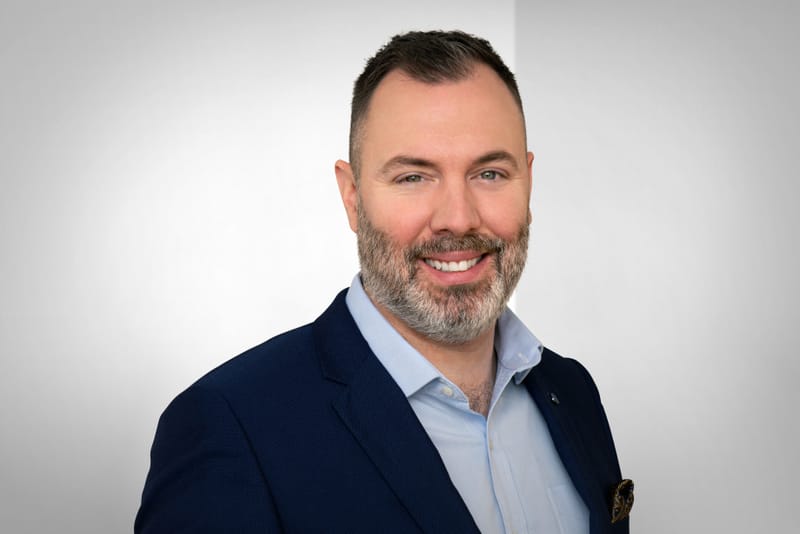
It's an honor to be here. So my name is Oliver. I am 40 years old, happily married and father of two amazing teenagers. I'm also the president of a wealth management company called Avis Wealth Management.
What is Avis? What does it mean? It is a Latin word that means time. Time is by far the most important resource that we have because you cannot buy any, you cannot rent any, you cannot steal any.
All you can do is enjoy it. So that was the premise to the name that we chose when we started this. I started this company with my associate Stéphane, with whom I've been working for 12 years now. And yeah, it's a wealth management firm.
We do not reinvent the wheel, but I do think we do things a lot differently. We work with a very limited amount of clients, so we do cater to them as much as we can. We spend a lot of time with them and hopefully we make a big change in their lives. Yeah, definitely.
I'm sure you do. And for us to understand the person that's sitting in front of me, the person that you've become, take us back a few years when you were— well, maybe a decade ago, let's say, when you were in your early 20s. Who were you back then? I became an entrepreneur at a very young age.
I always had that thing vibrate inside of me. So I started a business a couple of years ago when I was about 17 or 18 in production and promotions of events. And then I started working as an investigator in frauds and compliance. I used to love what I did.
I worked for some pretty big companies doing internal and external frauds until— and Brings me back to the start with why I started to see people around me that are near and dear to me started losing money with their investments for not the right reason, not because of market fluctuations, but just due to terrible advice. And I myself started investing at a young age, noticed that the level of knowledge wasn't as high as I expected it when I would sit down in front of people that were supposed to be investment professionals. And so I started to think that maybe being passionate about investing, being passionate about finances as a whole, it could be something very interesting that I could do. And so I went back to the drawing board, studied, studied, studied, and basically never stop studying because it's an ever-changing environment.
So I went back and started working in wealth management 12 years ago now. 12 Years ago. Yeah. So from that story, you knew in your heart that you wanted to do something in financing and help others.
Yeah, for sure. I mean, it's every kid's dream. It sounds cliché, but everyone says, I want to make an actual change in people's lives. I actually get to do it on a day-to-day basis.
So that's amazing. I mean, there's— what we do is such a broad spectrum that clients become friends and you get to know them probably as well, if not better, than they know themselves. So that's, that's what I love about what I do. And how would you define, like you just said, it's a broad term, financial advising.
How would you define it so that people that No, because a lot of people, they think, oh, financial advising, okay, maybe they sell the life insurance. That's the first thing that comes to, to their mind. How would you define it so that people understand? The worst term to define it would be selling, uh, and that's a big mistake that a lot of advisors do.
Uh, what we do, there's many pillars to what we do. So we're going to look into the legal aspect, we're going to look into the financial aspect, we're going to look into the protection aspect, protection of your business, of your family, protection of yourself. So insurance is tied into that. We're going to look into the markets, the investments, uh, the estate, obviously.
How are you going to pass down to the next generation in the most efficient manner? And you're also going to look into tax planning. A lot of what we do, and what I've been hammering left, right, and center since I started, is You don't create value with products. You create value with planning.
If on top of that, you're able to pile on the best products of the industry, then you've got a very good deal. But first and foremost, you want to plan everything out. So I always picture a project, a retirement, an estate as a trip. You do not start planning as you're driving down to your trip.
You want to plan your vacation ahead. So whether you're selling a business, buying a business, retiring, Preparing your estate, you want to plan ahead. So that's what I keep hammering to whoever wants to hear it. So for entrepreneurs, when should they start thinking about having somebody like you in their corner?
A month ago, yesterday, a year ago. I mean, the team that you have around yourself as an entrepreneur is going to pretty much determine how far you're going to go. Having an amazing accountant is crucial. Having an amazing lawyer is crucial.
Having an amazing notary is crucial. Having an advisor that's going to be able to quarterback each and every one of those professionals and tie everything into itself and make sure that everything is planned out is crucial as well. So I've, I've seen people that have amazing people working on the professional, uh, the corporate side of it and on the personal side of it, but like no one— the left hand and the right hands aren't in contact with each other. So you want to tie everything in to make sure that it's going to stick.
Kind of like what I aim to do with my clients is become the family advisor. So a lot of clients I manage for generations. So I know exactly how the wealth is going to be transferred. We know exactly how to be efficient because I know exactly what's going on.
Same thing with the business owner. You want to be— you want to make sure that your advisor is on constant contact with your accountant, with your fiscalist, with your notary, with your, you know. So that's what I aim to do, and that's very, very important. It's like a 360 vision type of thing.
Okay. Because you can't say that you've done a full-fledged 360-degree with someone without looking into the legal side of it. So my shopping list, as I call it, is extremely long, and a lot of people are surprised when I tell them the of documents that I need. But I mean, if I haven't looked into the legal side of it, God knows what's going to happen if you were to pass away or if something happens.
So I need to know about everything. Have you been divorced? Can I see the divorce papers? Can I see your will, your mandate, your buy-sell agreements, your shareholders agreement?
I get my nose into pretty much everything. So when somebody signs with you, Olivier, so you then, you have to meet with their accountant and then sit down and see Everything. Yeah, ideally I request a lot of paperwork because the more information I have, the more precise it's going to be. Okay.
So if I do a retirement plan and we stick with the plan, I can know in advance how much taxes you're going to pay in 2048. It's, you know, it's, but it's like a GPS. Yes. Oh, you should have turned left, we went right.
I'm just going to recalculate everything and make sure we're back on track as soon as possible. But yes, I do require a lot of info. The shopping list, like you call it. Yeah, the shopping list.
And what are, when selecting a financial advisor, what are some of the red flags or how do we choose one? It's an industry. I mean, first of all, you need to trust the industry as a whole. But most importantly, you need to trust the person that's in front of you.
You need to be in constant communication with them. What we do is not easy. It's complex. And we need to be able to decipher all of the information that is thrown at us or thrown at the clients and make sure that we're able to word it in simple terms.
Make sure you choose someone that has your best interest at heart. I mean, you have to care to do what we do. But how do you know the person? It's hard.
I mean, it's a question of gut feeling, but it's really hard. So, I mean, obviously the person has to be knowledgeable. They need to keep up with the ever-changing landscape that we have. So tax legislations are going to change, budgets are going to change, governments are going to change, the geopolitical tensions are going to change, whatever happens with them, the client's portfolio.
So we need to be aware of pretty much everything that's out there. So make sure you trust the industry, make sure you trust the company, make sure you trust the individual itself, and make sure that he's got the right knowledge and the right licenses to do what he's doing. You can verify licenses through the AMF or through la Chambre de Sécurité Financière or other governing bodies such as that. But that would be very important Someone who is going to come in and talk about products before assessing your situation is a huge red flag.
It's kind of like going to a doctor and you walk in and he says, okay, this is your prescription, please go now. No, that's not how it works. You need to assess the situation. You need to do a full body exam and then you'll be able to say what they need or don't need.
Would you advise somebody to, when choosing, selecting an advisor to choose somebody that's a bit— that has been in the industry for a long time? What about the new advisors? Make sure that someone has the support that they—. The support.
Yeah, they need to have. So choosing someone who works with a complete team, so who has access to, you know, a tax specialist or a notary or, you know, the whole deeper financial and tax planning support that they need is important. I wouldn't say— I mean, there are some I've met some amazing new advisor and I've met some terrible older advisor in my line of work, as in any line of work, there are some good and bad. But make sure that, I mean, going with someone who's referred to you is important because it's, you know where they're coming from.
But we've had cases like Earl Jones out in the West Island that did, I don't know how many decades of business with people without having the proper licenses. And in the end, the, He took off with money. So be wary of who you're dealing with. Do your due diligence.
You're not buying a cell phone. You're not buying a used car. It's kind of like asking someone to marry you before going out on a first date to say, well, here are my finances and we'll see in 30 years if you were right or if you did the right thing for me. So you want to make sure that you do your due diligence.
Have a chat with 3, maybe 4 or 5 advisors if you can. Ask people around. In Quebec, it's sort of— taboo to talk about finances and money, but it's a must. It's a must.
Why do you think that is? I have no clue. Success in Québec is taboo. People are always a bit— I don't know.
I don't know if it's jealousy or if it's— I don't know. I don't know if you've seen it. You're around a lot of business owners. So if you see someone who's got success, there's a part of the population that's going to be cheering for him.
And there's just the other side of the population that's a bit, oh yeah, we know he makes money before because of XYZ reason, and he must have had money from parents or stuff like that. So, but I mean, don't be afraid to talk about money. They don't talk about money in school. No, not a lot of people talk about money at the table.
I know my parents did not push me in any direction in terms of investing or financial knowledge. It was extremely limited to what we had in school. Probably, yeah. So I make it a must to sort of coach and have a discussion with my clients' kids about finances very early on, like I did with my kids.
Especially with our generation, they all— I mean, I've never even dreamed of asking my parents for a $400 pair of shoes when I was 12, but it's the new— reality now. They see Instagram and they see Facebook ads with people that are wearing, you know, $500 shoes. I had that issue with my daughter and my son, and they had the same response. I'm never going to buy you a $500 pair of shoes, even if I win the lottery.
This is how much I'm going to give you for shoes. Work for the rest. And they did. My daughter started working at 13.
—And my son started working at 14. And they're the first ones that said, why are you not doing like other parents do and just, okay, how much does it cost? Yeah, go ahead. Here's your new pair of shoes.
Here's a scooter. And then later on down the road, they say, you know what, Dad, I'm very happy that Mom and you told me to work for my scooter. I'm much prouder than my friends are because I bought it and it's my money and I worked for it. So, it's a question of mindset.
But it has to not be taboo to talk about finances and money. I like that. Yeah. So at the table, give me an example.
For example, for me, I have 3 kids. So when do I start talking to them and what do I say? How do we start? It happened pretty much similarly for my daughter and my son.
My son's older. He just turned 17. Just to hear them talk about what they want or what they need. And I started to do a list, especially with my daughter.
I did a list of every single thing she asked for and the price next to it. And after a month, I said, Alisa, come here. This is everything you asked within one month. This is the total cost.
So now you know why I don't often say yes. And she was like, wow, that much? Okay, so she realized that she was asking for a lot. Kids will be kids.
Yes. Same thing with my son. He likes Apple. I told him instead of You know, saving $1,000 to buy an Apple iPhone.
Save $1,000, buy shares of Apple. You like Nike? Instead of buying Nike shoes every year, put the same money that you're putting on shoes into the company stocks. Eventually, if you keep doing that, the dividends you get from your stocks will pay your shoes at some point.
So it's changing mentality. You like to drink that $7 coffee at Starbucks? Go buy Starbucks instead. Invest.
It becomes make sure your money works for you when you're sleeping. You can see your money as employees. So it's changing the mindset. We're in a world where we're bombarded by so many pictures or commercials daily.
You have to change the mindset. Yeah, I like that. Wow. Very, very, very insightful.
Because at school, like you say, they don't talk about money. Everybody— people have an idea about savings. But the intricacies of investing. Yes, they do know if we invest today, we're going to have more later.
But on how do they go about investing, most people don't know. No. And it's complex. It's very complex.
There's a broad spectrum of different types of investments. So you need to take the time to sit down with someone who's going to be able to guide you and decipher all of the information that's thrown at you. And word it in simple terms. But I mean, the important part, what I've always told my kids, no matter how much, no matter how, save money.
And if you can invest, because saving and investing is different. Saving money is for a nest egg. It's for your 3 to 6 months of living expenses in case you slip and fall and something happens. Investing is for your future.
Investing is for something that's down the road. So, uh, it's the difference between, uh, you know, an investment account and a high savings account or a high interest savings account. Sorry. So you're either saving money or you're investing.
It's different. But the important part is spend less than you make. Yes. That's the key to everything.
Is there a percentage? For example, I've heard people on the news, they said, okay, maybe put 10% away for your investment, 5% and save. They have a ratio of percentage they usually say. Yeah, would you have any, uh, take on that?
It depends on your project. It depends also on how fast you want to get there. Okay. And I mean, the dynamics have changed dramatically over the last 2, 3 years.
Yes, in terms of the available income that people have at the end of the month with raising interest rates, with the inflation. Um, inflation is going down, but it's about to go back up because of the price of gas at the pump. So, I mean, a lot of people that used to have a lot of disposable income have a lot less. People that are into real estate that had a good amount of money net after paying all of the expenses are now breaking even.
So it's a totally different dynamic. A lot of people haven't felt it yet because they're in fixed mortgages. But I haven't seen a lot of people whose rent didn't go up, whether commercial or personal rents. And same thing with mortgage.
So it really depends if you're looking at your retirement And you're trying to— let's say an entrepreneur who doesn't have a pension plan should be saving a good 20% of his money towards retirement because it's sort of matching what a pension plan would be doing, give or take. And considering the inflation, the high interest rate, what should entrepreneurs be doing at the moment? No matter what happens, a lot more as of now, but even before, that 3 to 6 months safety net is always important, whether you're talking about your personal expenses or your corporate expenses. It is a must.
And then you can think about saving strategies. You can think about investing with, you know, retirement. Obviously, not a lot of people are able to do everything at once. Yeah.
But I would start with this because no matter how much money you've stored away into, you know, RSPs or whatever, if you're unable to work for 2, 3, 5, 10 years, you're not gonna have any RSPs left at the end. That's for sure. So especially in the entrepreneurship world, you are your sole breadwinner. You're your own insurance.
So I mean, if you're not insured enough, if you're not covered enough, it could be detrimental to you, to your family, and to your business. So that's very, very important. Do you believe it's the situation, the economic landscape that we're in right now, is it going to get a bit better? You just mentioned that the inflation is about to go up, but What's your forecast up until 2024?
We're definitely seeing an economic slowdown. Even China, that usually has very big sustained growth, we were sort of hoping that China's economic growth would sort of compensate for the worldwide slowdown, but even they are having a slowdown. I've been keeping my eye on companies' earnings for about a year and a half because they're going to— Things are going to get a bit darker. Okay.
The raising interest rate, I mean, the cost of money is now an issue. It hasn't been an issue for so long. I mean, we've had rates, historically low rates, and money didn't cost anything. So a company that's going to burn through money now has a big problem because their cost for money has went up significantly, and that goes directly into earnings.
So earnings are going to start to slow down. You're going to start to see unemployment rates go up a bit. Okay. The GDP growth is going to slow down significantly and maybe at some point the recession has been looming for a while.
It's still not there. People are still spending a lot, which is weird because the economy is not doing as well and they don't have as much net at the end of the month than they used to. But at some point it's going to slow down. There's, you know, geopolitical tension.
The war is still not done. There's many, many things intertwined. But yeah, the company earnings is what I'm keeping my eye out for. It's like no good news, Olivier.
I know. Unfortunately. But the market is doing good. The multiples are stretched out a bit, but the markets are doing good.
And now with the raising interest rate, it is a very good time to start looking at fixed income investments because those investments are going to be very interesting. They're going to give good yields. What does that mean exactly? Fixed income?
Fixed income is like corporate bonds, government bonds, municipal bonds. It's sort of a, let's say a company needs money, they can go on the market and issue shares for people to buy, but they could also issue bonds where you know that you're gonna get a coupon every X period, you're gonna get X amount of percentage. 5 now. So it's a very good time to start adding that fixed income to your portfolio.
Even for some people that are more, I'm not talking about risk-averse clients, but even more dynamic investors should start eyeing a bit more on fixed income because it's going to become interesting and it's going to be sort of a safe haven, so to speak, if we do get a market pullback. But even if a recession hits, even if there's a market pullback, the only thing you should fear is how you're going to react to it. Because over the longer period, if you're this close to the numbers, you're going to say, oh boy, we had a market pullback of 10%, 12%. But if you look at it from a much wider angle and you look at it from a 5-year, 10-year, 15-year span, you're going to say, well, okay, it was just tiny turmoil and it's business as usual.
So you do not want to manage your money with your heart. You want to manage your money with your head. But it's difficult. When it's your money, you're sentimental about it.
So that's a very hard thing to manage, to not do mistakes and act impulsively. Yeah, exactly. But that's when you come in. That's where you're coming to, you know, fix the blind spots.
Don't worry about it. Let's look at the bigger pictures. You know, it's going to be okay. Don't quickly react and sell everything.
Oh, I don't know. And you want to be completely transparent with your clients and say, you know, it's about to get windy out there. This is what we're doing. You want to rebalance the portfolio.
You want to, you know, there's many sectors of the economy. They're all not going to do well or bad at the same time. Some of them are, they do, they tend to do best in high inflation environments and Some do better in— some are sort of recession-proof, so to speak. So there's many things you could do, but you need to adapt.
You need constant conversation with your clients to know what's going to happen and what you're doing with them and that you have their back so that they sleep on both ears. And earlier this year, a few banks from the States, United States collapsed. And I'm sure that created a shockwave over here. What have you heard?
And can something like that ever happen There's a huge difference between US banks and Canadian banks, but the difference is much bigger when you're looking at regional US banks, which are the ones that defaulted, and the Canadian banking sector. Here, it's really totally different. The rules are different. What happened in the US regional banks, you can— I ask everyone to look at their investment portfolios, see if they can find even 1% invested in regional US banks.
99% Of the people are not going to find anything. We do not have exposure to those regional US banks. So it made headlines. It was significant.
A lot of money was wasted with this, but it's not something that's going to happen here. We play by very, very different rules. It was a very good entry point to rebalance some portfolios because of the downturn. I had been building up a bit of cash with clients' portfolio to jump on certain occasions like that.
Everyone should always be keeping some money on the side to jump on occasions that are going to present like that. It was a good point to rebalance portfolios or to— It was a red tag sale, but we're not going to see anything similar to that happen here. I mean, it made headlines. It was significant.
But we do not manage the same way. And oddly enough, the problem with those banks is their business was a bit riskier than normal banks because they were in IT startups and stuff like that. But the way they managed the liquidity was too conservative. And this is what happened.
They were too conservative with the money they need to save. They went long term with, you know, fixed investments that were sort of there for 10, 20, 30 years. And when people started to say, okay, I want my money out, you're sort of, you're going to have to cancel what you had for 30 years. So you're going to be buying back your investment at less than what you should have.
And when everything started to go one after the other, we had the domino effect where a lot of people wanted to pull their money out. And that's what caused it. So it was, their business was more risky than other banks, but their savings were safer. And I would say too safe.
Too conservative. Too conservative for the environment. Yeah. Because usually we think the term conservative is a good thing.
We're being precautious, but there's such a thing of being too—. Too conservative can be problematic. I mean, someone who's going to save their entire lives in something that's like GICs, guaranteed income certificates from bank, you know exactly how much you're going to make, but after tax and after inflation, you're basically signing a contract with yourself that you're going to lose money because you calculate inflation, you calculate your taxes on your gains, and then you're left with less than what you're supposed to have, you're not keeping up with inflation. So you can save $100,000 and have $100,000 5 years down the road, but it's no longer worth $100,000.
That's the problem. So for somebody with, let's say, let's take that example, that amount, $100,000, they have it sitting in their bank. What should they do right now? Seek advice.
It depends on their project. It depends on their situation and depends on their family dynamics. It depends on many, many factors.. But I've seen a lot of people that have those GICs issued from a bank and they have a mortgage at the same time.
So let's say you have $100,000 in GICs and you have $100,000 as a mortgage. The bank is giving you, I don't know, a few years ago they were giving you 2% yield, lending you back at 4%, but it's your money. They're lending you back your own money. So that's the— In a case like that, what would you suggest?
I mean, there's a lot of conservative portfolios that are going to yield more than GICs, government bonds or corporate bonds. Like you said, 5% now. Investment-grade corporate bonds, there are some that are going to be very interesting. You have higher yield that are a bit riskier, but there's a lot of good corporate bonds out there that are going to yield more than what you could get with the GIC.
2023. Not too good, basically. Based on what you just said, a lot of things are not looking good. What about 2024?
Well, 2023 has been actually pretty good on the markets. On the market side, but not on the inflation and the—. Economically speaking, geopolitically speaking, there's a war raging. There's a lot of stuff going on.
2024 Is probably going to be a bit similar. Okay. There's some things that are going to change, but I think We're going to— you hear people asking, when are rates going to go back down for my mortgage? I don't see anything changing on that level until 2025, honestly.
The economic slowdown is going to continue in 2024. Earnings are probably going to be changing and going maybe a bit— I don't know, it's probably not going to be as good as they were in 2023. But overall, I mean, it's— you need to weather the storm out. Make sure you're going to plan ahead.
Make sure you're working with someone who's going to be diligent and who's going to have your back and who's going to review and rebalance if need be. But I mean, apart from certain companies, obviously, the rates going up means less profit. Less profit might come to a bit higher unemployment rates. So we might see— we're still historically low, both US and Canada.
I think US will probably do a bit better than Canada in terms of unemployment 2024. But it's not going to be anything too crazy, I think. If a recession hits, it's my opinion, I think it's not going to be as deep and as long as it usually is. Normally it's about 6 months and up.
Well, a bit more if you look at 2028 and 2020— 2020? 2008, 2009 With the subprime crisis. Sometimes they do last a bit longer. Hopefully, I think it's not going to be as deep as I said.
But make sure that you're building some sort of recession-proof portfolio to withstand what's coming. If something happens in the near future, economy is still strong. People are still spending, companies are still spending, but at some point it's going to slow down, I think. Yeah.
So by rebalancing, you mentioned that a few times. It means, what does that mean? I'll let you explain. Well, rebalancing means that if in the beginning you're going to say, okay, well, I'm assessing my client's risk tolerance.
This is my playing field. 11 Sectors of the economy. Geographically speaking, you can go with Canadian investments, US investments, international, emerging markets. Within those geographic positions, you can have 11 sectors.
Okay. So you could say, I'm going to put 15% in technology. Let's say technology does super well and gives you a yield of, you know, 20+. Wow.
You're no longer at that 15% or 14% that you were going for in the beginning. So you're now overweight technology. You want to rebalance and go back to your initial percentage. So same thing with industrial, same thing with telecommunications, same thing with the banking sector, same thing with each and every sector that's out there.
So in order for that to happen, how do you proceed? Do you call your clients and say, hey, John, let's have a meeting and speak about what's happening right now in your portfolio? So it's on you to make sure that you call every client or contact them to, okay. You want to do ideally quarterly calls with clients that like quarterly calls.
You want to do, you know, every 6 months a semi-annual review and you want to do an annual review. So sometimes if something comes up before the semi-annual review, I'll call them and say, this is what happened, this is what we're foreseeing, this is what might happen, and this is something that I would recommend. There's different types of investment management. So you can go with growth, meaning that company is going to have a bigger growth than others.
And you can have value investing, which means that this company is going at a much lower price than what it's actually worth. You can have contrarian style. So I mean, it's a mix of everything. And I try and build portfolios as to we're going to do well if the market goes bad, we're going to do well if the market goes back up significantly, and we're going to do well if the market's just going to be chasing its tail for another 6 to 12 months.
So you want different styles of management. You want to be well positioned. You want to be well rebalanced. You go with the ever-changing environment has to apply to your portfolio.
It's not pretty. Well, you have some sort of investments that are set and forget, but if you want a more dynamic approach, personalized approach, hands-on, it's a different animal. Do you have any stories of your clients of how, on how you were able to help them? I've had in the past 2 years, and this is very important, hopefully this is going to raise interest to a lot of people out there.
I've had on many occasion, I've told people around me, have a chat with your parents, elderly people, see if they've been in contact consistently with their advisor over the years. Okay. And I was expecting it, but I was still very surprised with the answer I got back. And I've sat down with a couple of those people and assessed their portfolio, and I've had, I've had a 90-year-old A lady who was over 90% equities in her portfolio, meaning that she was very, very dynamic, meaning she could make a lot of money, but she could also lose a lot of money.
And that was in the bank, that was in the investment account that she uses to live off of. This is a huge error that shouldn't happen. You need to review the investment, you need to review the risk tolerance, you need to make sure that you're in line with that risk tolerance, and you need to do follow-ups with clients. The number one complaint in our industry is lack of follow-up, lack of contact.
And this is really something that I'm trying to change with my clients. The only number to reach me is my cell phone. Even if I'm on vacation, I'll take the time to answer a text or an email, a call if it's very important, because an advisor is very nice to have when things are going good, but it's when things are going bad that you're really happy to have someone that's got your back. It's in the less happy times like someone passing away, someone losing their job, in those type of events where we truly are able to bring a very good added value for them.
So this is something that I would urge people to have a discussion. Again, it's a taboo subject. A lot of people are not open to it, but I've had a lot of bad surprises with this. And to go a bit deeper, another thing that I analyze is the tax efficiency of an investment portfolio.
We've had a case where the person was getting taxed on a lot of interest income. There's interest income, there's dividends, and there's capital gains. All three are not taxed the same way. Interest income is 100% taxable like a salary.
And just by reassessing the portfolio of that client, she was able to drop her income from at least close to $30,000 a year. So tax-wise, she's saving a lot. With the same money. It's the same portfolio.
It was just rebalanced in a tax-efficient manner. That's something that not a lot of people think about. Not a lot of people, even advisors, think about this is how much we need to pile on for retirement. But what about when we're going to be withdrawing?
What's going to be the impact? How do I take my money out in a tax-efficient manner? How am I structured with my investments? And this is key.
Tax planning, again, is how you create a lot of value. Definitely. Maybe do you have a list of questions the listeners can go back to their advisor and say, hey, you know, question 1, have you done this? Have you rebalanced?
Number 1 question is, when was your last conversation with your advisor? And if that answer is more than a year, that's a red flag. That's going to lead to a lot more questions. But the most important one is, how often have you sat down with your advisors in the last year?
That's step 1. Yeah. Contact your advisor. It's the most important one.
And well, you talked about tax planning for business owners or people that own real estate. What are some of the advice that would you have for them right now, especially in 2023? It circles back to what I was saying earlier. Work with someone who has access to specialized teams when it comes to tax planning, because assessing someone's structure, whether it's real estate, whether it's a wealth of personal investments, whether it's owning a corporation, the structure can lead to a lot of other tax planning opportunities that we have especially a business owner who's thinking about selling the company.
There's something called the lifetime capital gains exemption, which basically will save a huge chunk of cash. It's $913,000 that's exempt from taxes. Yeah. So that's, you know, more than $400,000 net in your pocket.
You want to make sure that you're going to qualify for that. And if you don't, you need to make sure you're going to act to purify your company or to change your structure ahead of time so that you do qualify. If you have a company that's worth a significant amount of money and you have a wife wife or a husband and kids, given certain situation, you might want to look towards a trust because you're going to be able to pile on more tax planning opportunities. So work with someone that's going to review your personal— the way you're set up personally, corporately, and get to know your family, get to know what, in terms of estate planning, what are the possible pitfalls that you could foresee coming.
What are the changes you need to do to make sure you qualify for all of those, you know, tax planning opportunities that might arise? So it comes down to sitting down with someone who has access to a team. You can't be a specialist in anything. I surround myself with people that are much smarter than me in a lot of fields, and I'm really not afraid to say it.
I do not know everything about everything. I know some about— I know a lot about a lot, but I do not know everything about everything. Of course, a team is always the best course. Yes, of course.
Because your partner specializes in something that you're not. Yes, we have our strength and we work together. A tax specialist is going to have other strength. A jurist is going to have other strength.
The notary, the lawyer, they each, they each know their little intricacies. That's part of the planning as a whole and working with making sure that you coordinate everything and everyone towards the same goal is is paramount to an entrepreneur's success. It's a lot of moving parts when you really think about it. It is.
A lot of people have tried with COVID to, "Oh, send me a bit of money. I'm going to, you know, give me some funny money. " And they started investing. A lot of people do the same mistake.
They're chasing headlines. They're listening to the noise. Their taxi driver becomes the financial advisor. You should buy this company and you should buy that company.
And you look at the company profile They've been bleeding money for the last 5 years. They're certain they're going to be bleeding money out for the next 3 years, but people are willing to pay top dollar for that money. I've told that to my kids and I tell that to my clients who want to invest themselves. If you lend money to someone, you're going to do your due diligence.
Investing in a corporation is lending money to someone. You do not do that with both eyes closed. If someone comes to see you and they say, hey, I need $100,000, but I don't have a job. You're not going to give them money.
A lot of people are investing significant amount of money in companies that are not generating profit. And 999 out of 1,000 times, a company not making profit is not going to make you profit. You know, it's basic economics, but a lot of people listen to the noise. They listen to the headlines.
Especially with the applications we have, it's easy, you know, click, click. Oh, yeah. And then you switch. A lot of people become traders.
Yeah. Yeah. And I've read an article that like 90% of the people that have become traders are losing money. But they're going to tell you about that one time they made a very good return.
They're not going to tell you about the 9 others where they lost money. So it's, again, it comes down to education, financial education, but it goes in deeper than that because the market is broad and it's— there's a lot of information to decipher. But yeah. But I think also people have to understand, especially business owners, if we're focusing on growing the business, then the financial part of investing and all the tax planning, it's a whole other, uh, category with all those moving parts we're talking about.
That requires a lot of focus and time to learn everything. Like, you can't do both. No, and I mean, a business owner is an expert in what he does. Yes, but the back office, the backstory, needs to have the right people handling the their right places there.
So they— and I've seen that on many occasions where people have tremendous, tremendous businesses, but like the back office is a bit iffy and they need a lot of handholding. And it's okay because they are generating enormous amount of money and wealth with what they do and they're helping gigantic amount of people with the products or the services that they offer. You can't be, you know, an ace in everything that you do. So don't be afraid to say, hey, I need some help with with my taxes, my tax planning, my estate planning, my investment.
It's just normal. But do you find also, based on your experience, that a lot of business owners are like, there's a, I don't know, I wouldn't say it's a taboo thing like we talked about at the beginning, but they're reluctant to go to a financial advisor or to select one to start working with them? I would say that I've seen a lot of people that were, a lot of people are wondering if they have enough money to go and work with A, B, C, or D company. They're always, do I have enough?
Is that enough? Is that enough wealth? Are they going to take me on as a client? I have a different mindset.
I couldn't care less how much money they have. I want to know if I'm going to have fun dealing with them. Are they teachable? Are they going to listen?
And no, it's— you're right. A lot of people sort of— they've got that I can do anything attitude. And it's okay because they did very well for themselves, most often than none. But at some point, I mean, there's no shame in asking for help.
I'm the first one to do it if I have, if I need something. I'm not, I'm very good with numbers, I'm terrible with handiwork. So I'm the first one to say, well, I've got this little, and they're gonna like, you can't do that yourself? No, no, I can't.
I shock myself changing a light bulb. I'm not going to do anything that's renovation related. It's the same thing. But yeah, you're right, a lot of people have that I'm good at everything mentality.
It's, it's It happens, I guess. It does. And you also do estate planning. Can you please tell us what does that mean?
Estate planning is making sure that you're going to be giving your money to the next generation as efficiently as possible. And that's most often than none a place where we're able to generate a lot of added value because especially with people in real estate, I think it's not a secret that real estate has taken a lot of value in the last years. A lot of people aren't aware of how it's going to work if I pass away. Will my wife need to pay Is it going to be rolled over to her and the taxes are going to come later on?
What happens if I give my chalet to my kid? What happens if I sell my 5plex in Montreal? What happens? A lot of people aren't aware of the tax implications.
And a lot of people have the same reaction. I'm thinking about a client of mine who bought a property many, many years ago that has gained so much value. And we had the discussion about estate planning and I said, what are you planning on doing with the building? And she says, I'm not going to sell.
It occupies me. I have a lot of fun with my tenants. I do homework. I do renovations and whatnot.
So I'll give the building to my, let's say, my niece. I said, is that the niece that you're always talking about that's 14? And the person was like, yeah. And I'm like, okay, let's calculate how much taxes today she would owe.
Well, the estate would owe if if you were to pass away? And she literally changed colors. Wow. You need to factor that in.
That's where life insurance comes in. That's where, you know, corporate structure or a trust might come in. Depends on the case, but plan ahead. Plan ahead.
And sometimes we're there to do a bit of handholding with the whole family because you want everyone to be aware of what's going to happen to prevent those, you know, fights in the family. I've seen estates not being able to get closed, not for money, but for the grandfather clock, like two people wanted it and they're fighting. Put everything on paper. That's where your will is going to come in.
That's where your mandate is going to come in. That's where your shareholder agreement comes in to make sure that if something happens, you've got a contract black on white that tells you what's going to happen to resolve that issue. Plan ahead, make sure that everyone's into it. Make sure you've spoken with your lawyer, your accountant, your notary, your advisor.
It's not something that you want to start thinking about when it's too late. You want to plan ahead. So with you and your business, it's like you're a full house because if somebody comes to you, but then they need a will and you know who that can help them with that. Of course, I have a pretty significant Rolodex of very savvy people in each and every possible field that I have personally dealt with or know people that have personally dealt with.
— and it's very important. Some of them already have those people. I like to be in contact with those people, and sometimes I get to meet some savvier people in that industry, and I keep their name and number very close by. So it's— but it's important.
You want to make sure you plan everything ahead. Not when the problem comes. No, it comes back to your vacation. You don't want to start planning when you're on the plane or when you're driving down the highway.
You want to plan ahead. Same thing with your personal finances, your retirement, your business, your family, your estate, you're selling your business, buying a business, retiring. It's crucial. Someone who's thinking about selling their business and they say, I want to retire in 2 years.
It's okay, 2 years ahead, but it's even better if you do it first. You need to find the right buyer. You need to notify your management team. You need to notify under the management team, the entire corporation, the entire company staff.
They need to be aware of what's going on. Once you're going to sell your company, are you going to stay into it for 6 months, a year, 2 years to transition? It's something you want to start planning ahead. There's some amazing companies that will take you by the hand and find the right buyer, structure the sale, do everything with you and start planning ahead.
It's crucial. It's very important. I think the main message from this conversation will be start planning ahead. Yeah.
The earlier you plan, the less The less it's going to cost. The less it's going to cost. Exactly. Especially for life insurance as you get older.
Especially. Yes. Especially. Yeah.
I should have gotten it when I was in my 20s. There's some amazing concepts you can do with kids. One of them I love is getting early on a permanent life insurance policy for their kids paid up in 20 years. So you give it to them as a gift when they're 20.
They don't have a dime to pay for their entire life for that specific policy. It's just going to grow exponentially over time. And at the age of 65, what I recommend, once you retire, do not claim your, your Quebec Pension Plan. Do not claim your Old Age Security.
Just let it go up until 71. Who can do that? You're going to get a lot more money, but from 65 to 71, cash some money out of your personal insurance policy instead. QPP, if you're waiting from 65 to 71, is 42% more you're going to get.
And that's an annualized amount that's indexed to inflation for life. So it's something that's going to cost very little for the parents that's going to generate a lot of money for the kids and a lot of money from the grandkids. There's a lot of stuff you could do with insurance. Insurance is the least sexy thing in the world, but you— I always want to make it as sexier as possible.
You want to get something from your own lifetime. If you're putting money down into a life insurance policy, you want to get something back while you're alive. So there's ways to do it. I like that.
I like how you're very knowledgeable and there's a lot of information to be shared for sure. For sure. Because most of us, there's a lot we don't know in that, you know, in that field. Yes, there's a lot I don't know as well.
All right, all of you. So tell— talk to us about some books or recommendations that— some books that have helped you in your business or personally. In my business, I mean, one of the challenges that I faced early on is having 2 kids in hockey while running a business. It is impressive the amount of time that's going to take away from everything else.
You have to be efficient with your time. And 4-hour workweek is very interesting for that. In terms of good money habits, I mean, Rich Dad Poor Dad from Robert Kiyosaki is a no-brainer. What else?
What else? But quick question. Yeah. Do you find that there is a balance?
I ask everybody that question. Is there a balance between like you as a business owner, you're trying to push forward with your business, but then you have a wife, you have kids. Balance is everything. And I remember when my office used to be in Ville Saint-Laurent and I used to live in Terrebonne.
When the kids had hockey, I would leave the office at 2:45 to have time to do homework with them. Cook them a healthy meal and then leave for two hockey practices at once. It's all about balance. For me, it's always been— I'm very, very, very family-oriented.
The last thing I want is to get a divorce before— because of my career. The last thing I want is my children not knowing who I am because I'm always on business trips and away working. So, I've got an amazing work-life balance. I couldn't ask for anything better, but this is key.
Do you have some tips on how people can achieve that? Set your goals and keep them very, very close to heart and tell it how it is. If you're not willing to do something, stick with it and you'll find some— I've found amazing clients that have the exact same values as I do, and this is very important. I work with limited amount of clients, so I have more time for them, more time for my kids, more time for my wife and my family.
But it's not as easy as opening up the Usain Bolt where you're going to get 500 clients and spend half a second with each and every one of them and do a terrible job with every one of them. It's a question of balance when it comes to life, to family, to work, to your clients, to your business. It depends on how fast you want to grow. I've got a lifestyle that I love.
We're not heavy spenders. We, I mean, we have a very good lifestyle. We have a very good work-life balance, but it's a lot of people want more. They want 3 Porsches in the driveway.
They want, you know, It depends. It comes back to, you know, spend less than you make and make sure you crunch the numbers and it makes sense. And if you could go back to your, when you were in your 20s, what advice, knowing what you know now, what advice would you have given yourself? Start earlier.
Start earlier. Start building a business earlier. It's so much fun. Obviously, I'm not a big fan of crypto, but I would tell myself buy some Bitcoin while it's half a cent and sell it later on.
No, but jokes aside, I would encourage myself to learn earlier about the wonderful world of financing and wealth management, finance and wealth management. I mean, it's a passion. And if I could go back, I would just start earlier, even though what I did before, being an investigator in frauds and compliance, shaped the man that I am now and the way that I run my business now and how I cater to clients' needs and compliance for clients. But I definitely would emphasize the fact that I would have started earlier.
So much fun. I just got back from vacation and the Saturday, the Sunday night, I was as excited as I am now going back to work because I'm as excited going on vacation as I am coming back from vacation because I enjoy working with each and every one of my clients. So yeah, it's a passion anyway. It is.
Yeah, it is. It doesn't even feel like you're working. Yeah, it doesn't feel like it's work, basically. Basically, yes, for sure.
If you love what you do, you're not going to work a single day in your life. Yes, exactly. And tell us about what you like about the city of Montreal. Oh, the diversity, choice for restaurants, the culture, the events.
I mean, you can have so many different events in the same week. You could have different restaurants every time you go out and you wouldn't run out of new experiences to do.. But there's just a diversity of, of human beings in Montreal is, is, is wonderful. It's really, uh, yeah, a lot of people say diversity.
People that ask that question too. Yeah. Yeah, for sure. Well, Olivier, we, we've come to the conclusion of the podcast.
I don't know if there was a one last message you think we missed, you want, or you want to, uh, say. Invite me back whenever you want. I've loved it. Thank you for having me.
And for everyone out there, make sure you have a a good discussion with your advisor, make sure that they're on top of things. We're more than happy to have you back again.
 Nicholas Sosiak
 Colin Worrell
 Lora Cerulli