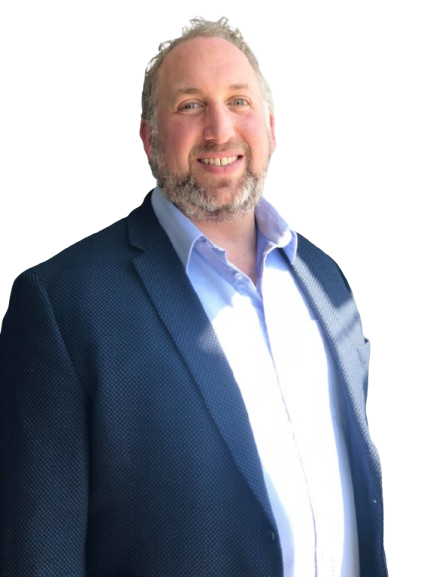
Ben Levine
President & Co-Owner, Levine Bros. Plumbing · A fleet described as 22 trucks as of 2024, family-run since 1922 · master plumber and master heating technician
Heir to a name that has been on Montreal pipes for generations, he began by sweeping the warehouse floor, told by his uncle to keep his mouth shut, eyes open. He still thinks like the hockey goalie he once was: the last line of defense.
Watch · Episode 8
Chapters
At a glance
Who is Ben Levine?
- Built
- The fourth generation of a Montreal plumbing company founded in 1922, run with his brother-in-law Jacob Bratin
- Scale
- A fleet described as 22 trucks as of 2024, 47 employees beyond the two family owners, clientele roughly half residential and half commercial
- Known for
- Marking the company's 100th year with 100 acts of gratitude instead of a party
- Before this
- A BCom in economics from Concordia, then the warehouse floor in 2004; now a master plumber and master heating technician
- Gives back
- Chairs the governing board of VOC, Montreal's English-language plumbing school; Canadian ambassador for the One Drop Foundation
Profile
en Levine became a hockey goalie in grade six, and he has never quite stopped being one.
"If a goalie makes a mistake, there's nobody out behind them to really bail them out," he says. You are the last line of defense, he says. You are it.
The title reads President and Co-Owner of Levine Bros. Plumbing, a Montreal company founded in 1922 that he runs with his brother-in-law, Jacob Bratin.
A fleet described as 22 trucks as of 2024, 47 other employees, four generations of one family.
His own start was in the warehouse. He arrived in 2004 with a BCom in economics from Concordia and a head full of ideas, and spent his days sweeping floors and taking out the garbage.
Months in, his uncle called him into the office.
"You have to stop," his uncle said.
"Okay, stop what?" Ben said.
"You're talking about change, and change scares people," his uncle said. Everyone saw someone who thought their work was not good enough, someone who did not respect the previous 80 years.
"Keep your mouth shut, ears and eyes open. When it's your turn, you'll know it," his uncle told him.
So Ben learned why the paper system existed. When he and Jacob started, the office had three computers; his father's stayed under a plastic cover.
His turn was hard in a different way. His father had run daily operations himself and, Ben says, "created a company that could only grow as much as he was willing or able to work."
His father stepped back and he, his brother-in-law and another partner stepped in on operations, holding people accountable instead of catching their mistakes for them. The complaint that reached his father: they're ignoring me.
"I'm not ignoring you," Ben told each of them. "You've been doing this position for 20 years. I started here 10 years ago. I'm not ignoring you. I just trust that you're going to be making the right decisions."
"Some people were able to adapt and others we needed to phase out," he says.
The values were not on the wall then; his father said they lived in everyone's hearts. Then a peer mentorship group met in offices where the values were posted, and Ben said everybody knew what he stood for.
"But do they know what they need to stand for?" one of them said.
The values went up. He calls them a lighthouse on a foggy sea: any decision in line with the wall is not a mistake. The hard part is upholding them case by case when people want to compromise.
The result is a company a client described after one job on a building she managed.
"You're not a plumbing company," she said.
"Of course we're a plumbing company," he said.
"No, you're a service company that happens to do plumbing," she said.
He took it as a compliment. "I install the same pipe as everybody else. I install the same faucets as everybody else," he says. The difference, he says, is people.
For the company's 100th anniversary, a carnival with a petting zoo was planned, then dropped as "slightly inauthentic." The team performed 100 acts of gratitude instead, for employees, clients and the community. Ben washed his plumbers' trucks.
Touring the Old Brewery Mission, which he describes as Montreal's oldest and largest homeless shelter, he asked the executive director how they could help.
"The water fountains," the director said.
The company repaired them on all five floors. "Plumbing in this case was deeper than just fixing a faucet," Ben says. "We're able to bring dignity back."
What has changed most is his clock. He went through a program called 18 Summers, about how few summers children want to spend with their parents. "At some point I just looked up and said, what's the real purpose?"
On a family trip to Disney he turned off his email notifications and checked them only back at the hotel each night. "It was a spectacular family experience to be in the moment."
The goalie is still the last line of defense. But the image he reaches for now is a boat, with his partner and "all the employees who are on the boat with us paddling in the same direction."
His step for anyone who wants the same: get a mentor, and trade money for time. "You could always make more money, but you could never get the time back."
I install the same pipe as everybody else. I install the same faucets as everybody else.
— Ben Levine
Key Takeaways
Put the values on the wall so people can decide without you. A peer in his mentorship group asked whether his staff knew what they needed to stand for, and told him the values on a wall are there to give employees permission to make a decision on their own.
Learn why before you change anything. Months into the job, his uncle told him that change scares people and to keep his mouth shut and his ears and eyes open until it was his turn.
Serve the employees first, and they will serve the clients. He keeps two Richard Branson lines in mind: take care of your employees, and train them well enough to leave but treat them well enough that they don't want to.
Not every person should be a client. Some people see plumbing as a commodity, and if you are one dollar more expensive than their current plumber, you are too expensive for them.
Trade money for time. He recommends paying for mentors, coaches and programs to fast-forward your development, because you can always make more money.
About Ben Levine
Ben Levine is President and Co-Owner of Levine Bros. Plumbing (Plomberie Levine Bros. Ltée), the fourth-generation Montreal plumbing and heating company founded in 1922, which he runs with his brother-in-law Jacob Bratin. He holds a Bachelor of Commerce in Economics from Concordia University's John Molson School of Business, joined the company in 2004, and is a master plumber and master heating technician with a contractor's licence. He chairs the governing board of VOC, the Verdun Adult Career Centre, and is a Canadian ambassador for the One Drop Foundation.
Questions
On the record
Who is Ben Levine?
Ben Levine is the president and co-owner of Levine Bros. Plumbing, a fourth-generation Montreal plumbing company. He joined the business in 2004 after a Bachelor of Commerce in Economics from Concordia's John Molson School of Business, worked his way through the warehouse and the trucks, and is a master plumber and master heating technician with a contractor's licence.
What is Levine Bros. Plumbing?
Levine Bros. Plumbing (Plomberie Levine Bros. Ltée) is a Montreal service plumbing and heating company founded in 1922 and now run by Ben Levine and his brother-in-law Jacob Bratin. Its fleet was described as 22 trucks as of 2024; it serves residential, commercial, industrial and institutional clients including Couche-Tard, Cineplex, TD, CIBC and Scotia Bank, and in 2025 moved from Lachine, where it had spent eight years, to the former Baylis Medical building in Saint-Laurent.
Why is the company called Levine Bros.?
The name comes from two brothers, Arthur and Jack Levine, who built the company together. Ben tells it this way: his grandfather Jack, then 15 or 16, fell off a grocery-delivery bicycle carrying a 50-pound bag of potatoes, and his great-uncle Arthur, driving his plumbing truck right behind him, finished the delivery and told the grocer Jack had just made his last one. The company traces back to 1922, when Arthur went into business with his father Isaac, a blacksmith who had made the metal rims for wooden car tires.
How did Levine Bros. Plumbing grow?
Largely through acquisitions and long-term client relationships rather than new construction. The 1997 purchase of Outremont Plumbing launched its commercial side and, with the mentorship of Hubert Kunzmann, grew the client list by +30%; the 2011 acquisition of De Gagne Plumbing brought corporate clients such as TD Bank, Couche Tard and CIBC. Ben Levine's stated strategy is to concentrate on high-quality service plumbing and hydronics.
How does Ben Levine find plumbers in a trades shortage?
By building a pipeline from the school he helps govern. He chairs the governing board of VOC, the Verdun Adult Career Centre, Montreal's English-language plumbing school, and speaks to classes before they graduate; he says 17 of his roughly 35 plumbers on the road came from that school. He cites a study projecting Canada would be short close to a quarter million tradespeople.
What does home water filtration cost, according to Ben Levine?
He gives three ranges. Under-sink filtration units start around $276, with quick annual filter changes at about $175, and larger whole-home filtration systems start around $700.
Full Transcript
The full conversation with Ben Levine, transcribed. Lightly formatted for reading.
So welcome to the Montreal Entrepreneur Podcast (now The Vault MTL). Today I sat down with Ben Levine from Levine Bros, and we discussed so many things. For example, family legacy, how to scale a business, and how do you keep your customer loyal to your business, and so much more. So I can't wait for you guys to enjoy it and let me know what you think.
So Ben, it's a pleasure to have you with me today on the Montreal Entrepreneur Podcast (now The Vault MTL). You're so multidimensional. When I looked at your profile, I said, wow, there's so many angles we could have taken this conversation because you've done so many things. things.
But for the audience, for those who don't know who you are, please introduce yourself and tell us what you do. Absolutely. First of all, Kathy, thank you so much for having me. It's really an honor being here.
Um, who I am— let's start. Uh, my name is Ben Levine. I am president of Levine Brothers Plumbing. We're a, uh, service-based Montreal plumbing company, and, uh, I'm a— I have a BCom in economics from Concordia, and now I'm a master plumber and master heating technician.
That's very good. And for us to understand the context of who the person you've become today, take us back a few decades when you were a teenager or your early 20s. How did people describe you and how would you have described yourself back then? Well, there was a, a few parts, uh, to it.
One, I was definitely outgoing, always smiling. I never took myself too seriously. I always had a good time. I figured, what's the point in being around?
What's the point in doing anything if you're not having fun? Um, the cool kid? No, not really, not really. I— there, there was a time, I mean, even I'd say by the time I hit 15, 16, I didn't even care.
It didn't matter to me. Um, I had my group of friends. I'm still friends with a lot of the people I was friends with in kindergarten. Wow.
So that's pretty cool. Um, and my close friends are still my close friends all the way through. School was, uh, I had a good time, which means the teachers might not have had as much fun with me in their class. I enjoyed learning.
Okay. And I didn't necessarily care as much about the marks. So that was an interesting part that really frustrated a lot of my teachers, is that I enjoyed the whole process of learning, but when it came time to the test or the exams, if I got in the 70s, I was happy, and then they'd be pretty disappointed, and it didn't matter as much to me. And maybe my mother was a little upset with that too.
Eventually she came to accept that's just who I was. I was also heavily involved in sports from the time I was a little kid. And winter was ice hockey and summer was baseball. Ice hockey in grade 6, I actually became a goalie, which I found to be a huge part of my identity.
Really? A little bit about who I was, who I became. If a goalie makes a mistake, there's nobody out behind them to really bail them out. If a forward makes a mistake, okay, he had a bad shift.
If a defenseman, there's always the goalie behind. The goalie, if you're lucky, you have some good posts behind you, but ultimately you're the last line of defense. You're, you're it. Mm-hmm.
And it really started to go into my character. Into who I was, level of responsibility that I felt towards a lot of things, and even even beyond into the trade, into the company later on, which I didn't even realize would be such a huge advantage for me. But so you mean accountability? Accountability, responsibility.
It's I make a mistake. There's a red light going on behind me, and my team. is losing. That's it.
I make a huge save and my team wins the championship. Oh, you did? I did. Nice.
With— I got series MVP. I mean, today is actually the 6th anniversary, but you know, that was— that's just beer league, but we had a great time. Well, it sounds like you did have a good time. And, uh, so now you're in your early 20s, you went off to university.
How when did you decide to join the family business? Because I'm sure you had other options. I'd actually like to recule un petit peu to move back in high school. It was one of the things that that my dad had always talked about with me.
We're I'm fourth generation in the company. Yes. So we're we're now I'm fourth generation. At the time, my dad was third, and one thing he wanted to emphasize to me.
was that the company was there as an option if that's where I wanted to go, and that's what I felt would make me happy and be part of who I was and part of who I am. Mm-hmm. But I didn't need to. He wasn't forcing me, he wasn't pressuring me.
Let's just say maybe he was grooming me with a certain level of responsibility in certain aspects. But I grew up, I grew up helping him out. That's good. I grew up, um, when I had winter break, I'd go into the office and work from the time I was 7 or 8 years old.
So I, I, I am the youngest of 3. I have 2 older sisters, but I wasn't raised as a youngest child. Normally the youngest child is carefree and fancy-free and all that other fun stuff, and they reap the benefits of The, uh, the 2 that came before them. But for me, it was more— I saw the way that my dad acted and reacted and put himself into the business, and that was the seriousness in which I was raised.
It was, uh, take life seriously, but don't take yourself too seriously. So that was, that was an interesting part of it. So in high school, when career day came out, and I'll never forget that day, I wanted to be a physio. Like I said, I really love playing sports.
I would play Ultimate Frisbee later on with my buddies Saturday afternoon, or we'd play a game of tackle football. Whatever it was, I'd always, always get hurt, though. I never actually— I was, I was the one who would dive into the thorn bush to catch the Frisbee. And whatever the consequences were behind that, but I caught it.
I made the stop no matter what. Didn't matter. So I figured a physio made sense. It's— I love helping people.
I realized, and I have since realized, that that is a huge part of who I am. Mm-hmm. And part of my being is really just being able to help people. But also I kept getting hurt, so I figured the two of them, I'd be able to help myself out.
Mm-hmm. Then I got to CEGEP and the science courses aren't necessarily for me. It's memorizing. It's not learning, at least not learning in the way that I like to learn and the way I know how to learn.
And then I took one business class. I believe the teacher was Les Cutler, and he came from industry. He had retired, sold his business, was able to retire, and decided that he wanted to teach. And it was more like a mentor or a coach standing in front of the class teaching us about business.
And everything just clicked for me right then. Okay. And I said, sciences aren't for me, but I would enjoy and love to learn and study about business. And once I'm studying about business, I knew that I was able to have the company to go into, to be able to eventually to take over.
Yeah. So from that point on, it was like my goals were like shifted and set. Yeah, I went into university. I, I have a BCom in economics, and every, um, every group assignment, every assignment, every project, I was focused on small businesses Family businesses, successions, and everything that I did was to focus towards giving me more experience and more insight into coming into Levine Brothers.
That's impressive. I like that. So I like how there was a shift because of that teacher that was able to yeah guide you. Yeah.
Because sometimes we do have teachers, but they have no idea about business. They're just reading the books and then sharing their knowledge. Chapter one. Yeah, exactly.
But then with him, there. was Cutler, you said, right? So there was— he, he was able to put like a little bit of insight on his past experience. Probably.
That's it. And he brought it forward and his passion for his company lit something up in me that I was able to bring to my classes, to my school, to my projects, and to help me really refocus. It was, it was a really interesting shift in my life. I understand.
Now let's shift gear a little bit and talk about Levin Bros, the company that's been around. It's a legacy. It's been around for over 100 years. Tell us on how it got started.
All right, so I will start off a little, uh, nefarious of a bit of a story. So my great uncle, uh, Arthur was, um, he was 17 years older than my grandfather. He was originally a plumber working on construction sites, and he was just this big, strong dude who was able to do things that most guys didn't try. So in those days, they had cast iron bathtubs, and they're like 300-pound bathtubs.
And normally back then, he was on a construction site, and back then it was 2 guys to a bathtub, and you had your quota that you had to do for the day. Mm-hmm. And Arthur decided he would portage these bathtubs like a canoe. over his head, and by 10:30 he, uh, finished his quota for the day.
And the stories go that maybe he enjoyed the Montreal nightlife on a regular basis, so he decided to catch up on some sleep that he might have been missing. And it was right then that, uh, the owner of the plumbing company, uh, came upstairs and obviously fired him on the spot. Oh, really? And the next day he started, uh, he started the company in plumbing, um, within the community.
Okay. So my great-grandmother, his mother, actually went door to door and said, my son is now your plumber. You let us know if you need anything fixed. It wasn't like the— this is like pre-networking days.
This is like, no, no, my son's a plumber. You're supporting us. Don't, don't. think about bringing somebody else in.
I'll know. That was my great-grandmother. I mean, she was, uh, an immigrant from, from the old country, and that was her mentality. My Arthur's father, Isaac, was a blacksmith, so he made actually the, the metal rims around wooden tires of cars.
And apparently we, we've evolved since then. Mm-hmm. And when rubber tires have actually hit cars, He lost his job. Okay.
And it was a natural, uh, natural partnership, so to speak, uh, on that time between Arthur and Isaac, his father, because everything was repairable back then. Nothing was made of plastic like today. There was no such thing as planned obsolescence. It was a radiator's leaking, they went out, took it out, brought it back to their shop.
fixed it because now we had a blacksmith who had the skills and the tools and the everything else. They fixed it, reinstalled it, and that was really the genesis of the company. Um, my grandfather Jack, about, uh, 10, 11 years later, let's say around then he was about 15 or 16, he was, uh, delivering groceries for a, uh, a grocery store on a bicycle. And he had a 50-pound bag of potatoes in the basket on the back.
And he happened to turn a corner and fall. And Arthur was in his plumbing truck right behind him. So he pulled up right behind him. He said, Jack, get in my truck.
Mm-hmm. He put the bike in the back of the truck. He made the delivery for him, went back to the grocery store, handed them the bike back and said, he just made his last delivery for you, Jack. You're coming to work with me.
And that's really the first bros, the first brothers that came together. Um, they, they built the company over the two of them together from the '30s up until my father, uh, graduated from electrical engineering in 1970. And he loved it in the same way. He loved working with his hands and just an absolute Huge disappointment to my grandmother, who was trying to get her sons to get a proper education so they wouldn't have to work with their hands and they wouldn't have to be on call at night and they wouldn't have to work till all hours of the morning, 6 days a week, because back then it was 6 days a week.
And my dad just loves it. Yes. He loves the trade. He loves helping people.
I'm sensing a theme here a bit, I guess. Um, and, and he was on a truck, and it's something he also grew up in the industry, obviously, and he also was experienced in it. So he went onto a truck almost right away. And a year, a year later, his brother graduated from business school from, I believe it was then Loyola, which is now Concordia.
And And, uh, he bought himself a Volkswagen bus. Him and a couple of buddies drove around North America for their summer, uh, graduation trip. And he came back and, uh, he decided to work in the company until he found something better to do. And he tells this story all the time, until I found something better to do, which turns out was retirement.
So he retired probably about, uh, 8, 9 years ago now. Yeah. And that was his better job that he found, uh, almost, uh, 45 years later. Wow.
So that's a, that's a great history there. Started from 1922 up until now. So it seems like— I thought maybe it was all planned that he started this plumbing business, but it seems like it was out of necessity. He had no jobs.
Out of necessity. And then the, the generation we're in right now, my brother-in-law, um, who graduated from engineering in 2003. He actually, um, got married, and right before they got married, my dad had a conversation with me about him coming into the company. And he's an amazing person, an amazing— He's great.
Great. Uh, he's graduated electrical engineering, which I really appreciate the mirror towards my dad and uncle. My dad's graduated in mechanical engineering, my uncle in business, now my brother-in-law in engineering and me in business. So it's, it's really, um, interesting to see that dynamic.
So he started in 2003, um, in August, and I started a year later. I graduated, uh, in the— I took the summer off. I had— took the summer off. I had knee surgery and I needed to, uh, rehab.
I, I I told you I like getting hurt playing sports, right? Yeah. And so I tore my ACL and I had knee surgery in June. In August, I started at Levine Brothers in '04.
So that brings us to, to our generation now. Today. Yeah. But it's interesting to see how everybody that came before you, all their skills that they had or what they studied at university, all of them, it contributed to propel the business to where it is today.
So this is very interesting. Now let's talk a little bit about the company culture. Was it always what it is today? If not, how has it evolved over time, the culture and the values as well?
So super interesting. When I put values up on the wall in our office and my dad walked in and core values, mission statement, and I talked to my dad and I'm like, did you have these? He's like, Of course, in all of our hearts. And I said, okay, how did you communicate that to the staff?
He's like, everybody just knows. Like, okay, so everyone's following your lead. And, and really, my grandfather was always, um, if you could serve somebody, serve them the best you possibly can. If you can be there to help, it is your obligation to help.
And he was always about giving better level of service, which is super interesting. He talks about how he— I remember him talking about that people will remember if you do bad work for them. Yeah. Not if you gave them a discount.
Yeah. So the idea is you're not actually giving them better service by giving them a discounted service. You're giving them better service by looking after their needs, whether they know about it or not. Yeah.
And that theme actually has, has brought us through the generations. I, I, my dad talked about it, is you give people the service so that they know they are properly taken care of. And I go one step further and say, give people the service that they don't even know they wanted. Yeah.
And it's interesting. It reminds me, Henry Ford's quote is, if I would have asked my customers what they wanted, they would have said faster horses. Yeah. So that's— it brings our principles and our values as a company and the culture to, to that there's a continuity over the generations, but in a different way.
Yeah. I mean, if my grandfather walked in and the way and saw the way that we're all working together, and I think we'll talk a little bit about technology after that. So that's interesting. But even to the point that my dad, and bless him, he felt that in order to make sure everything was done properly, he needed to be involved in all aspects.
He was involved. He took care of the operations, the daily operations of the company. And, and, and bless him, everybody, he is the nicest person. If you've ever met him, he will go out of his way.
He will sacrifice. And he will be there to help people, including people in the office. Yeah. And but what he did was, is he created a company that could only grow as much as he was willing or able to work.
Okay. I mean, there was no willing. If he wanted to work more, he just couldn't. Yeah.
Um, I, I used to meet him in the hallways I was in university in CEGEP, because I'd be coming home and he'd be going to work. And sometimes we'd have breakfast together and I'd go to bed and he'd go to the office. Seems like you had a good relationship with him too. Still do.
Thank goodness. Yes. No, it's, it's very much so. Um, right now, what I, I try to hold people accountable for their work.
I try sometimes maybe in retrospect, sometimes maybe I'm a little too hands-off. However, the employees won't learn at the same level if you're constantly correcting their mistakes. Yes. If you're catching mistakes before they went out, then there, then there's no motivation to a degree to truly improve and take care of what they're supposed to be responsible for.
So it was an interesting dynamic when my dad stepped back and myself, my brother-in-law, and we had another partner stepped in on the operations side. And the complaint to my father was, they're ignoring me. Okay. And, and I sat down with each one of them and I said, I'm not ignoring you.
You've been doing this position for 20 years. I started here 10 years ago. I'm not ignoring you. I just trust that you're going to be making the right decisions.
Okay. And whether you do or you don't, we learn from it. And they didn't understand the mentality. It was hard.
Some people were able to adapt and others we needed to phase out. And that's any succession, any transition, whether it's family or not, generations or not. But that's That's the difference in mentality while still keeping the continuity of the values together. I like that.
So that's a very good point that you just brought forth. So with your dad, what you're saying is that there was a lot of, a lot more hand-holding with them. But then you, you said, you know what, do the work. Yes, you're going to make some mistakes, but then you're going to learn from those mistakes.
And we grew as a company together. Okay, I got that. That's, that's very interesting. You mentioned earlier that your dad said like the values were in his heart and then everybody just know.
Yeah. And I think a lot of entrepreneurs today, they kind of think like that. You're like, you know what, this is what I want. This is why I want the company to go.
But then the people, they don't know where we're heading, the values. What advice would you give on how to communicate that effectively in a few words? That's a good one. First of all, there is such a shift in how I am able to speak now that we have the values up on the wall.
Yeah. And what I talk about and what I say in my office is let's use those values as our lighthouse, our guiding light on a foggy ocean, on a foggy sea. And as long as you're heading in that direction, And no matter what decision you make, as long as they're in line with everything you see on that wall, you didn't make a mistake. We could adjust, we could learn, but you didn't make a mistake.
I like that. The problem, and, and it was interesting, is I visited a few— I was— I visited a few companies that I was, uh, part of a almost like a peer mentorship group. And when we had meetings in their offices, each one of them had their values up on the wall. On the wall?
Up on the wall. It was— I, and I didn't get it. I'm like, well, everybody knows who I am. Everybody knows what I stand for.
And then one of them looked at me and said, but do they know what they need to stand for? Yeah. I said, what do you mean? What do they need?
What permissions are you allowing them to make decisions? Because if you— he said, the values up on my wall are there to allow our employees the permission to make a decision on their own. Okay. And that shifted my whole mentality.
I like it. And then— but that— you're right. There is a lot of entrepreneurs and I have people who come visit that said, oh, that's really nice that you have them up on the wall. It's just decoration, right?
I said, absolutely not. The hardest part is holding, upkeeping those values case by case by case. Yeah. When people want to compromise.
Yeah. And those on the wall show that we won't. We can't. That's— And that's very good.
I like that. So we can say the values on the wall, lighthouse. Got that. And since you joined the company, I think you said 2004, correct?
2004. You also, you already mentioned an obstacle that you had to face, you know, the transition, letting the people do the work on their own. Were there any major challenges that you had to face? If so, how did you face them?
So some major obstacles, a few. One is I had so many ideas. I was coming out of, I was coming out of school and I had so many ideas how we could do better. How do we improve?
And I took that as my responsibility. How could we improve? And one day my uncle called me into the office and this is, I mean, like months after I graduated and I was working in the warehouse at this point. I was literally, I was sweeping floors, putting stock away, taking the garbage out.
It's— and he called me in and he said, you have to stop. I'm like, okay, stop what? And, and like, I, I just had no true understanding of what he was talking about. And he said, you're talking about change, and change scares people.
Mm-hmm. And all that they see when they look at you is someone who thinks what they're not doing is good enough, and someone who, who doesn't respect what has happened for the previous— so I've been, uh, for the previous 80 years of this company. And you're actually really insulting them. Yeah.
And you're insulting me and your father to them, which only discredits you. He said, your job right now— take mental notes. Keep your mouth shut, ears and eyes open. When it's your turn, you'll know it, and then you'll be able to change.
Wow. Learn how we do it. Learn why we do it. Yeah.
Learn why we've put these processes in place. Don't say the process is garbage and we need to fix it. Learn why. What has been built?
Yes, there are some— it's almost like a house that's been renovated one extension at a time and nothing really joins properly together. And then a builder comes in and says, oh, this is all garbage. Well, no, you don't understand. Yeah.
The history behind why we got there. Once you understand the why. And a lot of the processes were put in place almost as double checks. It was by far the best system that could have been made on a paper system without being computerized.
Yeah. When, when my brother, brother-in-law and I started, we had 2 computers in the office. Sorry, 3. My father's had the plastic covering on it all the time.
Except when I came to visit and I played Minesweeper on his. But besides that, it was our bookkeeper and our receptionist who did our invoicing. That was it. That was the only computers.
By the time, within a few years, we had our service department, we had our customer lists were starting to be computerized. It was easily searchable and Now, so that in itself was a challenge, was we actually had one employee that we had to teach how to use a mouse because he was working solely on DOS-based systems at this point. And I'm talking, this is like— I remember that. This is 2005, 2006.
I had to teach him what a right-click was. Anyway, so there were definitely challenges to change. People don't want to change, even if it's for the better. They're nervous, scared.
And people are very comfortable in status quo. Yes, yes. So that, that was a huge part of it. And then for other people to realize that it's not my dad and uncle running the company anymore.
Yeah. Very different. I am a little bit more open and honest, um, sometimes more vulnerable, which is contrary to the old generation, and some people just didn't understand how that worked. And people called me weak and said, oh, you can't say things like that.
And I said, why not? If they're feeling it, I'm feeling it. Well, then let's connect and let's talk about it and see how we can do better together. I understand.
Yeah, it is a shift from different leaders. Yeah. And I see what you're saying. And you also touch upon a point on how innovation has changed a little bit with the innovations for your operations.
I don't know if you wanted to add one one more, I don't know, more thoughts on that before we move on to— Sure. So talking right now, we're actually in the middle of putting in a whole office ERP, and this is our work orders, pen and paper, our pricing. We have a book that's, it's called an Allpricer. It's like the manufacturer's suggested retail pricing of 100,000 different SKUs.
It's like inches thick. Yeah. And that was all done by hand. And when I say was, I mean up until a couple of months ago.
We're just starting to computerize our inventory now. Our service department are— we're able to communicate now from the service department to the warehouse to the project managers. to me. So we're actually able to, um, we're able to, to not lose anything.
Okay. Our— we like to say, sorry, things fell through the cracks. Well, every call that was on a paper was a client that was waiting for us to help them on the other side. Okay.
So the ERP, the goal of this ERP, and ultimately once we finish putting it together will be to give a higher level of service to our clients, but also to fill in those cracks that those calls used to fall through, let's say. Yeah, that's very good. So this no doubt is going to propel the business to a whole new level. That is, is one of the things that we're putting in place.
Yeah. Very nice. And if we're talking about the legacy of this business, family is involved, and What advice do you have for entrepreneurs today that are looking to build something that will last, something that— an asset they can pass on to the next generation? So there's a few things.
One, first and foremost, build a process. Understand that you need to have the steps in place for everything that you do. It's, it's when you're a solopreneur and you're just doing everything yourself and you know the standards that you are working at, but then you want to grow and bring somebody in. How do you start that?
Well, you have to train them. Yeah. And training is not based on watch what I do and then do it after, because no, there's no standards involved, there's no KPIs in place, there's no goals. Okay, how do you build that legacy?
Well, You start off by the process and having the standards. Understand that the you need to have the right people in place, right people. And it's something that I've been noticing over the past few years as we were growing our support staff in the office and even the plumbers on the road. If you don't have the right people, yeah, the processes won't matter.
If you have the right people. then the processes won't matter. It's, it's really interesting. I was speaking with a client and he said, if you are— if your employees are the right mindset, then nothing else matters.
But if your employees are the wrong mindset. Yeah. He paused and said, nothing else matters. I was like, whoa.
And then Like I said, is if you can help, do it. It's— there's, there's a beginning part, but you have to— you also have to know your standards. Not every client— not— sorry, not every person should be a client. That was a really hard revelation for me growing up.
It was always like some of my friends' parents didn't want to call us. They didn't necessarily have those values. And I took it very personally growing up. And then as I got older and as I started to go deeper into the business development and I started speaking with people, I'm like, wait a minute, they don't value what we bring to the table, the processes that we've put in place.
We— They just don't. They're not there. They don't care what our extra value is. So no matter what, if we're $1 more expensive, yeah, than who they're using right now, we're too expensive because they don't see the value in what we bring.
They see the— they see it as a commodity, basically. Exactly. Yeah. And it's, uh, one of the biggest compliments I've gotten recently from someone who I had known for a couple of years And then she called us in for one building that she was managing.
And at the end of it, she called me up and said, you're not a plumbing company. I'm like, what are you talking about? Of course we're a plumbing company. It's right.
I mean, it's who we are. She's like, no, you're a service company that happens to do plumbing. Hmm. And I'm like, wow, that's a compliment right there.
And it's, it's what we strive for. We strive for the customer experience. Yes. Yeah.
Put the client first. I understand that. And also having the right people, like you say, on the road because they're meeting with your clients. So hiring process, the hiring process.
Hiring process, then training once you have the right people in place. And I mean, I have Richard Branson quotes popping around my head all the time. when it's if you take care of your employees, they'll take care of your clients. And then the other one is that if you train your employees, uh, well enough so they can leave, but treat them well enough so they don't want to.
Yes. And those 2, just like, they're at the forefront of almost everything I do with our employees. Even the last one, sometimes as entrepreneurs, especially maybe newer ones, we're thinking, oh no, we can't Give them all this training, then they're going to become our competitors. It's a fear.
It's a mindset. You know, it is especially. And I hate to say there's such a small barrier to entry in plumbing. But if you write one extra exam, then you can become a master plumber.
Then you can open your own office. You have one client, and now all of a sudden you have a company. And most of our guys, our hand tools belong to them. So we supply the heavier equipment.
If they're leasing a truck and it's— there's a relatively small barrier to entry and especially there's small business loans available. And for them to compete with our clients. Yeah, there's a lot of guys that leave. Yeah, it's a risk we have to take.
It is. Because what if they stay? Yes, exactly. What if they stay?
And there was one plumber who, from the time I hired him as an apprentice, said his goal was to go out on his own. And I had, I had a lot of trouble. I actually learned a lot about myself from the experience I had with him because I felt very betrayed when eventually he did go out on his own. And, and that was the mind shift in, well, yeah, that makes sense.
He always told me he wanted to. Yes, you didn't listen. I just wasn't listening. Exactly.
And, uh, Do you believe that— because we know that after 5 years, 50% of businesses will fail eventually. The stats are against business owners. Do you believe that there's a greater chance of survival, of success, if it's a family business? There are pluses and minuses to a family business.
So I actually, a couple of years, a few years ago now, I had a mentor who asked me if I wanted to run a family business or business with family in it. And I said, okay, I'll bite. What's the difference? A family business's primary purpose is to serve the family, make sure that everybody in the family is properly taken care of, make sure that it's you eat first.
Okay. As opposed to a— I hate to use the word— a proper business, that which obviously— I mean, I wanted to have the business that has family in it. Because right now it's the, the family involved in the company is myself and my brother-in-law, but we have 47 other employees. Yeah.
Who need to feel part, who need to be part of the company, who need to have some sort of ownership and responsibility over the overall well-being of the company. And if everybody has their proper roles and responsibilities, they have proper KPIs and the business is run with targets and it's run in a— I, again, I hate to use the word proper, not to say that small family businesses that don't work in a structured way aren't proper, but they're missing an aspect of being able to make a business great. On the other hand, Like I said before, being in the family business growing up, I was groomed. I experienced what it took, what commitment level was involved, what needed to be done.
And I saw what I wanted to do and what I didn't want to do. My lesson to take over the business started when I was born. Not when I got promoted from project manager to manager to— no, it— from the time I was born, I saw what it took to lead the company. And yes, there were definitely parts of what my dad did and how he worked that I did not want to work.
For sure. Long hours, maybe 7 days a week, like you said. And maybe I'm not doing much better these days, but in different ways. We won't talk about that.
And what are some of the advantages? and disadvantages of a startup, or should they join an existing company? So starting an existing company, you have the reputation. I feel so lucky to come into a company with this reputation.
People knew my father, my grandfather. We had the employees already working. We had the system already done. We had the money in the bank.
We had invoices going out, and I didn't have to worry whether we were going to be opened in a week, a month, a year. It was— so there was definitely advantages to that, whereas a startup, it's— there's nobody else around but you. You're not— you're, you're— and, and all the power to you for starting a company, um, and scrounging and scrimping and getting the clients and the start and building the process and building the employees. And there's such a harder part to that.
Yeah. Now, where I see as an advantage and something that I see as a roadblock, almost a maybe a speed bump towards what I'm working towards, is now I have to change the way that people work. And that's a slow process. And I am not as patient as in some of these processes as I could or should be.
where I see companies who had started relatively short time ago who are exactly where I want to be in terms of the process and how they train their people and how they bring their people in and the onboarding and, and, and. So they're able to move faster. They're able to move faster because they're starting out from a, From a blank canvas. I understand.
Yeah. Where I still have all of that paint that I don't only need to paint over, but to move Mona Lisas into a smile is not as easy as it, it could be. I understand. Changing, like you say, scare people and the curve, the learning curve for those that were there, or maybe that were not using the systems that you're bringing in.
Yeah. So it's gonna take a lot of training. And in your opinion, what is the best way to grow a business? I know it's a catchy subject.
There's a lot of answers, but what's your take on it? I'm going to go back to people, people relationships. You open up the Yellow Pages. There's lots of other plumbing companies out there in Montreal where I hate to say a dime a dozen, but honestly, you.
Take a dart, throw. Someone will come and fix your toilet. That's that's great. But I install the same pipe as everybody else.
I install the same faucets as everybody else. And and and the difference is people is how we train them, how they interact, how you make people feel when they call. is what's going to keep them calling. And then you build on that.
Talk to us on how you're celebrating the anniversary, the big anniversary of your company. 100 years. Yes. So I'll— we decided about close to a year ago now, we talked about having this huge blowout party.
We talked about inviting our employees and their families and kids and grandkids and a carnival and a petting zoo and different eras represented with foods and drinks. And, and it just sounded like a lot of fun and slightly inauthentic for who we were and who we are as a company. So we decided to shift. We shifted to a huge blowout party for our staff.
Mm-hmm. To performing 100 acts of gratitude to celebrate 100 years in business. to be able to give back. So we separated these acts between our employees, our clients, and the community.
So in terms of our employees, breakfast barbecue and gifts, and every now and then, not in the winter, but I would wash one of their trucks for them. And we had a candy bar and my wife baked cookies for them and and a whole bunch of things as we go along. We're planning a few other activities in the next couple of months. Uh, from the client side, we, uh, send— we send flowers to clients who have been with us for a long period of time.
Wow. We have certain giveaways that we've had. We've given hockey tickets away as just as a thank you. Yes.
Um, we have our 12 Days of Giveaways on, uh, on social media where we partner with other companies and give away huge, huge presents to people just for putting their name down. And this past year, we really tried to focus on companies that— businesses in Montreal that were growing that we want to support, that we wanted to showcase. So it was almost like a two-for. But then the community is is the community aspect of it is somewhere that I'm actually really proud of what we've been able to accomplish.
First, I mean, I'm a partner for care with the Lakeshore General Hospital Foundation. We've helped women's shelter fix their bathrooms up. We had a graduate of a women's shelter. that we were able to have one of our suppliers supply a Washlet bidet that we went and installed for her on her first apartment after leaving the shelter.
Nice. We took a tour of the Old Brewery Mission, which is the oldest and largest homeless shelter in Montreal. And part of that tour, the executive director, James, took us around and I looked and I said, How could we help? And he said, the water fountains.
I said, what do you mean? He said, not a single one of the water fountains on the 5 floors work. Wow. And what ends up happening is some of these people in the middle of the night, they wake up, they're thirsty, they're going to go to the bathroom and they're going to suck out of the faucet.
And there's a loss of dignity. Okay. And it's deeper. So plumbing in this case was deeper than just fixing a faucet.
It was— we're able to bring dignity back to, to these residences of the shelters. I became an ambassador. I am now one of the Canadian ambassadors for the One Drop Foundation, which is the foundation started by Gila Liberté. And there's a 7-year program for Canadians on, on reserves to help bring fresh drinking water to the reserves while changing characters and attitudes towards the water through art in all different kinds of ways.
Super interesting initiative there. Yes. And I'm super proud to be part of that. One that I really just wanted to bring up that brings chills every time I talk about it.
There was a woman a family of 6 in Pankur, in a suburb of Montreal. And the woman, the wife, the mom had to— was having cancer treatment and had to stop working. And so she was getting handouts and she was getting help with groceries just to be able to support her family. And then she had a leak in her kitchen and the insurance company came and demolished the kitchen and then denied her claim and refused to put anything back together because it was not What they deemed insurable.
Oh my God! So we helped her put her kitchen back together. We helped source with her. We were able to get the plumbing work done with her, and then about she called me up the night, the first night she had a kitchen, told me that she was crying as she was washing dishes in her kitchen.
And then it goes one step beyond is two months later, I heard that she started selling pierogies. from her kitchen. And for the first time, she didn't need handouts for groceries to support her family. That's amazing.
That is a boost, a positive. Yeah. Even for your employees to go and then because they know they're making a difference. Exactly.
It's like they're superheroes, but maybe they are in costumes. But no uniforms. Yeah. No capes.
Yeah. CSST wouldn't like the capes. All right, Ben, let's quickly talk about what do you see the future of the trade? What does that look like for us?
Future of the trade is, is super interesting because we have such a deficit coming in in terms of tradespeople, especially skilled tradespeople. There was a study that came out about 5 years ago that within 5 years we'll be missing close to a quarter million tradespeople in Canada alone. We're feeling it here. I mean, we felt it over the pandemic.
Yes. People who tried to get trades to come to their house, people who wanted to renovate, good luck finding a contractor, a plumber, an electrician. And we're finding it is one of our barriers is to find new and great people to come in with the right character that want to learn with the humility to learn. And that's what we're always looking for.
It's, it's on the positive side. Mm-hmm. I'm actually chairperson of the governing board of the English-speaking plumbing school in Montreal called VOC, Verdun Adult Career Center. And I go and I speak to the classes before they graduate.
And it's good strategy. They come work for you. Thank you very much. Actually, right now we have about 17 of our 30— we have about 35, 36 members on the road.
17 of them came as graduates from that school within the past 10 years. So yes, I so if this is something I could give back to the school, they get exposed to our company and realize that they want to come work for a company that has values like ours. For sure. Then it's a great done done at this point.
Yeah. But meeting these students coming up shows how much they care about the trade and shows the reason why they got into it isn't just about hey I get a great paycheck and I could retire on that. It's it's really much more. behind it.
So it's really encouraging. I'm really excited. I just, uh, hope for more people to go into trades these days. Yeah, because there's going to be a big, um— Huge.
And, and I really wish that the trades would get the respect that they used to have, or even the respect that they're shown in Europe, where being a plumber, we're not talking about the, the crack in the plunger, you know. It's, it's really We're there to protect the health of the nation. Yes. And, and there's— I, I say it's because of the plumber that a mom was able to give her newborn baby a bath in hot water tonight.
Yes. It's because of a plumber that we didn't have to evacuate an old age residence because their heating system went down, but we were able to get them heat by the end of that night. I like that. It seems like as business owners, and especially in your case because you do have Like, it's like there's the ship and you're the captain of that ship.
It's been around for 100 years. How much pressure do you feel to keep it going? So there's the pressure of the legacy. Yes.
Which I think the first word that came to mind as you were asking that question was how much pressure? Kind of like Atlas. Yes. Yeah.
But the company, we've evolved the company so much over even the past 5 years. And I know where we're going. I know where we want to go. I know the vision.
And with, uh, support of my partner and my brother-in-law and all the employees who are on the boat with us paddling in the same direction, it's actually— it's a pretty exciting time because like We're just— we're, we're on the way. Yeah. And that's, that's kind of fun too. And do you believe that there is a balance as an entrepreneur and family life?
Is there a balance or there's no balance? Balance is a misnomer. I think, I think that's the wrong kind of word. It's what you want to do is you want to have extreme commitment.
And whether it's while you're at work, you're extremely committed to the work, but while you're at home, be at home. You're at home. Don't, don't, don't check emails while you're, while you're in the backyard with your kids. It was, on the other hand, easier said than done.
Yes. I read a book and I went through a program called 18 Summers. And the theory behind it is you only have 18 summers that your kids want to actually spend time with you before they're on their own, before they're traveling. And I have a 12-year-old at home, which means I don't have 18 summers left anymore.
And at some point I just looked up and said, what's the real purpose? Why am I doing this? I'm doing this for them, for me to not be there for them, or for me to work myself to death so I won't be there afterwards. Yeah.
But let's enjoy the ride now. Let's be there. Let's appreciate what we have now. Let's focus on what we have now.
And this, uh, this past February I went to Disney, and I believe it was one of the first times— and it's probably self-inflicted, um, because it's who I am— but it was the first time that I trained myself to disconnect, and I trained myself to relax, and I trained myself to not check my emails, and I turned the push notifications on my emails off, and I only checked them when I got back to the hotel at the end of the day. And I wasn't that reachable. And it was a spectacular family experience to be in the moment. To be in the moment.
I like that. Uh, you talked about books, 18 Summers. Give us 3 books quickly. All right, so I, I've quickly— and why.
So first is Radical Candor by Kim Scott. If you haven't read it, it's about having the hard conversations and why you should, and why if you don't, you're actually doing a disservice to the person you're not having that conversation with. because they don't realize what they're not doing right. And that's a huge part of it.
Simon Sinek, Start with Why. Yeah. If you're a business owner, you haven't read it, it focuses you to move forward. And that's really what got me started on putting the values up on the wall and the mission statement.
That's nice. And another one is The Slight Edge by Jeff Olson. Yes. And he talks about Uh, quick story about these 2 frogs who fell on a farm, and they fell into a bucket of milk that was just squeezed from a cow.
And they're swimming around and swimming around, but they can't jump out because the milk is too deep, and they can't jump out because the bucket— top of the bucket is too high. And one of them says, I'm just going to give up, and he drowns himself. The other one just kept going. spinning around.
And eventually, as he swam and swam and kicked, he felt his foot go on solid ground, and he created butter from the milk. And then he was able to jump out. And that image sticks with me about constantly putting in the dedication, putting in the time, even if you don't see the results, but you know it's in the right direction. Same as going to the gym.
It's go to the right direction. If you— now let's talk quickly about Montreal before we finish. What do you like about the city? So what I love about Montreal is first multicultural, and the multiculturalism is celebrated every step of the way.
I mean, between the Francofolie that we have and the Just for Laughs And the Jewish communities and the Haitian communities and the Portuguese communities and the Italian. I don't know if you've ever been driving between Little Portugal and Little Italy during World Cup. Yes. But it is amazing.
But so the heritages, the heritage, the values that came are all celebrated. the history behind it and how we got to where we are celebrated. But Montreal is so invested in innovation and being able to talk about our flavors, but to be able to advance where, where Montreal as a city is one of the hotspots for software and video gaming. Yes.
And, and technology advances and just mindset. It's, it's a mix. of so many different things, and that's to be celebrated. I agree.
And if you had to endorse a Montreal entrepreneur, who would that be? Somebody you respect and admire. So this, this is— there's a lot of them, and I've been thinking about it. Um, there's one that I actually wanted to bring up that I, I, I hadn't thought about before, and it's— there's a In the Jewish community, we have a funeral home called Paperman's.
Okay. Right now, Paperman's is— they're about to have their 5th generation running the company. And so Joseph Paperman was one of my first, uh, mentors while I was still in university. He was involved in the Jewish Students Association and the Business Students Association, and he was so involved, and I got so much of um, so much of the caring side of it.
And speaking with him and talking about family businesses and how they have grown and how they have evolved but still kept the same principles, where, A, each one of the family members has their own roles and responsibilities. It's not, okay, we're all running the company together. It's he takes care of the business side, he takes care of the family, he takes care of the operation and, and, and passing that down from generation to generation, going back to the family, the business with family in it. And it was just the mindset of being able to bring the next generation and communication and relationships.
5th generation. Impressive. Yeah. My goodness.
Did we miss anything? Is there anything you want to add? Um, just, just one, one quick point is I feel that entrepreneurs and business leaders, uh, seem to feel that having a mentor, having a coach, having a therapist even, is taboo. It's, no, it's, it's my business.
I'm the one. I don't have any weaknesses. No, it's, it's not about that. It's about knowing who you are.
Mm-hmm. Having someone who could who has been where you are, who is where you want to go, and is helping you to get there. In life, we only have really 2, 2 currencies. One is time and one is money.
Yeah. And if you're willing to trade one for the other, I highly recommend trading money to get time back. If you could fast forward your education and your progression and your development By paying for it, money is not a scarce resource, and I think that's something else that entrepreneurs need to think about. You could always make more money, but you could never get the time back.
Yeah, that was deep. And if anybody wants to reach you, how could they get in touch with you, Ben? Easy way. So so to get in touch with me personally, I'd recommend LinkedIn.
Or go on our website. ca, but LinkedIn, it's Ben Levine. Mm-hmm. Hopefully pretty easy on that side.
Or, uh, check out the company. We're very active on Facebook. We're very active on Instagram. And if you message, uh, my director of marketing happens to be my wife.
So I guarantee you I will get the message no matter what. Um, so yeah, those easy ways to reach out. Well, Ben, it was a great honor to actually have you talking about all these great things, uh, business owners need to hear. The legacy of your business, what you're doing actually for the town, for Montreal.
It's very impressive. Thank you so much. Thank you again for coming on the Montreal Entrepreneur Podcast (now The Vault MTL).
Sources
- President of Levine Bros. Plumbing; BCom in economics from Concordia; master plumber and master heating technician; joined in 2004 In conversation with The Vault MTL
- Co-owner with brother-in-law Jacob Bratin, Vice-President and Co-Owner; division of roles between them Westmount Magazine; Levine Bros. Plumbing, About us; SFA Saniflo Canada blog
- Master plumber and master heating technician with a contractor's licence (his own wording); 22 trucks (as of the September 2024 Q&A); 100 acts of gratitude; water fountains repaired on all five floors SFA Saniflo Canada blog, A Century of Service (Q&A with Ben Levine)
- Founded 1922; Arthur Levine and his father Isaac, a blacksmith who made metal rims for wooden car tires; grandfather Jack; father Elliot joined 1970 with a mechanical engineering degree; uncle Neal joined 1971; 1997 Outremont Plumbing acquisition and +30% client growth; 2011 De Gagne Plumbing acquisition; Bachelor of Commerce in Economics, John Molson School of Business Levine Bros. Plumbing, About us; Ami Magazine profile
- Story of Jack's bicycle fall and Arthur's truck; great-grandmother going door to door; grandfather's saying that people remember bad work, not discounts In conversation with The Vault MTL (his account of family history)
- 47 employees beyond the two family owners; about 35 plumbers on the road, 17 of them VOC graduates; chair of the governing board of VOC, Verdun Adult Career Centre In conversation with The Vault MTL
- Study projecting a shortfall of close to a quarter million tradespeople in Canada In conversation with The Vault MTL (his account of the study)
- Uncle's 'you have to stop' conversation; succession and phasing out staff; values on the wall; peer mentorship group; 'service company that happens to do plumbing' remark; ERP and 100,000-SKU Allpricer In conversation with The Vault MTL
- Old Brewery Mission described as Montreal's oldest and largest homeless shelter In conversation with The Vault MTL (his account)
- Canadian ambassador for the One Drop Foundation; partner with the Lakeshore General Hospital Foundation; women's shelter bathrooms; kitchen rebuilt for a family whose insurance claim was denied In conversation with The Vault MTL; Chambre de commerce et d'industrie Saint-Laurent–Mont-Royal blog
- Eight years in Lachine; 2025 move to the former Baylis Medical building in Saint-Laurent; named clients Couche-Tard, Cineplex, TD, CIBC, Scotia Bank; clientele roughly half residential, half commercial Chambre de commerce et d'industrie Saint-Laurent–Mont-Royal, Levine Bros: Ingenious New Kids on the Block
- Strategy of avoiding new construction and focusing on service plumbing and hydronics HPAC Magazine, Business Disruptors podcast
- Water filtration prices: around $276, about $175 annual filter change, around $700 for larger systems West Island Today, Levine Bros Plumbing: Clean, Safe Water Solutions
- Paperman's about to reach its fifth generation; Joseph Paperman as an early mentor In conversation with The Vault MTL (his account)
- 18 Summers program; Disney trip with notifications off; books Radical Candor, Start with Why, The Slight Edge In conversation with The Vault MTL
More from The Vault MTL
The Dispatch · The Vault MTL
A monthly record of Montreal’s most consequential founders.
Once a month. No fluff.