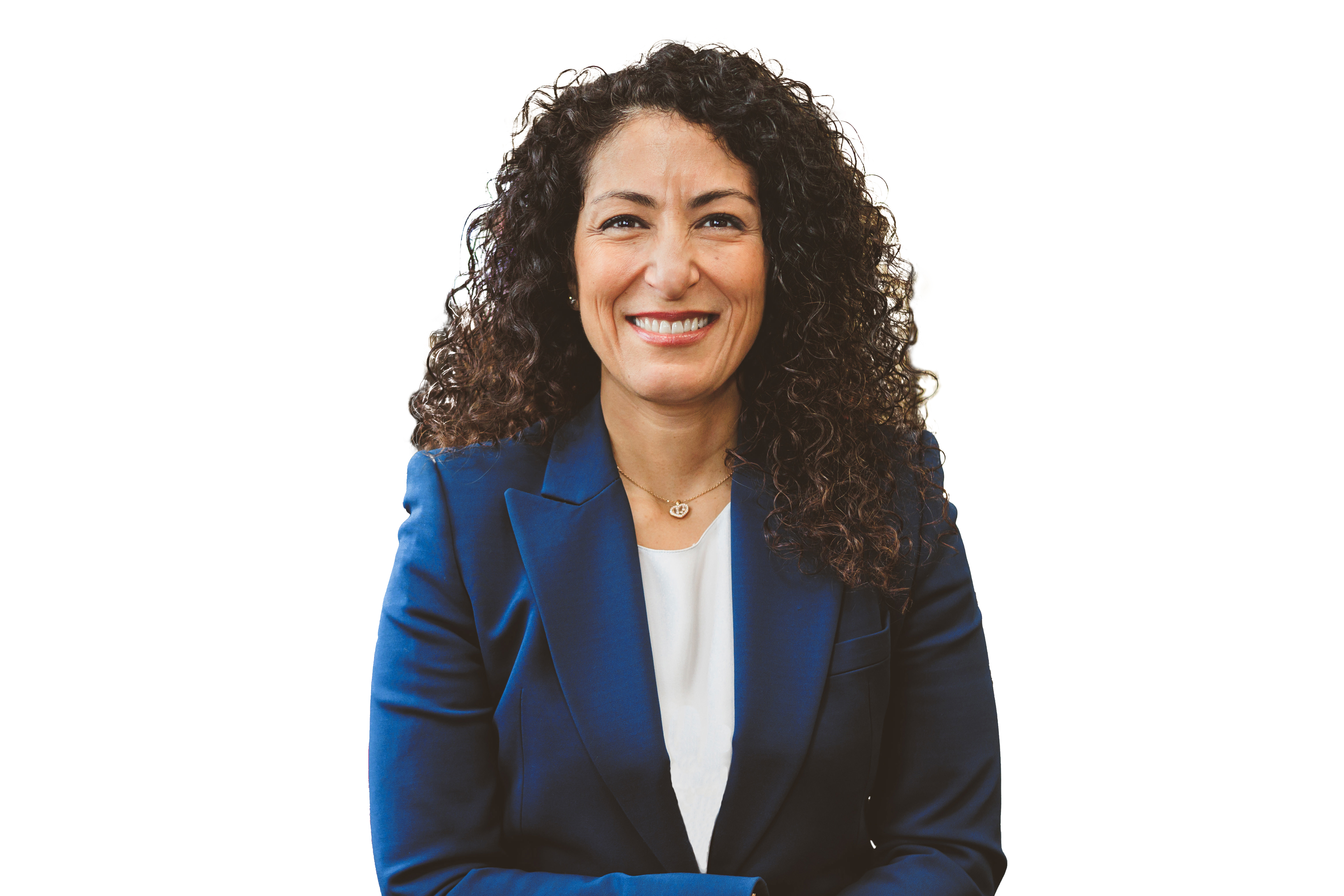
Sanaa Benzakour
Co-Founder and Co-Owner, PMML · more than $6 billion in transactions every year · past president, CREW M
She built the back end of a firm that now stretches across Québec; she still needs ten minutes to reach her own desk, because she stops to say hello to everyone on the way.
Watch · Episode 33
Chapters
At a glance
Who is Sanaa Benzakour?
- Built
- PMML, with Patrice Ménard, from a basement office in 2008
- Scale
- More than 260 professionals, over 138 brokers, eleven offices across Québec
- Known for
- The administrative team and systems behind PMML's growth
- Recognition
- Connect CRE Canada Women in Real Estate Award, Québec, 2023
- Before this
- Email marketing, telecom, multi-level marketing; affiliated real estate broker with Groupe Sutton Royal
Profile
few times a week, Sanaa Benzakour and Patrice Ménard would go downtown to the Fairmont Queen Elizabeth and order coffee.
"We had money for coffee, and that was expensive because we had to leave a tip," she says.
They went mid-afternoon or late in the evening, never at lunch. They were broke students. Why sit in a hotel lobby?
Today she is co-founder and co-owner of PMML, the commercial real estate, mortgage and damage insurance brokerage she started with Ménard in 2008.
The firm manages more than $6 billion in transactions every year, with more than 260 professionals in eleven offices across Québec.
Before real estate there was email marketing, telecom and multi-level marketing. She recruited Ménard into one of those businesses when they were friends, before they became a couple.
"He was the best deal of my life," she says. They have known each other 30 years and been married 28.
Their entertainment budget was $3: Le Palace on St. Catherine Street, $2.99 each for movies that had just left the big cinemas.
She has three sisters. When one of them no longer wanted a piece of clothing, she took it. "I always felt like I had new clothes."
"I could have had nice clothes much earlier, but we reinvested everything in the company."
Ménard got his licence in 2004, she in 2006; their son was born in 2000. He did the visits and inspections; she dealt with clients and banks from a basement office. Their first employee was a programmer.
"If he had to do a task twice, he would systemize it," she says of Ménard.
She built PMML's market report by hand. "I entered everything and I cleaned the database manually every single day."
The industry did not know them. At events, people in real suits asked what company she was from, heard a name they did not recognize, and drifted back to their conversations.
Then a banker told them something she still repeats. She will not name him; he is still in the business.
"You are setting new standards in the industry," he said.
"Your files are so clean, we like to put them first," he told them.
That came from an early rule: "We will never be the cause of a delay." They learned what lenders needed and built the file as the deal went along.
The other rule was to listen. "We're marketing people. We listen to people."
At networking events they worked the room, took cards, kept notes, and kept hearing the same irritant: nobody was serving the mid-market, deals between $2 and $10 million.
"We went where the multinationals wouldn't go," she says. Later, listening to Blue Ocean Strategy on audiobook while training, she recognized the pattern. "Oh my God, we did this."
Clients who started with a six-plex now hold 500 or 1,000 doors, and PMML grew with them.
She still refuses the word established. "It's a very dangerous thought because that means that you can now relax."
She and Ménard have declined to speak with companies wanting to buy PMML. Instead they set out to make brokers, part of the executive and people with five years at PMML shareholders.
"The people that helped you build PMML need to have a share of that."
She remembers standing in a great hotel with Ménard, tears in her eyes.
"I can't believe, like, now we're standing in that page of the magazine that we were reading."
The magazines were the other half of the ritual. They also spent hours at Chapters with maybe ten magazines each: health, fashion and travel for her, travel, tech and business for him. "We should have paid rent."
The coffee was never about coffee. It was about sitting where business was being done, among the people they hoped would one day be their clients.
Her advice for anyone walking into a room where nobody knows their company: find the person standing alone, stand beside them rather than face to face, and comment on the event.
"It's not because they're alone that they're not interesting."
We had money for coffee, and that was expensive because we had to leave a tip.
— Sanaa Benzakour
Key Takeaways
Never be the cause of a delay. She and Ménard learned exactly what each bank needed and built the file as the deal went along, which is why a banker told them their files went to the front of the pile.
Go where the multinationals won't. Rather than chase the biggest landlords, PMML consolidated the mid-market of $2 to $10 million deals and grew alongside clients who started with a six-plex.
You cannot buy leadership. You build leadership. She says brokers are leaders inside a transaction, and the value is in anticipating patterns and orchestrating quietly, not speaking louder than everyone else.
Established is a dangerous word. She refuses to describe PMML that way because it means you can relax.
Start with the person standing alone. Stand beside them, comment on the event, introduce yourself; it breaks the ice, builds confidence, and most people in the room skip that person.
About Sanaa Benzakour
Sanaa Benzakour is co-founder and co-owner of PMML, the Montreal commercial real estate, mortgage and damage insurance brokerage she founded with Patrice Ménard in 2008, which today counts more than 260 professionals, eleven offices across Québec and more than 2,000 buildings under brokerage contract. She received a Connect CRE Canada Women in Real Estate Award in 2023, served as president of CREW M in 2025, and sits on the boards of CORPIQ, the 30,000-member Québec property owners' association, and Levic, a 100-member real estate network. Before PMML she was an affiliated real estate broker with Groupe Sutton Royal.
Questions
On the record
Who is Sanaa Benzakour?
Sanaa Benzakour is the co-founder and co-owner of PMML, a Montreal commercial real estate, mortgage and damage insurance brokerage she started with Patrice Ménard in 2008. She received a Connect CRE Canada Women in Real Estate Award in 2023, served as president of CREW M in 2025, and sits on the boards of CORPIQ and the Levic real estate network.
What is PMML?
PMML is a Québec commercial real estate agency, mortgage brokerage and damage insurance brokerage that manages more than $6 billion in transactions every year. It has a team of more than 260 professionals, including over 138 brokers and more than 132 administrative staff, eleven offices across the province, more than 2,000 buildings under brokerage contract, and a PMML.TV channel with more than 1,400 episodes. The company says it holds the largest database in Québec's commercial real estate market.
How did PMML grow so large?
By serving the mid-market, deals between $2 and $10 million, that Benzakour says the multinationals were not addressing. In 2023 the firm had seven offices and 1,500 commercial buildings under contract; when she sat down with The Vault MTL it counted 150 people, 100 brokers and 50 support staff, and $5 billion under contract; today it reports more than 260 professionals and eleven offices.
What is CREW M?
CREW M is the Montreal chapter of CREW Network, an association of women in commercial real estate that Benzakour says has 14,000 members around the world and about 200 in Montreal. She was president-elect of CREW M for 2024–2025, president in 2025, and past president on the 2026–2027 board.
What is Sanaa Benzakour's advice for networking?
Go to the first person who is standing alone. Stand beside them rather than face to face, comment on the event, then introduce yourself; she says the person standing alone is often interesting, and most people skip them.
Full Transcript
The full conversation with Sanaa Benzakour, transcribed. Lightly formatted for reading.
There is something more. Like you said, you wanted to keep your dream alive. You need to have very clear expectations because when people enter, someone enters the business, the PMML, they're very clear with their intentions. We're clear with ours and there's a code of ethics.
But where did that come from? Like, how did you know you had to go into a place to like submerge yourself and then feel what the other people that you want to be like, to feel that and say, okay, you know what, I think I can do this because I'm present here. They're just human just like me, and if they can do that, So you need to have instinct in business, but instinct comes with intense practice over a long period of time. You cannot buy leadership.
You build leadership. If you believe that you're made for something bigger, if you believe that you're made for something greater than your actual circumstances, be patient, but never stop. You can't stop. Consistency is what got us here.
Sana, it's a pleasure and an honor to have you on the Montreal Entrepreneur Podcast (now The Vault MTL). Thank you for inviting me. Thank you for coming. I had a lot of fun researching you, getting to know what you do and the business that you're in.
very inspiring stories. So without further ado, please introduce yourself and tell us what do you do. So, um, my name is Sanaa Benzakour. I am the co-founder of PMML, which is, uh, the leader in commercial real estate.
So we do, um, real estate brokerage and mortgage brokerage, only commercial of course, and the province of Quebec. And, uh, we also have our license in Ontario, so we're, uh, setting up office in Ontario, but very, you know, like we like to do it, you know, one step at a time, no rush. But, you know, after a few years, oh my God, you just grew, you just blew up, you know, you just grew. So we have— we're a team of 150 people in the conference.
150? Yeah. So 100 brokers and 50 multidisciplinary, uh, staff. So it's, uh, we have analysts and business intelligence, uh, people and, you know, marketing and video and All kinds of great professions within the 50 people that support the brokers.
Now, looking back, did you anticipate all of this? Did you foresee in the picture of your mind that you would be here today? It's a very good question because no. I was hoping— you know, when you start a business, you never start a business hoping to fail.
So that's, you know, like, in a way, you hope to succeed. Yes. But to succeed at what level? You hope, but you have your idea of success when you start, in a way.
And then after, you have to discover yourself as you go. And as you face challenges and you discover how you react to certain challenges, and you don't anticipate sometimes— well, most of the challenges. We like the challenges that we pick, but life gives you other kinds of challenges. Of course, of course.
I always had big dreams. And when I met my husband and my business partner, Patrice Ménard— because I'm co-founder with my husband, Patrice Ménard— we've known each other for 30 years. We've been married 28. Wow.
So we've always been in business together. And I, uh, um, we grew up together. I mean, I met him, I was 20 going on 21, and he was 23. So we grew up together, and we did a lot of personal development together, you know, and, and did a lot of business together.
But we've always had big dreams together, but so broke. I mean, we were students, so we were so broke. And I remember, like, our entertainment was $3. It was, uh, this, uh, movie theater that was called Le Palace on St.
99 each for, uh, a movie. And it was like, uh, movies that just left the big screens, like, of the big cinemas, and it was just before going on DVD, on video. Actually, DVD was it? Was it a thing there?
I don't know. Video. So, so yeah, going from there and, you know, just having big dreams, you kind of don't know how to get there, but you just want to feed the dream, like feed the beast, feed the dream. So I think that it takes faith, uh, and honestly, you don't know how long it's going to take.
But you know, when you're young, you know, you just— yeah, I think that, uh, you just take the first step and, uh, and then another, and you never stop. I think it's What helped us is that we never stopped. So you felt like maybe a little bit naive. We're just gonna try it.
Completely naive. You know, you just— we're just gonna see how it goes. Yeah, exactly. And we didn't start in real estate, we started marketing.
Okay. So yeah, so we started marketing, email marketing, and also telecom. And we did a lot of things, you know. We did, uh, you know, multi-level marketing.
We did— that's our experience in building teams. I guess that we took it there. Yeah. So the no-shows, the rejection.
I mean, you know, and for what? I mean, the pay was like the money was compared to real estate. It was so little. It was not much.
But for us, it was— I mean, you know, it's a business, right? And you just want to, you know, the idea of building teams and help them grow and, you know, help them, you know, achieve their goals. And if they achieve their goals, you achieve your goal. That whole mentality, I think, came from— when did that start?
When did you realize? It was actually I sponsored Pat. My husband. So I started, he was my— I recruited him.
He was the best deal of my life. So that's how we became business partners. Before, we were friends, business partners, and then we became a couple. Oh, that's interesting.
So the foundations, it's really good because we got to know each other. Yes. And then we got to know each other with money, with, you know, how we, you know, so, and every— all the, uh, fundamental values, we got to know them first. So then the foundation was rock solid after.
And of course, there was a little attraction, of course. But, you know, and then, you know, and then it just, it was just a natural fit, you know? Very interesting. So you shared the same values and you understand each other and move on to something else.
Wow. And then all of that, all of those skills that you acquired, you were able to transpire them into the business that you're in today. Yes, absolutely. Absolutely.
It's, I think that learning how to understand people, understand yourself first. Yes, and getting to know yourselves. Getting to know yourself. So I think that having a strong sense of self, well, for each other, you know, like for me, I need to become myself.
He needed to become himself. And but parallel, you know, in parallel, like side by side. So, and being kind to each other, like, okay, you know, We grow to our own pace, but towards the same direction. And we were able to, um, you know, in a loving relationship, in a respectful relationship.
Of course. So that helped us a lot. So I never wanted to challenge him. He never wanted to challenge me.
We challenge ideas, but not the person. I never challenged his integrity and vice versa. But we challenge ideas sometimes because, you know, we're business partners. But sometimes— but the intention is always pure.
So I think that when the intention is pure, I think you don't have to always be on guard or in a survival mode within the couple, within the partnership. That's what kills partnerships sometimes. Yes. It's always checking the person out or always, you know, but you trust each other, but sometimes your business partner, you know, probably has a new significant other and sometimes goals change.
So I think that when a couple starts In a business, you are in a— Yes, exactly. When you have the same goal. Same goal. And, you know, it's— It's aligned.
I think that people say, how do you do it? I honestly don't know how people don't do it. I think it's just integrated system. It's all integrated.
It's— there's a flow. Uh, for me, there's a harmony. It's never balanced. I don't believe in balance.
We don't believe in balance. We believe in harmony. There's highs and lows, and you just have to fill in. And it's just— Just go with the flow.
Yeah, you know, it's just the flow, you know. It's got to be done. it's got to get done, you know. No matter how it gets done, it's got to get done.
So if you can't do it, I'll do it, if I, you know. And then— So do you separate the task? Like, you know, he's in charge of, I don't know, operations, and then somebody else is more marketing type? Like, which one are you?
When we started a real estate business, because PMML, you know, it was, uh, we, um, he got his license, Patrice Menard got his license in 2004. I got my license in 2006. before that, we had our other businesses, email marketing and all that, but in real estate. So when he got his license, um, I, um, you know, I helped him with the admin stuff because our son was born in 2000.
He's 23 right now. I mean, and, um, so it was just easier because all the activities, schoolwork, you know, like, um, you know, homework and all that. Mm-hmm. And, um, so it was just easier for me to, you know, be at the office Back then it was home office in the basement, and he would do the deals.
He would do the visits, inspections, and all that. I deal with clients, deal with banks, and all that. So when we founded PMML, it was Patrice Menard Métier. I actually found the name.
I said, "You know, well, like we're competing in such an old school industry, like commercial real estate. It's very when we entered it, it was like 2004. " It was very different. It was not digital.
It was very paper, still paper, you know, like offers, paper fax. We were in email marketing, you know, like we came from— You were a little bit advanced. Yeah, my husband would always read, you know, a tech magazine. Like, he was— he's a very tech guy.
Our first employee was a programmer, so everything we did was systemized. So when he started in real estate, like as an agent, as a broker, everything was systemized. If he had to do a task twice, he would systemize it. So, you know, our big team of 2 were running so many transactions because we systemized a lot of things.
Yeah. So, and that was in 2008 when we founded PMML. It was 2008, our own company. We were with residential brands before because, you know, that's what Everybody did.
Yeah, it was, yeah. And, um, but so, so 2008, when we started our agency, it was, uh, you know, it was our system, one employee. It was, it was, uh, a programmer, and we just, uh, started that way. And, and then after, we just took so many market share for like, for a team of 2.
And then we started, uh, we launched our report, um, a market report, which is all the transactions that we, we bought every transaction in the market of commercial transactions. Okay. Everything. And now, like, we're in 2024.
We have a history of like, now the company is 16 years. We have history of like almost 18 years or 17 years of transaction. And also, I did all the vetting of the trip before we had a team. I, you know, I entered everything and I cleaned the database manually every single day.
And then after, eventually we had more people And we never, like, you know, we never splurged. We never— you know, I could have had nice clothes much earlier, but we reinvested everything in the company. Self-discipline too, like different. Oh my goodness, I have no idea.
That was really hard, I bet, right? Oh my God. I mean, you know, I have 3 sisters. Okay.
And my parents are Moroccan. I was born here. My 3 sisters also. I, you know, sometimes— and they're— thank God they like fashion, so they, uh, they had nice clothes.
So whenever one of them didn't have any, like they didn't like a piece of clothes, I'll take it. And we do that. It's not, it's not like— Sisters. Yeah, it's like between sisters, you know, it is, you know.
When we were younger, we'd fight about clothes, and I was like, you want this? You want that? You know. And so I always felt like I had new clothes, and that's what we did.
Yeah, rotation. And so I was able to save on that because that's a budget, uh, and, um, but you know, we're always reinvesting in the business, um, and also a lot in technology. Back then, a CRM was not even a word. We used— we had an extranet, intranet in 2000.
Think about it, 2008. It was not a thing. It was a lot— it was not that long ago, but now you see. So, and everything was centralized, and every time we did something, we said, okay, just in case we have a team, this is how we should build the— that's my husband, he's the architect of the, the whole CRM.
Just in case we have a team, Let's do this as this, you know, the foundation of the CRM, the way we laid it out, but we're not gonna have a team. And then we just continued. And then, but because I think we had a couple of fears, you know, what happened, you know, our standard, we worked so hard to build our name, you know. So building new people would— You know, building new people, are they gonna follow the rules, like the standards?
I think what struck me was one of the bankers had told us, you are setting new standards in the industry, because our files were so clean. And he told us, he said— I'm not going to name his name, he's still in the business— he said, your files are so clean, we like to put them first. We like to treat them because it's just so easy. We just go through them.
It's billed. It's like— And because me and my husband, Patrice, we always say, We don't like to do things twice. It's like, what do you need? What do you need?
Okay, this is how you need us to build the file. So when we had an offer, we would tell the client while we're having— like, we know exactly what the bank is going to need. Okay. You know, you have a couple of bankers, so, you know, you have like a common denominator.
This is what we need. So we were building the file as we go. So we would never— we always said we will never be the cause of a delay. So when you work that way, you have velocity, you have speed.
Mm-hmm. So once we decided in 2013 to start building a team, you know, and then 2018, we just opened the machine. Like, we had an acceleration in 2018, but it was just like multiplying those standards. So we're always continuously want to set a new set of standards for the industry because we're very tech.
And now we're working on AI projects where we expose them at the, um, Montreal Summit, Real Estate Summit, in the Palais des Congrès Convention Center. And, uh, we had a, uh, PMML was with, uh, uh, a specialist of, uh, EY, uh, from New York. And, um, our Gabriel, our COO, was, was talking about our, uh, AI tools. Wow.
And, uh, I mean, a lot of people came back to us and said like, You're working on this? I said, yes, we're working on this. So we're, you know, like, we're not so big that we can still— we're still agile, but we have the means of a multinational. So you created like a blue ocean strategy in the industry.
Do you know that book? Yes, I have it. It's an amazing book. I honestly, when I— I actually, I didn't read it.
I listened to it on audiobook while I was training a couple of years back. And I was on my elliptical. I was like, oh my God, we did this. Oh my God.
Like, yeah, because we went where the multinationals wouldn't go, which is great. I mean, there's established companies. I mean, you know, we never saw each other as competitors. It was just like, I mean, there's no way we can compete.
You know, we're, we're in our basement. We're just starting real estate. What can we do? We're client-centric.
Yes. What do the clients need? So what do clients need is they need service. They need someone that understands their business.
They need to— like, so the mid-market was not addressed. So we just consolidated the mid-market, which was the smaller transactions between, you know, what is now between the $2 and $10 million. But how did you figure that out? How did you understand?
We're marketing people. We listen to people. Okay. You ask questions?
We ask questions and we networked a lot. We went to all the networking events. Networking events. So when you go, when you network, you listen to people, you shake hands.
And I'm very sociable. You have noticed. Yeah, I noticed that. I like to speak, I like to listen.
My husband's the same. So we would enter an event, see you later, see you later. We just work the room. You're gonna elaborate on that.
We just meet people and sometimes we're together, we meet people and we just speak with people, ask questions and then keep notes and take cards. Back then it was cards, now they're e-cards or QR codes. And we have cards and we talk to people and it's okay, that's an irritant that you don't like that, they don't like that. Nobody's addressing this.
We did. And we were— we're all— I'm still hungry. Yes. But we were hungry.
So when you're hungry and you listen to people, there's no other way to build a business than to be a client-centric business. It's— I mean, it's like, for us, it was a no-brainer. So, and, and I think that other people were just busy with their deals. Probably they heard the same information.
They just didn't address it. Okay. We addressed it. But you coming from the outside with a marketing background, I think that, wow, that, that was a huge advantage for you both.
I believe in cross-pollination. Yeah. You know, people that come from other industries are the ones— I, I don't, I don't like the word disrupted because it was not an intention, but that's what we did. Okay.
I mean, think about it, $5 billion under contract right now, and we're only 16 years old as a company. Okay, 30 years in the making because I wasn't born 16 years ago, but our business intelligence was there. But seriously, 16 years PMML, and we've reached that point between our mortgage and real estate division. It's amazing.
It's, it's, it's, it's huge in Quebec. It's huge. So I think that when you remain client-centric, when you understand what the client needs, and collaborators also— I like to see our, the bankers to listen to them, to understand what they need, what's irritant, why, you know, who are the best people to work with, uh, even all, you know, the lawyers, everybody, everybody in a transaction. Are you always taking notes, like, to gather all of that information?
Because you're, you're taking it all in, you have to write it down, and then after that— Well, we have plans, of course. We have planned strategies. But, you know, but it's, it's funny because I think that, um, people say that you have You need to have instinct in business, but instinct comes with intense practice over a long period of time. You know what I mean?
When you're very intense and very obsessed, and I said, you know, we were very broke. I just want to remind people, like, we were so broke. I mean, you have to— My marketing budget today would have been like a dream just to have that as a, you know, a revenue. Yeah, it's like, you know what I mean?
For us, it was just, it was a no-brainer. So I think that, you know, just being intense over a long period of time, always being alert. Yeah. And never, you know, we were underestimated, like not underestimated, but you know, like when you enter this type of industry, you're like a newbie, nobody knows you.
And you go to events, like some real estate events, like corporate events, and people are, back then, people wore suits, like real suits. Now people are more relaxed. But so like the budget of a suit was like, okay. But anyways, so you go into those events and there were cliques or people that know each other.
And when you try to network, they're like, hi, yeah, what company are you from? And you say a company, nobody knows your company. It's like, okay, yeah, they're polite, but they just want to go back to their conversation. And not to be intimidated by that, you know?
Yeah, that's a good point. You know what I mean? And you want to— and you look at, you know, you listen to panels and you see big clients or like I remember like some of the biggest, some of the biggest Landlords, you were on panel. You were on panel, and you listen to some of the people that give some talks and say one day maybe we'll be able to to to work with those people.
Yeah. You know, but it was just a thought because the step was so big. So, but it was never a goal because that that's the red ocean. Everyone wants to work with those people.
You know, like you know, les têtes d'affiche. You know, the big the you know the big landlords. The shiny. Everybody sees that.
Yeah, the shiny. It's fine. Fine, but it's like, there's so many people, so many clients to serve, and so many people in our position, meaning they want to start and they want to grow. We wanted to find the clients that wanted to grow, and so we can grow with them.
And that's exactly what we did. So now, 20 years later, or 16 years later, well, those clients that started with a 6-plex, now they have a portfolio of 500 or 1,000 doors. And we've built those. Yeah, you grew with them.
We grew with them. So now we have such a great relationship with them and we're able to work with them. So we're at the same position where some people, you know, that were already established. So now— but I don't like to say that we're established.
It's a very dangerous thought because that means that you can now relax. Yeah. That's death. Yeah.
That's death for business. You can never get comfortable. Because, you know, now everybody knows us. Mhm.
Everybody knows us. Now you become the shiny object. We're, we're leaders in the market. So hey, everybody wants a piece of what we have, right?
Mhm. So no, I will not concede one inch. I'm not competitive. I'm, I, I'm— we honestly, we're very big in collaboration.
We love to collaborate with all brokers. Um, I think that the best way to ensure that your business thrives is to collaborate. Yeah. And not to be too snotty or cocky or, you know, be too good for some people.
Always be humble. You never know where your lead is gonna come from. If you're not nice, if you're dismissive, you won't get leads. People won't like you.
But if you make people comfortable, Then you get all kinds, you get the attention, you get the leads, you get referrals, you get, and you actually, you keep your clients. Of course. Who wants to deal with somebody who's not nice? Yeah, I know, but some people, they just— They're just like that.
They get high on their own supply, let's just say that. Oh, okay. They believe their own image. Which is okay, I mean, it's their stuff.
I just think that you can be confident, But it can still— I understand what you mean. There's a story that I heard you mention that you were back, you know, you didn't have a lot of money, so you would go to coffee shops, but not any place to get coffee. You would drive downtown with Patrice and then sit down and have a nice coffee at a hotel. Can you please relate that story again?
Oh my goodness, that's a nice one. That was the Queen Elizabeth, the Fairmont. So we, that was one of our favorite places. is we would like to, you know, yeah, we had money for coffee, and that was expensive because we had to leave a tip.
So that's not just Starbucks, like you pay and then, you know, you leave a, you know, it was like a, you know— Fancy coffee. A fancy coffee, fancy sitting. But what we liked is to put ourselves in a favorable environment and in an environment where, okay, this is where business is being done, this is where successful either stay, have lunch, business lunch. And these are the clients, or whatever they look like, or whatever their energy or their status, or— these are the clients we need to be around.
These are the people we need to be around. One day these people will be our clients, or, you know, whatever their stature or whatever their, you know, wherever they are in their company, you know. So we would sit and a few times a week and just go for coffee. And you don't go for coffee at lunchtime because, you know, it's lunchtime.
So you'd go in the middle of the afternoon or a little bit late at night, and you would see who would be there and especially just soak into that environment. And also we would go to Indigo. It was Chapters on the second floor. Yeah.
Now there's Victoria's Secret, but now it was the second floor, it was Chapters. We spent so many hours there. It's like, I mean, we should have paid rent. Oh, you're reading?
We had a coffee and we had maybe 10 magazines each. Okay. And it was very strategic. I had health and I had fashion and I had travel.
And Patrice also had travel. He had tech and he had business. And we would exchange. Why was that important to do that?
Because our circumstances were pretty much— it was not ideal, you know, financially. And when we had money, we always reinvested. So I didn't have extra money to, you know, like I said, you know, splurge. Yeah, exactly.
But we knew that if we kept going, because, you know, you read success stories, you read biographies, you read growth mindset books, you read John Maxwell's books, you know, about leadership. And you know that you have to serve in order to get whatever you want to get in life, you know. So if we focused on who we would become, so we needed to stay dreamers and not disillusionized or, you know, um, you know, like, uh, bitter, or, you know, like, oh well, you know, my friends just graduated from university and they're getting their first house or condo and We don't have— we're still renting because we're putting all our money into the business. So, you know, that part, we needed to keep our dreams alive because life is not a race.
It's, you know, it's a long marathon with, you know, hurdles and all that. But we knew because of other business people, how they succeeded, we knew that it was just a question of, you know, I like to say power moves. Mm-hmm. Okay.
You know, it's a question of moves and question of, you know, what's our strategy. We need to work on our strategies, our approach, and all that. Yeah. For sure.
But a lot of people that are broke, they're not gonna go and do that. So there is something more. Like you said, you wanted to keep your dream alive, but where did that come from? Like, how did you know you had to go into a place to like submerge yourself and then feel what other the other people that you want to be like, to feel that and say, okay, you know what, I think I can do this because I'm present here.
There's not— they're just human just like me, and if they can do that, so can I. You know, it's a good question because a lot of success stories, a lot of people come from, you know, shattered home lives, and I had such a great childhood. I mean, and again, that could have been a limiting belief. Oh, well, I don't come from, you know, despair or like, you know, like I had a really great childhood, thank God.
My parents were great, my sisters were great. So that need, I think it's like, my parents are immigrants. Well, not now, after 45 years. They were immigrants.
So, and I know their story, and they did struggle in the beginning. And like any immigrant, you know, they had a lot of money, and they invested in business, and they worked really hard and all that. Mm-hmm. And out of respect, I think that I I think I realized that later on, but it's like I owed them to succeed.
Also, because I needed— you know, like in our culture, I'm Moroccan, my husband's French-Canadian, but it's like you don't send off your parents to a home. You know, I shouldn't say that, I'm in real estate, but you know, that's the culture. You know, like senior residence. Yeah.
You need to take care of your parents. So for me, I needed to be able to— you know, I have 3 sisters, so they're fine. I mean, it's like I'm not the only kid, but, you know, we need that sense of I needed to take care of them. Yeah.
You know, we have the same mentality, my husband and I, for our parents. So we needed to take care of them no matter what, 'cause, you know, who knows in the future, you know? So, and also, I like nice things. I'm very empathetic.
I have a lot of empathy for people. I wanna be able to give to whoever I wanna give, to whatever cause I wanna give. And also, I like nice things, and I don't think we should choose. Yeah.
I don't think we should choose. I think that we should be able to give and enjoy, you know. I was in an extraordinary environment. I— we're in a great hotel in a great location, and, um, I mean, the service was just amazing.
And I was like— and I had tears. I was with Pat, and I was like, I just— I can't believe, like, now we're standing in that page of the magazine that we were reading. Wow. You But I have that, my gratitude is ongoing.
Yeah. And I've been living a great, like, we were able to, you know, we're good. We've been traveling for many years now in great places. So it's not like new.
But every time I'm in a great environment, I have a very strong emotion of gratitude. I have so much gratitude because I know what it took. So, and I am not, To, you know, it's like I am, and every time a broker starts, we have a lot of people that were already successful that started with PMML. Some people were not successful, but they had that drive, no matter what's your background.
So I think that if you have that drive, I can see in their eyes they're gonna succeed and they're gonna, you know, at a different level. Some people have really great success and they just wanna go to the next level. So you can spot them? I can spot them.
And some people, they just wanna have a chance and we We have so many great tools, like the leverage of time that we, we give at PMML, uh, the, the tech tools. I mean, now if you don't have tech tools in your agency, uh, you're going to be considered illiterate. Yes. And I don't know how people are going to do it in business.
They're going to be left behind, basically. Left behind. It's not— it's not— it's no joke. Now it's advancing at a speed where even my— me, I'm I mean, I look good, but it's because of the team.
They make us really look good. They make us really look good. But the team is benefiting from all the efforts that we've been building for the last few years, and now it's just accelerating. Yeah, leveraging tech is the best, the best way.
People are afraid of AI, but we have to use it and become better, faster, more efficient. Yeah, and AI without data is nothing. thing. Yeah, it's like a car without a— without gasoline.
That's it. It's that you need both. You need, you need data and you need AI. And, um, I think that for us, the database that we've built and that we've been able to maintain, uh, and clean over the year, and like over every, every month, every year, uh, matching the AI, matching our CRM, all that together Any broker that feels they're at the top of their game, if they're not backed by the right tools, it's not going to be good in a couple— it's not going to look good in a couple of years.
And I feel like, uh, that the businesses that are agile will win the— will win in business because they're, they're staying focused. They're like not distracted and go, go, go. Yeah, for sure. And what is the culture like at PMML?
Ah, the culture is amazing. It's wellness and performance. Wellness and performance. Yeah.
And you put a lot of emphasis on mindset because I hear in a few of your videos you talk a lot about that. Yeah. You know, Robin Sharma described it really well. It's like mindset and heartset and soulset and all that.
And I think that people that we, we like to attract at PMML They're— they would like to see it as a whole. We're holistic people. You need to feel that you— you need to feel like you're growing personally and in your business, and you feel like you're aligned with your goals and that your goals are aligned also with the goals of PMML. Yeah.
So when we speak with a broker, it never feels like an interview. It feels like a conversation. When I speak with a broker, Patrice speaks with a broker, or anybody— actually, we have ambassadors at PMML. A lot of, of our brokers— it's funny because in another agency, every time they see another broker like approaching the agency, it's like, uh, another competitor.
Yeah. But us, it's like we welcome people because we see that it's an added value because we have these ecosystem of masterminds. We share our knowledge, we share a lot of knowledge within so that we become better. So instead of keeping our tricks to ourselves, each one of of us, we think that, okay, if I give my advice or if I, I, if I share my experience with this, this situation, okay, well, yes, it's going to benefit my, my colleagues, but their experience is going to benefit me.
So we're like 100 brokers that share all the time. Like, we have 37 brokers, mortgage brokers, and the rest is, uh, 63, uh, real estate. So we have our masterminds and, okay, So they're sharing this situation, it's like, and then it just triggers something, and then conversations. And we have, we have masterminds, Zoom, like the whole province is within Zoom.
And wow, yeah. And even the business intelligence team, which is in the administrative team, they listen to that. So whenever they, uh, they deal with data, they have that periphery, uh, peripheral, uh, knowledge. Yes, the vision.
So I think that when have such a team working in the same direction. Uh, we're like a safe space where people— you can make mistakes, non-intentional. Intentional mistakes repetitively, that's negligence, so that's not a mistake. But— I understand.
But you can make mistakes, and we're between ourselves, and we're like— I don't like to say it's war out there, but, you know, it is very competitive, and And certain things that are being done, and sometimes you see people that sometimes act with, like, it looks like they're desperate sometimes to make a deal and they do things. And it's like, for us, it's like we just, we have a code of honor and we have wisdom inside. And these are the pillars of a strong business, you know, like honor and wisdom and common sense. Common sense.
I didn't see that one coming. I mean, it's just like sometimes it's like, oh my God. And sometimes clients will ask you things like, do you realize that what you're asking me is going to put my license in jeopardy? I can't do that.
So our brokers are very aware of that, but, you know, they always try to help clients help themselves. And, you know, and because sometimes Sometimes it's just not gonna, but anyways. And if there's a team member that they don't match those values, what do you do? Like, how do you guide them to become more, or if it's not working out?
You know, we have a code of ethics, so it's pretty clear. You know, if you wanna create a very healthy environment and governance in a business, you need to have a very clear expectation Yes. Because when people enter, someone enters the business, the PMML, they, they're very clear with their intentions. We're clear with ours, and there's a code of ethics.
So these are things. So I think that it happens naturally sometimes when people do not, you know, if they're not up to the standards, you know. They just leave on their own? They just leave on their own, or we have a conversation with them and it's like, okay, you know what, like, you know, what's going on, you know, like your colleagues are not gonna, you know, or even in the business, you know, it's like, can't you really, really do that?
But it doesn't happen really often because it doesn't happen. Do you have those hard conversations or is it Patrice or somebody else? He takes care of the brokers, so he coaches the brokers mostly. But I'm very close with brokers also.
We speak, you know, every time we go into an office, we just go around the office. It takes me 10 minutes just to get into my office because I like to say hi to everybody. I like to connect. We like to— Patrick says the same thing.
We like to connect with everybody. And whenever we leave the office, we go around again, see who's still there, and we say bye. We just— unless I'm really late to a meeting. But we like to connect with people, and we're really— we're connectors.
And we, like I say, you know, there's a safe space. It's an open space, open discussion. So now I cannot be be responsible for someone who is not— you know, like, everybody has their own blueprint, relationship blueprint. So if somebody is not— like, somebody is used to say, okay, um, this is a safe space, you can— open-door policy, you can come to me.
Yeah, yeah, sure, sure. I said it. Yeah. Everybody around you says it, but maybe you're not used to this because maybe in your past experiences if you speak, you're shut down, or, you know?
So I cannot control that perception of the person, right? Their baggage. But, you know, that's— Sometimes they just need proof that it is— Well, no, but I mean, it is there. So sometimes, you know, so it takes time to learn to work with each other sometimes so that they can feel, you know, like, because everybody wants to work at PMML, it's like it's a high-performance performance environment.
People, they know that. But at the same time, once you're in there, it's like, okay, it's really high performance, but it's also wellness. Yes. How can I help you to get better?
How— if the challenge— because commercial real estate is really tough. I've heard. And it's not 15-day deals, it's like 6 months to a year to a year and a half deals. So it takes stamina, it takes strength of character, And it takes a lot.
People think it's too emotional being in residential. They want to be in commercial. Sorry, uh, try to deal with a big ego, or sometimes, uh, people that are— they can buy you and your family altogether, they're so rich. And you'd have to deal with that person and say, sorry, we can't do that because, you know.
Okay. So that takes strength. So we're here, we have all the tools also, all the, the training. Patrice gives all the training for that, and the whole team, not just Patrice.
We have a team. So there's the training for that, or like just to vent. Forget about the training, because our brokers are not new brokers. Sometimes they're experienced, like sometimes experienced brokers, they just need to vent.
We're here. So a lot of experienced brokers, they just go into Patrice's office, they sit down, they say, I'd like to speak, they vent, and then they leave. Or they call Patrice, and it's like Patrice doesn't even have to say anything sometimes. No.
It's a lot of listening. It's a lot of listening, but because Patrice knows, like, he has this overview, like bird's eye overview of the whole business. He does know all about the transactions. He has all these dashboards and all these really sophisticated, yeah.
He knows a lot about everything that goes on in the industry, so he's able to, counsel, you know, and say, you know, help the brokers or ask the right questions. And most of the time the brokers come up with a solution. But that good listening, and he's very wise. Very good leadership.
Yeah, it takes that. Yeah, leadership is all— it's like, uh, you cannot buy leadership. You build leadership. Yeah.
And leadership, like, if— I don't know if you read John Maxwell's books, uh, The 5 Levels of Leadership. Please, I don't know the camera, but read that book. Amazing book. Well, write that down.
That's one of the questions at the end. Like, that's one of them. Sorry. No, no, it's okay.
It's okay. We'll take that into consideration. So that's very good. I like that.
But continue with the book. Yeah, go ahead. No, it's just that actually, it's just that, you know, there's titles and there's, you know, there's position and there is status. And, you know, when you strip all that out, the human qualities of a leader.
And brokers are leaders in transactions, and that's how you build people. And it's like, it's not just, you know, having your, your name, you know, a tape tapered in the whole, you know, around the city. It's not just that. It's what do you do when you're in a transaction?
What— how do you act with— how do you take leadership? How do you orchestrate a transaction? Mm-hmm. And it takes humility and it takes strength.
It doesn't mean that you need to speak louder than everybody else. You just need to be able to understand and foresee, anticipate what are the patterns. And if somebody does this, this is going to happen. And, you know, that's the value.
It's the little things. It's the little things. And that's the value of a very good broker. And, you know, like, we're always looking for power players and always looking for, you know, we're having always, always really great candidates that come to us, and sometimes it's just because— Now you're expanding to Ontario, right?
We're expanding, expanding still in Quebec because in the commercial we have different class assets. We have multifamily, commercial, industrial, and office. So I need more brokers in commercial, industrial, and office. That I need more brokers because that market is so big and we need more experienced brokers in there.
So we're in discussion with a couple. It's just a question of timing sometimes, but a lot of people are knocking and I'm really flattered and very grateful for that because that means that they see the standards to attract them. You mean? Yeah, absolutely.
Yeah, that's, um, it's very nice. So, so for all those listening, if you're a power player, power players only, because we are power players and we have the— honestly, jokes we have really the best tools for people to leverage their time. Yeah, definitely. And recently, you're in the process of becoming the president of CREW-M.
Yes, CREW-M. Congratulations. Thank you. Thank you.
Actually, I was elected. So it could be confusing because it's a 3-year mandate, you know? So it's like the way it works, it took me some time to understand this. Even if I was in CREW for a few years, but now I really understand the role of president.
Last year it was— you have president-elect, so that's— you're being elected president. And then after, you have the year after is president, acting president. Okay. And then you have past president.
So it's nice because it's like president-elect, it's like you're starting to understand your role and contribute to the, you know, to the association. Then you are acting president, so you assume your presidency. And then after, when you're past president, well, you just help the other 2. So now you're in year 1?
I'm in my year 1. And I'm very— this is a very good system because, you know, it's volunteer work. So we're all busy with our businesses or, you know, jobs. A lot of people, it's not their businesses, you know, they have jobs, so they can't just take off.
So it's a lot of implication. But at the same time, you have the help with the other 2 presidents. So it's like you understand, because, you know, you're on the board, you have to oversee all the committees. And also, uh, the, the president-elect, which is my position right now, we're the bridge with CREW Network, which is 14,000 members around the world.
Now we have UK, uh, France, and Ireland that just, um, uh, just joined. Uh, they were affiliates, now they're You know, members on the other chapters. You know, amazing. Yeah.
So it's a very nice network. So it's all commercial real estate. So it's funny because it's an association. In the beginning, it was like, I think 2018 or 17.
I started. I was like, hmm. It's a women's association. It's all commercial.
I have all my competitors there. So why would I want to network with them? Right? Seriously.
Honestly, I was like, hmm. Interesting way to see it. Yeah. No, but seriously.
Seriously. Seriously. I was like, and you know, I was like, hmm. And you know, I was like, okay, but you have architects, you have all kinds of, uh, you know, all kinds of professionals, uh, lawyers and all that.
And I see so many lawyers. Why would lawyers want to network with other lawyers? So many lawyers, you know, that would— but at the same time, again, it's the collective, uh, sharing masterminds and helping each other. And also the, the purpose is to put women, to show women, you know, how to be in their own business.
When you go back to your business and you go back to your firm, how to be able to be better and to be considered if, you know, that you were to be chosen on a board, how to act, how to become a valuable asset for your company. So when I saw that aspect, I was like, okay, I'm in. So they teach you all of that? Yeah, that's why I told you you have to come.
Yeah, and also all the networking because he's just broadens your network in commercial real estate. And how often do you meet per year? Like, what is that like? We have one event, I think, once a month, but different kinds of events.
You have training, sometimes you just have cocktails, just mingle and get to know each other. Sometimes we have panels. So it's different types of events. And also you have many tools also to your disposal.
And, you know, there's one of the biggest studies on DEI that was done by CREW Network. So that And that's like, it was an extensive study throughout North America. Well, actually United States. I don't know if they included Canada in that study.
But, you know, it gives you all the trends, all the trends in the workforce. So it gives you that kind of like that workforce intelligence. just so you can, you know, just to foresee. Sometimes some people, they have such small firms, or, you know, like, you know, architects, maybe they're 4 in their firm, they're 4 or 5, they don't relate to that.
But at the same time, it gives them an idea of what's going on in, you know, on the field. And sometimes they're like big, big, big firms, and you just understand a little more what are the social trends. So I think it's just valuable to be in that kind of environment. And then you saw that those benefits work for you.
Absolutely, absolutely. And I think it's really great. You can be a volunteer, but at the same time, being a volunteer, you just say whatever you want to do. It's like you can help out at an event or just, you know, for like at the golf, being just, you know, be on the golf cart and just, you know, having fun, you know, serving.
There's so many ways to volunteer. We're 200 members in Montreal. I think Toronto, they're 400. It varies, you know, it varies.
I think Ottawa, they're pushing to have 35 people to create a chapter in Ottawa. I would love to have a chapter in Ottawa. Because you're expanding in Ottawa. Well, I know, but I'm in Gatineau.
We have a team in Gatineau. It would be great to create that synergy because Gatineau and Ottawa, let's just face it, it's 8 minutes. Basically the same. That's very interesting that But to go back to what you said earlier about working the room, so now if we're speaking about networking events, okay, and let's say me, for example, I don't have a lot of experience to work the room, like what is your strategy?
What are some tips and tricks that— Yeah, networking. It's a lot of people ask me that, actually. Well, for me, it's so natural, and because it's so natural, once the There was this young woman, she said, but how do you do it? And I really had to stop and think, what do I actually do?
I enter a room and I just talk to people. So no, but okay, okay. I like that, I like that. No, I mean, we overthink things so much.
Yes, that's true. Okay, so the easiest way, because they say when you enter a room to show insurance, you don't, you don't, Lick the walls. You're walking into the wall. Don't do that.
Go straight into, like, maybe not in the middle of the room if you're shy, but, you know, don't stay near the wall. But if you see someone that's alone, you can just have it, you know, you drink a glass of water, whatever, wine, whatever, and just, you know, stand next to the person, not face to face, because if they're alone, there's a reason. They're shy too. They're going to feel invaded.
So you stand next to the person and comment on the event. And then after, oh yeah, by the way, my name is— it's as simple as that. You start with one person that's alone, and then after, it's just an icebreaker and it gives you more confidence. And then after, someone passes by, and chances are you know someone and you bump into someone.
Or if someone looks at you, you cross your eyes, it's like a hi, you just smile. And then just honestly just go towards people and just, hi, I'm Cathy, it's my first time. Is this your first time? What is this event?
What is the purpose of— not the purpose, but what do you think you're getting out of this event? Or whatever it is. Sometimes it's just a cocktail, sometimes it's a launch of something, depending on the event. But I think it's go to the first person that's alone.
Because sometimes it is intimidating to go into a group of friends and you're like, hi. You know, like, it could be, you know, like— Maybe don't start there. Don't start there if you're shy. I have no problem doing that.
Or you just walk in and say, hey, you know, by the way. Yeah, yeah. Or sometimes I just smile and then I just smile. I pass by a person, I smile, and then they smile and I just go grab a drink.
And then after, I'll just pass by again and if they smile back again, then I'm like, okay, save me. I'll go save them. Sometimes I do people shy. I like, I like that dynamic because after— and sometimes they're so interesting.
Yeah, they're so interesting. It's like they— it's not because they're alone that they're not interesting. People— no, but seriously, people, they just skip the person that's alone. I'm telling everybody.
They're so— yeah, yeah, yeah, yeah, yeah, yeah. Well, so everybody that's listening, this is how you do it. One, one side of it. And where do you see PMML in the next 5 years?
PMML in the next 5 years. We started, you know, in Montreal, the Greater Montreal. Our first expansion was Quebec City in 2017, and also we also started the same year our mortgage division. We thought One, two brokers.
That's it. Now we're thirty-seven, and we have like okay, we cover the province. So in the next five years, what I think now we're working on the very big power move right now in September. We're going to launch our shareholders.
We're going to we're going to include we're oh my god in French c'est le plan d'actionnaire. We're we're include we're we're including all the brokers and part of the executive and people that have. past 5 years in the PMML, you're going to be part of the shareholders— Okay. Shareholder partnership.
Partnership with PMML. So that's a big power move because we think that to be thriving in an environment where there's— I think that you cannot be on the defensive side. You need to be on the— I don't like to be offensive, but on the development side, always. always foreseeing, always developing.
So in order to develop and continue to grow, I think that the people that helped you build PMML need to have a share of that. They want to feel part of it, basically. Part of it, but truly part of it. So for us, that was a no-brainer.
Like, honestly, for us, we need to share. Beatriz and I, like, we have plenty. We're— yeah, honestly, we technically, we We don't have to work anymore. Again, depending on what is the level of success.
And for us, we're— I don't think we will ever be full. We'll always be hungry because I think that as long as you have that fire in you, if you try to put off a fire, you'll die inside. Oh, yeah. I think if you feel it, if you feel you have it in you, Continue.
You have to continue because it's in you. That means there's something you need to build. I think there are so many people you need to help build also. You need to enable the right people to reach heights that exceed your comprehension right now because that's what we did.
I did not expect this, but I expected to attain my goal goals, my dreams, whatever I saw in the magazines. And every time we see something, it's like, oh my God, that was a goal, that was on the vision board, oh my God, that was a— you know. So I think that now that we have proven to ourselves that we could do it, we need to teach more people, or we need to enable more people. Yeah.
A lot of people already doing it, but we need to give the tools to the people that want to reach new heights. So 5 years from now, I need to find power players and integrate them in that power move that we're doing right now in order to reach heights that we've never thought were possible. National, like all over Canada, maybe? Who knows?
Absolutely. Our goal is to, within 5 years, is to quadruple the, the value of PMMA And probably have an equity partner, a major equity partner to help us go national and international. So that's the goal in a short sentence. Yes, yes.
Because you don't want to like 20 years from now, I'm like, oh no, we should have continued, we didn't need to stop. You don't want to have any regrets. No, no, no, no, no. And like at this moment, I know that we have refused to speak with companies that wanted to purchase PMML, because again, I feel like we're a family, we're an ecosystem, and I need to build this, and our team needs to be a shareholder before we think of any other move.
Okay. It's just organic. It just feels right. Wisdom, I think.
It's— I think that that's what we think, that it would be the wisest, because not everybody is after the quickest thing. You know what I mean? It's always the quickest thing. It's like, I don't— like, we use social media, but I don't build my business for social media.
How are we going to look? What's the headline? What's this? What's that?
We need substance. Of course. You know, we need really strong foundations. So that's the goal.
Do you feel like we missed anything? Is there something else you said, okay, you know what, I want to add this to the conversation for those that did not listen to the whole conversation, But those nuggets, no, I think we said it all. I think that if this is the Entrepreneur Podcast, so if you are an entrepreneur, I think if you're an entrepreneur, you think, you know, you have to go with your heart and you have to be aligned with what you wanna believe, what you wanna build. If you believe that you're made for something, bigger, if you believe that you're made for something greater than your actual circumstances, be patient, but never stop.
You can't stop. Consistency is what got us here. I mean, you know, it's like, you know, watering the bamboo tree for 5 years, and then it grows. And it's like, oh my God, what happened?
It exploded. Yeah. It didn't explode. I've been working underground.
I've been With no evidence. We've done everything. And back then there was no social media. I— now when I think about it, it's like, in a way, it's, it's okay.
But, you know, if we would have documented all our journey, I mean, you know. So I think that you have to— don't do things for other people, you know. Do it for yourself. Take a good, good hard look at yourself and what do you really want to do, because there's going The journey is really tough sometimes, but you have to find joy and you have to find— you have to be light.
Yeah. You know, you have to feel light and feel like you're in your, you know, like in your zone. So it's gonna get tough. It's like having kids.
You can't return them. You can't. You have them. So when you— before you have kids, you think about it twice.
You really want to have kids, it doesn't always go like that, but you know, but you love them, you have to nurture them, you have to, you know, and that's a business. You have to nurture your business on a daily basis. You cannot just check out. Yeah.
You gotta nurture your business day in, day out. There's no, like, you know, like just checking out of your business, and then you're always obsessed with it. And if you're obsessed with your business, if you're obsessed with everything that you do on a daily basis, places. How do you do— how do you— how to do things better, how to stay aligned with yourself, how to do it with integrity, how to attract the right people.
Yeah. And also that thing about, I don't want to micromanage things, that's the lack of wisdom. You have to do everything, understand your business, and then hire Yeah. So many startups started with a lot of budget and they busted.
Yeah. They hired so many people because they plugged people in departments without knowing what they were doing. Yeah. That's just a lack of wisdom.
It's just like, it doesn't make sense. And it takes more timing in the beginning, but after, if you never stop, if you continue, you will have an acceleration and exponential growth growth. And that part people are not willing to do. Yeah.
And we have the patience. And it's like, it's not being patient and waiting. I'm not saying that. I'm just like, you know, like we have so many dopamine hits with Instagram and all that.
It's like dopamine, dopamine. It's like just patience. Do your stuff, do the work, connect with the right people. Yeah.
Connect with the right people. Yeah. And get out of your living room. Go shake hands.
Seriously. People network. You can network on, you know, DM people. It's fine.
But meet with people. You create chemistries. Because otherwise it just becomes so technical, disposable. Relationships are not disposable.
And businesses are relationship-based. That was a lot there. Sorry. It's great.
That's a mini talk. I love it. I love it. And what are some of the books that you would, uh, counsel somebody to get on entrepreneurship or something?
Maybe a book that has nothing to do with that but that you like. I don't read novels. Me neither. No, I honestly— no, no, but it's okay.
Okay, so One book that I really liked, it's High Performance Habits by Brendon Burchard. Why do I speak about that book? Because the book, you would think it's about perform, perform, perform, but he says exactly how not to burn out while you perform. Mm.
And I like that book because of that, because we think that if we work a lot, we will burn out. You know what I mean? But if you work towards your dream and you have fun and you know how to, how to take care of yourself and block time for yourself, which we do— my husband and I, we always block time for ourselves. We always travel.
We just never stop, but we always travel. Well, you know, that's how you disconnect and then reflect. The word disconnect we never use. Okay.
Because it's, um, I don't think that we, we can disconnect. It's like having kids. kids, again, you cannot disconnect from being a parent. You will have them taken care of while you go on, let's say, like a vacation with your husband or your wife, whatever.
But you never disconnect from your kids. They're always roaming around, you know, you always think about them even if they're taking— so it's the same thing with the business. Yeah. You do have a team, you do, you, you know, you, you make sure things like operations are covered, or like you have people that you can rely on, but you never never disconnect because, um, it's always on your mind.
You know what I mean? Yeah. So that's why I'm saying don't, don't disrupt the flow. Don't destroy the momentum.
It's, it's like taking off a plane and then you're right in the middle of the air, let's go back down. You know, but you do have a cruise. Sometimes you, you get that, uh, uh, you, sometimes you get that, that, that vitesse de croisière there. Mm-hmm.
You, you get that cruise, uh, uh, speed, uh, but at the same time, it's like you can't just— I, I don't think a business should be on autopilot because it's very dangerous. You stop thinking, you stop feeling, you stop listening to your clients, you stop, you know, you, you, you're, you know, unless you're like Jeff Bezos. Even him, I don't think he's— Yeah, he moved on into a new project. I don't know, you know, like you just But I think it's very dangerous if you just disconnect.
I like that. And what do you like about the city of Montreal? The city of Montreal. I love the vibe.
I love the people. I love the diversity. So many cultures. You know, United Nations is in Montreal.
It's like, it makes me feel like, you know, New York or Toronto. It's like, I like I like Montreal for that. I can't wait for— well, I don't think the roads would be finished ever. I don't think so.
I like the architecture. I like the vibe. It's my home. Yeah, especially Old Montreal and stuff.
Yeah. Well, Sanaa, it was a pleasure to have you. A lot of the discussion went great. There's a lot to digest there.
People can watch it over again. And I really appreciate that. Thank you so much. Your questions were nice.
It's different from other podcasts. It was, you know, very broad. So I really appreciate your energy. You're very calm and soothing, actually.
I get that a lot. A very good interviewer. Thank you so much. Thank you.
Sources
- PMML founded in 2008 by Patrice Ménard and Sanaa Benzakour; more than $6 billion in transactions every year; more than 260 professionals; over 138 brokers; more than 132 administrative staff; eleven offices; more than 2,000 buildings under brokerage contract; more than 1,400 PMML.TV episodes; largest database claim; Québec City office and mortgage division in 2017 PMML, About us
- Title of co-owner; credited with building PMML's administrative team and systems; boards of CORPIQ and Levic Informa Connect, Ottawa Real Estate Forum speaker profile
- Title of co-founder and owner; earlier role as affiliated broker at Groupe Sutton Royal Crunchbase
- 2023 Canadian Women in Real Estate Award (Quebec); seven offices and 1,500 commercial buildings under contract in 2023; CORPIQ described as 30,000-member; Levic described as a 100-member group Connect CRE Canada, 2023 Women in Real Estate
- President of CREW M in 2025 CREW M, account of the 2025 CREW Network Convention
- President-elect of CREW M for 2024–2025 LinkedIn, Raphaël Dubreuil
- Past president on CREW M's 2026–2027 board LinkedIn, C. Cousineau
- Hotel coffee at the Fairmont Queen Elizabeth; magazines at Chapters; $2.99 movies at Le Palace; three sisters and Moroccan parents; recruiting Patrice Ménard; 30 years known, 28 married; son born in 2000; licences in 2004 and 2006; basement office and programmer as first employee; cleaning the database by hand In conversation with The Vault MTL
- Team of 150 with 100 brokers and 50 staff; 37 mortgage brokers and 63 real estate brokers; $5 billion under contract; team-building from 2013 and acceleration in 2018; mid-market of $2 to $10 million; clients growing from a six-plex to 500 or 1,000 doors In conversation with The Vault MTL
- A banker told them they were setting new standards and that their clean files went first (her account); PMML refused to speak with companies that wanted to buy it (her account); shareholder plan for brokers and team members; goal to quadruple PMML's value within five years and bring in a major equity partner In conversation with The Vault MTL
- CREW Network has 14,000 members worldwide and about 200 in Montreal (her account) In conversation with The Vault MTL
More from The Vault MTL
The Dispatch · The Vault MTL
A monthly record of Montreal’s most consequential founders.
Once a month. No fluff.