Machine-generated transcript, lightly edited for readability. It may contain transcription errors.
The era of AI. I think curiosity is not just about learning new stuff, about, you know, opening your mind and saying yes to stuff you don't know and being ready for discomfort. The good things of being an imposter. Can you elaborate on that?
Being an imposter at one point doesn't mean you're not confident. Team and founders is probably like 80% of the analysis. We're making on the business because we're betting on people. 80%.
Are they solving a real problem? Are they solving the problem? Are they obsessed by their clients? But at one point it's the people because it's going to pivot.
The business model will change and all that stuff. You have to let go on that part, but you never have to let go on people. Well, Guillaume, welcome to the Montreal Entrepreneur Podcast (now The Vault MTL). It's an honor, true pleasure to have you here today.
Thanks for having me. Great. I'm excited to be here. You have a lot of great insights you're going to share with us about venture capital.
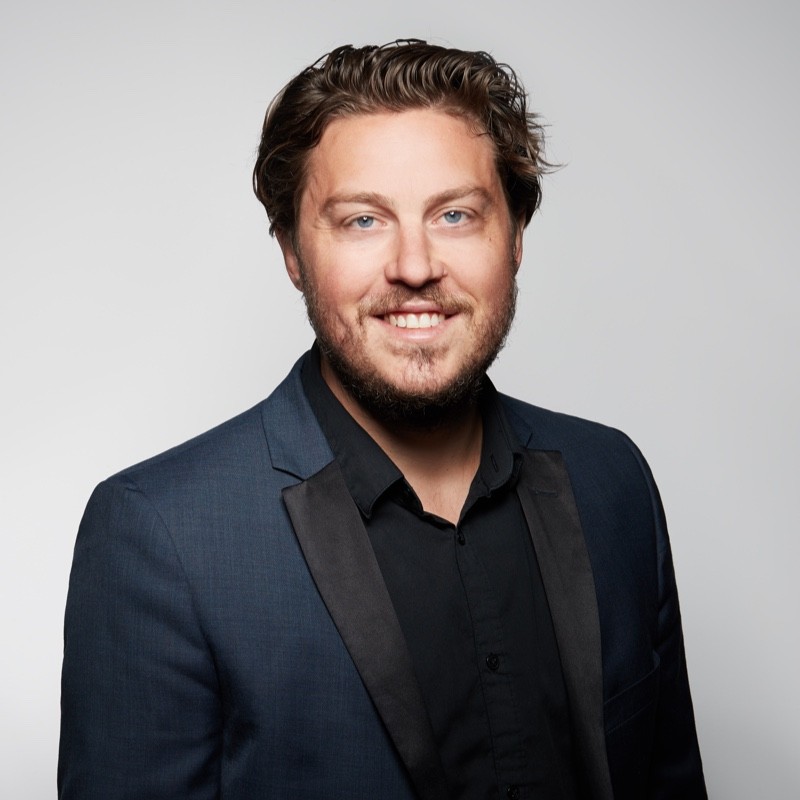
Can't wait. I'll do my best. To begin with, please introduce yourself. Yeah, I'm Guillaume, a guy from up north Montreal.
And I'm a music junkie. So I would define myself like this. So I probably ruined my credit or the credit of my mom with Columbia Records. I don't know if you remember, you were buying one record record and they sent you 12.
But the trick was, you know, you had to pay for a year to get another record. But, you know, whatever. So I'm still a big music fan. Do you play music?
I'm not. I'm actually such a bad musician that, you know, I wanted to be a super fan. So rapidly I moved to, um, to Montreal because that was the place and did my finance degree. Okay.
But really wanted to work in the music industry. So I knock on the door of labels. BMG accepted you know, even if I was not speaking English at that time. And really, what were you speaking?
Just French. Just French. Yeah. And yeah, so, you know, they accepted me.
I worked there and they merged with Sony. And that was such an interesting time. That was a peak of music, you know, working with HMV and the retail shops and the marketing and the local artists. But, you know, the streaming and peer-to-peer came into the industry, Napster, LimeWire, Napster.
Yeah, I remember that one. Yeah. And Spotify. And I was so fascinated by it.
But as you can imagine, the labels were a bit freaking out. So I probably at that point, without even knowing, but I chose the innovation path. And I was always fascinated by how technology or new business models were changing the game. So, worked a lot in experiential marketing and live entertainment and broadcasting and led me, really fast forward, to work for the family office of Guy Laliberté, who's the founder of Cirque du Soleil and Le Nouveau Rouge.
So, they wanted to empower creative minds, injecting entrepreneurship and technology to propel their career and their business. So, we worked on— an incubator called Zoo. And the goal was really to put 4 pillars to help those entrepreneurs, creative entrepreneurs. First pillar was, you know, a real estate, so a nest for those entrepreneurs, which was, you know, downtown Montreal, which is a beautiful Alken House that has been renovated.
Second pillar was the, like, the human interface. So how can we support, you know, the entrepreneur with mentorship, programs and all that stuff, which is now and still going on really well at Zoo. Third pillar was the tech equipment tooling. So providing the right tool for those entrepreneurs to learn and to implement the most cutting-edge technology into their business.
And the fourth pillar was the capital, because at one point, as an entrepreneur, yeah, it's great to have all of this, but you need—. Capital is important. Fuel. Fuel, right?
So, but we didn't really know how to do it. So we started, you know, the three first pillar and we wanted to learn from them. How long ago was that? That was during the pandemic, just before the pandemic and the pandemic.
So that was actually a really grassroots gap assessment exercise of just getting to know like, what's the best way to help those creative minds, you know, getting into business and live out from it. So What we learned is there were smart capital firms investing in technology for media, entertainment, music, gaming, creator economy, and everything, you know, next-gen consumer tech. So there was a lot of, you know, B2B SaaS, a lot of fintech, you know, cleantech, biotech, but nothing for the creative minds. And every time those, you know, great entrepreneur with a creative project or journey, they had to go to US because, you know, all the standard or typical, you know, VCs were telling them, you know, go find a lead investor because we don't know that part.
That's how we started to think about what's Triptych now. It's being venture capital adapted and dedicated to technology within the creative industries. With the conviction to lead rounds, support those entrepreneurs, and propel their, their business. So at that time, were you still with the family office, or—.
I was still, but at one point we had to spin it out. And, uh, and lucky enough, and I will always be, uh, really grateful, but Guy and the family office were our anchor investor, and we were able to, uh, to gather many strategic investors that knows really well the industry, that understood our thesis. And we raised $41 million. Wow.
And yeah, we're now 3 partners. I'm lucky enough to have great partners and great colleagues. And our team is just fabulous. And yeah, we're just— it's been— we closed the fund in 2022 and just started to invest.
And deploy the capital into founders that are bold, ambitious, and disruptive. So you mostly target those that are in the media and for the creatives? Yeah, because that's what we know first. Yes, your background as well.
So you have to invest in what you know. My background is more, as you can see, operator. So operator, go-to-market marketing. That's what I'm good at.
My other partner, Charles, is a lawyer. Okay. Did a lot of, you know, institutional investment at VC and private equity firms. So, you know, the dealmaking, the fund administration, compliance, risk mitigation, all that stuff.
That's very important. Really important. And my other partner is Bertrand. He's the geek in chief, entrepreneur at heart, techie, gamer.
So he built XR headset. Funny enough, we were talking before just the podcast, but an overnight success of over 10, 12 years led him to exit and to sell his company to Apple. Really? So sell to Apple, move there, work at Apple, and build— or was part of the team that built the Vision Pro, which is probably the most— one of the most cutting-edge spatial computing.
Nice. Did he benefit from the fund or no? Oh, for sure. He was fortunate enough.
He had a— it was really hard, but he had a good exit. Yeah. Okay, good. So then that's very good for Chiptech as well.
It is for sure. Yeah. Nice. At the beginning of the podcast, we talked about the good things of being an imposter.
Can you elaborate on that? Yeah, I, Because if you look at, you know, it's funny because when I— I never dreamed about being a VC. And I— it's interesting because many of my peers, when I'm talking to other VCs, that's the dream job. They always aim to be a GP, general partner.
And I never dreamed—. Because you studied in finance. I studied in finance. But, you know, I love the operation of, you know, running a business.
So So for me, you know, just growing and getting there, I was like, oh my God, I'm not a tech entrepreneur. I'm not the investment banking guy. So am I a fraud? At one point, and throughout my career, because, you know, I change and I always push the limits, my own limits.
And I'm always turning to the most famous imposters. And the one that I really like is Rick Rubin. Rick Rubin is one of the most famous music producers. He doesn't even play any instruments.
He doesn't even know how to control, you know, all the monitors and all that stuff. And he's the what? He's the most famous what? Music producers.
Wow. Work with, you know, from you know, Run-DMC to Slayer to Johnny Cash. And I just finished his new book, which is fantastic. And for him, being an imposter is actually proving that you're never coasting, that you always push yourself, and that being an imposter at one point Being an imposter doesn't mean you're not confident or you don't trust yourself.
It's just that you give yourself another perspective on any topic or subject. And because if you're living, breathing, only did one thing and you're a domain expert, you sometimes— I'm not saying that you shouldn't be a domain expert, but you're stuck into Yeah, the lingo, like in the bubble, in the bubble. And, you know, just being an imposter, sometimes you, you'll, you'll even help those domain experts, you know, getting another perspective. So I'm, I'm trying to take that imposter syndrome into and turn it into an advantage or a cutting edge, because usually it's, it's seen in a negative light.
So I, I do like your, your spin on it, make it something positive. Yes, because at one point I can You know, I can fight it all the time, but I think, you know, but does it ever go away eventually? I don't know. No, I don't know.
Probably, you know, some people probably, you know, go over it. But yeah, I, you know, I still struggle at one point, like something in some circumstances with this, but I'm, I'm actually living really well with it. That's very good because it can destroy many entrepreneurs, like the dream. Like, what?
Yeah. What was I thinking? The first block that they encounter in their path, and it's— they stop. Yes, because of that.
I'm just looking at our own industry, and sometimes people are like, oh, you're not from Hollywood, don't try to go into film and movie. And you look at Reed Hastings, who's the founder of and CEO of Netflix, doesn't, doesn't come from Hollywood, change Hollywood completely. Yeah. Daniel Ek from Sweden, not coming from the music at all, changed the industry, you know, completely with Spotify.
So I'm like, I think for sure they had tech expertise, they understood, you know, the capital market, but they surround themselves with people that knows really well the, uh, this industry and their fresh perspective. And that, like, I'm pretty sure they're living with that imposter syndrome. Yes, but it was a creative edge for them and for their business. Definitely.
So do you see founders when they come to pitch you sometimes, do you see them dealing with that? And can you see the ones that are using it as an advantage as well? Yeah. When you're investing at early stage, because we're pre-seed and seed, so really early stage, so they don't have a product market fit.
They're still in through the validation phase. So pre-revenue, basically. Pre-revenue or, you know, some small revenue or I would say traction, not revenue, but like traction. From the market, but they're into the validation phase.
Team and founders is probably like 80% of the analysis we're making on the business because we're betting on people. 80%. Yeah, probably. Yeah.
Because, you know, for sure we were analyzing, like we do deep research on the market and the total addressable market. We look at the under the hood for, you know, the technology and say, oh, is there any patent? You know, is it defensible? Are they solving a real problem?
Are they solving a real problem? Are they upset? Success by their clients. But at one point it's the people because it's going to pivot, the business model will change and all that stuff.
So you have to let go on that part, but you never have to let go on people. But what are you looking for specifically? So we're looking for dedication and passion. Dedication and passion.
About, you know, the problem they're trying to solve. Really about that. Always a bit scared when they're passionate too much about their product. They have to be passionate about, you know, the problem they're solving because the product will change a bit.
Do they have the skills, competencies? Do they have the founder market fit? Founder market fit doesn't need to be industry expertise, but are they the one? Because there's probably like tons of people that have the same idea, but why them?
Okay. Why them? So, why those founders will make it? So, and depending on the problem they're addressing, they're trying to address, we'll do the analysis on the founder market fit.
And I would say personally, and you know, I know my colleagues share the same, but one of the things we're looking at, it's how the founder, the CEO mostly, is he able or the team, are they able to gather and to recruit the best talent because they won't be able to do it with money. Google, big tech will offer them way more. So they have to sell their purpose, their passion to other great individuals and build a kick-ass team. And it's not made for everyone.
And it's pretty rare to see those type of leaders that bring the best in their team. So recruiting talent and talent retention. Sure. Yeah.
Interesting. How can they prove that from the beginning? If they're a small team? Yeah, it's sometimes you're going to see some signals on the angel investors they were able to attract, on the advisors they were able to get to help them in their and guide them into their journey.
Even just by having some people on the side saying, you know, they're just waiting for, you know, financing round so that I can pay them, but they're ready to jump. So there are signals that you can—. There's signals that you can see that, you know, they've got. And even just communicating the desire to hire, you know, great talent that knows more than them, it's a really good signal.
Yeah, the ability to not only sell what they're solving, sell themselves. Is it just one meeting or that's over a few meetings? We do, you know, we've got a process. You know, usually, you know, our team, our team is meeting, you know, every founder.
If the first meeting goes well, probably like 30 minutes. Okay. You know, there's a partner assigned, the right one, if I'm the best suited to do it. I'm going to do it, but you know, it could be Bert, it could be Charles.
And we spend, you know, more like an hour on what we say the T's, like team, traction, technology, terms, obviously, and timing. Is it the right timing to get this business out of the ground? And we go over the T's with them. And after 2 meetings, we are trying to be disciplined.
And say no, because, you know, the business of VC is 99% of the time we say no. Yeah. And we have to say no in a proper way with constructive feedback. But if it's a yes, then after that it's, you know, more due diligence on all of those T's that I mentioned prior.
So if it's a yes, by the time you get to due diligence, how long the whole process might take? It really depends, but I would say hopefully less than a month. Oh, OK, that's pretty fast. Because we're trying to— we put ourselves in the position of being capable of leading the round, so setting the terms, and after that syndicating, so bringing other co-investors.
It's going to depend on the size of the round, type of co-investor we're bringing into the round. But yeah, I would say probably a month. When it comes to co-investors, is it something that you do often? Do you partner up with— those in the state?
I'm just thinking, I don't think we did it by ourselves, like even once. So, I think we're always trying to bring other co-investors for multiple reasons, because I think we've got some, we've got expertise in our firm, but we don't have all the expertise. So, bringing other VC that are bringing other skill sets. So, we'll say, you know, we're not specialists in marketplaces.
So, if we love what's happening with, you know, a gaming tech firm or company like we could lead because we know gaming, but bringing someone, you know, another, you know, VC that knows really well the business model. So marketplaces will do it. But maybe, you know, as well, that company has a lot of potential in Asia. So let's bring, you know, a VC from Asia as well to open the market.
So that's the way we're trying. So you have a network of VCs there? Oh, we do. So there's no competition?
It's such a gossip world. Oh my God. You know, I was— it's actually super similar to the music industry. Oh, really?
Because, you know, the music industry you had, you know, back in the days and still you've got all those agents and booking agents and labels and everyone were, you know, talking about, you know, that's the next big artist. That's the next big one. And it's the same with, you know, in VC, that's the next big startup and you should meet that founder, you know, exceptional, charismatic. And so it's really really similar.
So it's a small world, basically. FOMO as well. Some FOMOs and all that stuff. And under invitation and who you know, it's really relationship-driven, really relationship-driven.
So I'm making fun out of it, but it's great because people think it's really highly competitive or sharks and all that stuff. At all. Zero. It's not like Shark Tank or anything like that.
Oh, please. No, no, no, it's not at all. It could be competitive for sure. When you've got a good deal, or you've got access to a stealth mode type of founder, you jump and you go fast.
But usually it's really collaborative. So what does a typical day look like for you? A typical week, I would say. OK, let's say a week, yes.
Because most of the VCs are acting the same way. So on the Monday, we've got our partners meeting. We look at the deal flow that— opportunities we received recently. And we just filter, scan which one we want to meet.
We go after, you know, on the second meeting list. So, you know, from the second meeting list, which one we want to say yes or no. And after that, we do a review of our portcos, our portfolio and say, you know, is there any urgency, any specific material topic we should talk about? So that's pretty much Monday.
Tuesday to Thursday, it's like meeting with founders, you know, from our portcos, board meetings of those portcos, meeting with entrepreneurs for, you know, deal flow of new entrepreneurs, you know, new opportunities, talking to other co-investors and VCs on just sharing best practices as well on, you know, what we do. As a professional investor. And on Friday, usually it's like more an admin day. We look at the firm operation, tech stack, just we look at more at ourselves because we're a business and we're a startup.
Because every—. Yeah, COVID was not that long ago. A VC usually, a runway is 4 years. 4 Years.
So after 4 years, you have to raise another fund. So has it been— you're close to the 4? Oh, it's been 4. We're getting there.
So we're getting there. We're entering, like, we're entering, you know, our 4th year. So we still have money to deploy because every VCs are, if you look at the plain vanilla VC, it's like you've got every fund is 10-year. Yes.
The 4 first year is portfolio construction. So you're investing in building your portfolio. And the 6th one is the, The 6 remaining is more the value creation period. So basically choosing your champion from your portfolio, doubling down, helping them grow, you know, just grow and invest more into them.
But, you know, you're not adding new companies during the 6 after the 4th year. So you have to build another fund to continue and, you know, adding up, you know, portfolio companies. But you said you have some funds remaining. From the— Sure.
Okay. Yeah. But you're going for—. Obviously.
Yeah. Yes. Okay. Okay.
Do you have a number in mind on how much you want to—. We want to— we're pretty ambitious. I think we're aiming for a bigger fund, but not to do more companies. To sustain the ones you currently have.
No, it's because, you know, our port— like there's different, you know, strategy in VC. There's, you know, what we call spray and pray, which is actually not— even if it's not our strategy and I'm not criticizing at all that strategy, but Spring Priest, like investing and really betting on the power law of, you know, investing in many, many companies and after that doubling down on the best ones. Okay. We're more specialized VC, boutique VC with a specific thesis and with not a mandate, but with the capacity to lead because we're domain expert in our, with our thesis.
So we do 4 or 5 investments per year, bigger check size. What is it? 5 billion. Okay.
Trying to be diligent on the ownership. So around 10% of the company, that's pretty much what we're aiming for. And just leading deals takes way more time because all the co-investors are relying on your expertise, your due diligence, the terms you're setting. And usually when you lead, you've got board seats.
So you've got more ongoing activities with, you know, each portfolio company. So we're more highly conviction specialized VC than more of the agnostic sprint and pray. So to go back to the fund too, so we would like to have maybe, you know, between like $75M and up in terms of million in our fund. But same thing, doing like 4 or 5 investments.
But larger check size, maybe being even more diligent on the ownership. Because what we saw in the industry right now, the industry is facing challenges in terms of liquidity because the public market is going really, like, it's going well, but there's not a lot of new IPOs. So IPOs are like the holy grail for VCs. But now the window is pretty close.
Why is that? Because first, there's a lot of money in the private market and going public is highly demanding in terms of reporting compliance. And public market is really tough on valuation these days. So, IPO is just not there yet.
We're getting there, but it's reopening. And in the private market, the, with, you know, all the uncertainties and, you know, the high interest rate, the M&A market has been slowing down as well. So overall, all those trick— it's trickling down to liquidity in our portfolio, not just myself, but, you know, the VC community in general. So, so we're all facing that.
And, you know, the limited partners that are investing in VC funds are expecting distribution at one point. We're not a liquid investment because it's, it's pretty long before, you know, a company go— you know, we grow the company and we exit it and sell it, or, you know, IPOs. So what the biggest consequences of that is, um, you've got fewer deals, less, you know, company getting funded, but with larger round. Okay.
So because you need more runway, you need more capital, and we're betting on Champion. Exactly. That's a little bit more what's happening. And to go back to what I was mentioning about MyFundoOne is like larger round means that you— bigger valuation, so you need bigger check to respect your ownership objective.
So that's a little bit how we envision it. That's our plan. And how do you raise funds? I like it, actually.
I really like it. It's hard, really hard, really humbling because—. Is it harder on your side than the founders seeking your capital? Similar.
Similar? Similar. You know, that's why we do understand, you know, the reality. But it's super humbling because, you know, they look at your own track record and like, why am I giving you my money?
Because, you know, I can put it in real estate, which is a little bit more secure, maybe less performing in terms of profitability, but way less risky, tangible. We can put it in public market. A bit faster. Exactly.
More liquid. Or you. So you've got alternatives, right? Yes.
So we have to sell why. And returns. Are for sure one thing you have to sell as an L— as, you know, a VC. But I found that there are multiple other reasons that attract and appeal LPs.
Many LPs, corporate LPs mostly, sometimes, you know, they don't invest enough in R&D. They're just heads down into running their business. They don't have time to keep up with technology and all that stuff. So, So, VCs are a good way to have a view on, you know, on the landscape of technology and all that stuff.
So, many, you know, companies are investing, yes, for return, I'm always saying, but as well to get that view on innovation. Some high-net-worth individual entrepreneur are investing as well for to learn on how VC to help other founders. Okay. So there's not a philanthropy, a philanthropic, you know, necessarily objective, but a bit.
They want to help others and being involved with like getting in traction with, you know, founders, which other investment are not like if you're in public market, all that's like, you don't, you don't need to, you can't. And, um, and other, you know, and the third is other, um, investors are investing for co-investment opportunities and/or, you know, M&A perspective. So they're like, okay, great. So they're— I don't want—.
What is M&A? Uh, merger and acquisition. So, so they, the— some companies don't have the time or don't have the corporate finance team internally to say, okay, we'll look into the market. So we on what's happening.
So having an early-stage VC growing, grooming those companies, at one point they can say, oh, I can be a client, or even, yeah, you know what, I like that company, I'm going to co-invest, or, you know, talk about, you know, strategic partnership with them. And do you find that there are a lot of investors that in Montreal, what is, what are you seeing in terms of investors? Montreal is, and Quebec in general, it's challenging. It's challenging.
Yeah, let's face it, because most of the successful founders now that exited their company are coming from the service company. So, they had a really successful service company, more into the traditional industries. So give me an example of, you know, just retail, we'll say, or, you know, grocery or manufacturing. So investing in tech is so different.
Um, business models are different, you know, the burst and buzz type of philosophy. So for them, it's just like, wow, it's so different. Even like if you had, if you're talking to a doctor or pharmacist or, you know, it's really tangible for them. They have, you know, different franchise and, you know, they've got cash flow.
Like, so for them, you know, starting and investing in highly disruptive technology, there's an education to do for that. Second thing is there's not a lot of— there's less high net worth individuals in Quebec in general. So we have to face that. Where are they mostly in Canada?
Yeah, I think Montreal, Toronto, Calgary are probably the good ones in terms of quantity of family offices, multifamily offices, and high net worth individuals. But I just think sometimes it's harder to just get the high risk, high reward message to potential investors and VCs. And I think that's a good thing about the community in Montreal of VCs. We're really all together as a community trying to educate and spread the good word about VC as a vehicle to grow the productivity and bring the Quebec market to the next-gen economy.
Yeah, definitely. But also there's a saying maybe that plays into play here where they say invest in what you know. Yep. So if they're coming from the service industry, it's like, we're not investing.
No, you're right. And maybe the long way, they find it too long, right? You know, it's not liquid. No, liquid investment.
So, so, so yeah, so it's just the understanding as well. Yeah, for sure. I understand. And what is the success rate for the current companies that you have?
Like, It's so low. So low. Yeah. And it depends what you mean by success rate because—.
Well, you said IPO, it's very, it's not easy. So already, I don't know, did you have—. It's not even, it's less than 1%. Less than 1%.
So how do you define success then? Maybe it's a better question. I think there's a common, and I'm not saying every VCs are thinking the same way, but I would say standard success is we're trying to have what we call a fund returner. So an investment that will return the size of the fund.
So let's say I've got 10% of a company that exits at $400 million, so I get, you know, $40 million in return. That returns my fund. Okay. So we're— that's for us, that a lot of VCs are thinking always when they're investing, they're like, is it a fund returner?
You know, you've got all those debates with, you know, the analysts, the associate, and, you know, and your advisor, and, you know, all the GP. And probably like the last question, or one of the questions, will be, is it a fund returner? Is it going to be a fund returner? So I think, you know, is it success?
Uh, I think a fund returner is a success for sure, because that's what people are expecting. Yes, because exiting is the That's the ultimate goal. It is. Yeah.
So even when the, at the early stage, you're already looking in the future. Is this company going to score big at the exit? And that's the interesting part because in most of the debates we've got internally, it's about the future. Yes.
Because I'm investing in a company that might address now a problem, but if I'm only investing in the now, I won't have success. That's private equity. That's other type of investment. VCs are looking at least what is going to happen in 3 to 5 years, because that's the exit, you know, our eyes are on.
So, we have to debate on what's going to be the future and what are the signals that will, that back up your arguments and your position. So, it's really interesting. It is very interesting. So you have to educate a lot yourself on, on, you know, next generation of consumer, next generation of workers, next economy.
You know, we're— you're, you're, you're like, you're a media now. Like, you're doing like— you're a distribution channel, which was, you know, linear TV before, but now the creator economy is booming. I would say it already replaced. Yeah, definitely traditional.
Yes. So if you were not believing that 3 years ago and you did invest in linear TV on—. Yeah, just like Blockbuster. Bye-bye.
And especially now AI, what are you seeing and how is that changing your perspective on investing? Yeah, AI is fascinating technology because it's going to be— it's transformative. It's not going to be, it is already transformative. Everything is AI now.
So that's the biggest challenge. It's like how— there's a lot of smoke and mirror on AI companies. So you have to be really diligent on what's a really AI company. And myself, what I'm trying to do, because every company has AI now or will implement AI, it's like I'm I'm looking at the company, I'm removing the AI part, and I'm saying, is it a viable company?
Are they trying? Are they capable to survive and to do it? And if I'm putting AI into it, just propelling the entire thing. But AI is going to be, if I'm just looking at artists in the creative industries, wow, it's already changing everything.
Like VO3, you look at that and Midjourney, and you look at, you know, the, text-to-speech and you look at, you know, the deepfake and it's just like, wow, it's just going so fast. But what are the business models? If you look at, you know, IP and intellectual property and protection of that and what's going on, is it, you know, free to use, like the fair use and the like a lot of regulation laws will be around that. But it's going to be transformative.
My vision, I was at a music conference in Atlanta, and I said to people that 10 years ago, 15 years ago, when I was at that same conference, Spotify was the persona non grata. Everyone was like, oh my God. And now Spotify and streaming in music, it's over 70% of the revenues. I think it's 78%.
I do believe in 3 to 5 years, AI will be the main revenue driver in the music industry. Number one over streaming. That's my belief. I might be wrong and I'll probably be wrong, but if I'm right, But I might exaggerate, but I think it's going to generate a lot of velocity and it's going to change the revenue streams in, we'll say, in the music industry.
But I think it's going to do the same thing in many, many other sectors. For sure. AI, it's very exciting and also a little bit scary for a lot of people because it's going to eliminate a lot of jobs. You don't know for sure.
For sure. Some people are more doomy than I am. I just read a book and 100 years ago, 93% of the population was working in agriculture. Yes.
And now it's less than 2%. And there's not 91% of unemployment. You know what I mean? Yes, I see what you mean.
So I think it's going to— employment will shift. Yes, for sure. 100%. There's going to be some sectors that will be weighed, like, they'll be touched, and it might be dramatic for some industries, and job market will, will change.
From—. If you look at the— if you do a snapshot of the job market, like, say, in the US right now, job cuts or the unemployment rate is not that scary. What's the most scary right now? It's the job opening So there are less job openings.
So companies are not recruiting, less recruiting. One of the worst job opening stats. But there's also a lot of cuts that have been made by Microsoft. Yeah, but, you know, big tech and all that stuff, which is, if you look at it and you benchmark it with other years, not like it's not—.
There's no spike. No, it's— and you like, is it really AI, you know, or uncertainty, tariffs? There's so much stuff going on. Yes, there are.
Yeah. But the job opening is, ooh, is interesting. So people are a little bit more on hold. I think companies for the economic context, just wait and see.
And with AI as well, they're saying, oh, can we do more with less people? So we're into the cost efficiencies and reorg. So that's what's happening. So we'll So, we'll see.
I think, you know, I don't think it's going to be that disastrous. I think it's going to be challenging for a couple of industries, but I think I'm optimistic. It is good to be optimistic. I'm trying to always, you know, I've got kids, as you know, and I'm trying to be optimistic for them.
Exactly. Because you're thinking, okay, what field should they go into when they graduate? Because how AI will impact those jobs. Yeah.
You know, should they go into coding or is it just going to be AI now or? Yeah, I think they have to be curious. Yes. And I'm going back to, you know, it's probably you need that curiosity and everyone, you know, scared about it.
I'm saying try things, try, try, try it, try AI. Yes, that's important. That way they can see how they can leverage it. Here we go.
Yeah, for sure. And in Montreal landscape, you have a lot of founders. Most of them, are they coming from Montreal or other places as well? Yeah, since we're investing at early stages, I think proximity is really key, even more as a lead investor.
So we're actively engaged into the startup community in Montreal and we're investing, you know, most of our funds have been deployed in Quebec. And then locally, but we look elsewhere as well because I think that's a really good practice to have because founders from the same VCs are all like, we're trying to get them to know each other, to collide, collaborate, maybe there's some synergies. So I think it's a really good thing to have founders from Montreal to meet with founders from California. To founders from UK and exchanging on best practices, seeing, you know, different perspectives.
So I think it's really a sane thing to get that diversity geographically as well. But, you know, we do like that proximity. And you talked about the collision of tech and culture. How do you see that playing out?
I don't know, in Montreal or in Canada? Montreal is a fantastic place. It's— I think it's, it's not even because I'm coming from here, but I think We've got it all to HQ, our fund here. So if you go back in history, probably one of the first tech VC-backed companies was into the creative industry.
Softimage by Daniel Langlois. He created, you know, the 3D graphic design and software that changed the cinematic industry, like Jurassic Park, the first dinosaur. That's the software that was built here. Wow.
And that was VC-backed and sold to Microsoft. Bill Gates was in Montreal for that acquisition. Daniel Langlois, the founder, was sitting on the board of Microsoft. Can you imagine?
We have, you know, Quebecois sitting on the board of Microsoft. And after that, it was resold. Resold to Autodesk and Autodesk came here. You know, they've got a large office here.
So, you know, it was really, really transformative for Montreal, brought the tech and the creative. And after that, you had the Cirque du Soleil, which, you know, they bought, you know, ticketing companies, they invested in innovation, like, you know, giving first shot at, you know, Moment Factory and all that stuff. So, All the live entertainment innovation and the immersive technology went from there. Phoebe Greenberg from Phye Centre in Montreal, amazing woman, transformed as well the industry by being one of the first to invest in digital creativity and everything from mixed reality, virtual reality, augmented reality, AI.
So, and the VFX industry is just incredible. You know, we've got Denis Villeneuve, who's now— is going to direct James Bond, but directed Dune and gave, you know, all these contracts to, you know, VFX company in, in, in Montreal. So you've got all those— this ecosystem and active player and talent. That's the thing.
You know, amazing talent in Montreal. And I didn't even, you know, I forgot the gaming. So, you know, you've got Ubisoft, EA, plus all the indie studios. So you've got plenty of talent that is really required for an ecosystem and a viable VC specialized like us.
So Montreal is just like a perfect nest for, for Triptych. But in Canada as well, Canada has been fantastic in comedy and, you know, the IMAX technology. You know, many different companies. E1 was in Toronto as well.
So I think we don't have to shy away and we should be proud to what we laid as foundation. But now there's a new revolution. So I think, you know, the digital revolution, we didn't take advantage enough. But now there's an immersive and AI and new computing.
You think we'll do better this time? We should know, but we, we have to, because I, I would be scared. I would start to be scared about, you know, our culture, um, because, uh, you need to, you need to control the funnel, uh, at one point, and the platform to get some sort of control on the content. So we need to invest not just capital, but I think creativity, effort, entrepreneur to find and to work and to build new platform, new infrastructure, new tooling, new distribution channels so that we can get a little bit more autonomous on our culture and lifestyle.
Yeah. And what define us at the end, right? Yeah. Because you also said like there's a lot of talent here.
For sure. And so Montreal deserves its place in the big scheme of things. Yeah. But would you say that globally we're not quite recognized as like the hub, like Montreal is recognized for the tech, the innovation?
It's really well recognized. It's well recognized. Oh, yeah. Internationally you go, it's probably what defines Montreal.
Everyone, you know, everywhere I'm traveling, people are like, oh, from Montreal, amazing restaurant. Yeah, they talk about the restaurants. Yeah, amazing restaurant. And, you know, such a great creativity and Cirque and Celine and blah blah blah.
So they, you know, you've got all of this. And, um, and, and when you go, uh, you know, the Canada, it's like all of our comedian, Mike Myers, Jim Carrey, Seth Rogen, blah blah. And, and you, you've got, we've got it all. The thing is, too many of those builders, if they, uh, really want to get a large success, they exit Canada.
So they start here. We're really good at starting stuff, but we're a bit, maybe shy or too humble to commercialize it and to conquer the world from Canada. So I think that's the thing we need to change. And it's a A bit more in the mindset.
Yes. Like you said, too humble. Too humble. We're so kind.
And we're, you know, we have to be more evil. A little bit more evil on— I'm joking. But, you know, I think we have to play the game. And we've got a fantastic opportunity right now.
Yeah. Because we're proud. We're gathering all together and we're ready to change the economy. Hopefully we do not miss the boat this time.
You know, we're one of the actors, I would say, Triptych is we want to offer that different path. Because if we do apply the same recipe all the time, we'll get the same result. Exactly. And I think we have to change the recipe and change, I know, might be uncomfortable, but I think we're there.
Is that where the power of curiosity comes in? Oh, for sure. You want to elaborate on that? Because I know that's one of the points that you have.
I think that's the most superpower any manager founders should nurture. And even more at the era of AI, I think curiosity is not just about learning new stuff, or it's really about, you know, opening your mind. And saying yes to stuff you don't know and being ready for discomfort. And I think that's the most important thing.
And curiosity is, I would say, it's even more on other people than on topics. You need to be— we need to be curious on why some people think different because The originals, the outliers, the defiant, they're the one who are going to change the world. It's not the more conformist or— they're the one, the weirdos, the geek, whatever, name it. And I'm working with that type of people and we have to be curious on how they see the world because nobody's seeing the same future, but we have to be curious on how people from different backgrounds look at the world.
Yeah, definitely. It makes sense. And what do you see the Montreal startup ecosystem in 5 to 10 years? I think we're well positioned, super well positioned.
I think we've got great schools. We've got, you know, we've got talent. Lifestyle is amazing. Cost of life is still affordable.
I think we can be, uh, we can be really well positioned. I think we can be in the top 10 for sure, um, in the world. We've got the right foundation. Um, I think it has to be a bit more grassroots versus institutionalized.
Okay. Um, so, and we're aiming and we're getting there. I can see that, you know, we've got the signals and, you know, we, um We have to find ways for people, like for founders to stay here and grow, not just start, but stay, scale here. Do you have any ideas on how they could do that?
I don't know, government, would they have to be involved somehow or more? No, I think, you know, it will come. It's a mindset. And I think more and more now we've got tech founders that started, that failed or succeed.
If they stay here, they'll nurture and mentor and help the other generation. So I feel that's that cycle. So I think it takes a generation. So 20 years, I think we're going to get there soon because if you look in the '90s, it started.
So I think we're getting there. So that's why I think we're well positioned and in the full circle of life, we're getting into the—. We're optimistic. Yeah.
And for Triptik, what does the future hold for you guys? Yeah, if I see, if I look at us in 3, 5 years, I would say we're an investment platform. We're not just fund and every time, you know, adding more funds. We're an investing platform, which is ecosystem-driven, really changing the way consumers and, you know, consumer technology suit, you know, the next generation and just redefining the future of entertainment.
Just how we tell stories, how we experience arts and content, how every individual create, because I feel that it's already starting. We're all creators. And express their creativity. So yeah, that would be amazing if we're that platform that can do it.
So, and you know, maybe to go back to what Montreal needs, being that platform that helps, you know, Montrealers and people from Quebec to just expand and express how they see the world to everyone around the world. Yeah, because I feel like there's also a sense of you want to be proud of the city, you know, not just help them with capital, but help The founders to see. And our vision of the world in Montreal is different. And I think it's attractive.
It's as sexy as fair in the way we're seeing the world. So I think it's worth just screaming, barking our creativity to others. Yeah, for sure. Well, did we miss anything?
Is there anything else you want to add for the founders listening? Piece of advice? No, I think it's for the founders, it's time to build. Time to build.
Time to build. It's a fantastic time to build. I think, you know, we've got many transformative technologies right now from AI, from robotics, from spatial computing. So it's pretty rare that we see those, you know, technology frontier, frontier technology that will completely change the way we work, we transact, we consume, we communicate.
So I think it's just fabulous to be a founder at that time. Frightening because it's the speed of innovation is growing so fast. But at the same time, you know, just it's time to build and we need more people to build. Great.
Well, Guillaume, it was a pleasure to have you on the Montreal Entrepreneur Podcast (now The Vault MTL). It was fun, thanks. I really enjoyed what we discussed, your insights on VC and how you see the culture in Montreal. With innovation.
Thank you so much. Until next time.
 Denny Chared
 Nicholas Sosiak
 Colin Worrell