Machine-generated transcript, lightly edited for readability. It may contain transcription errors.
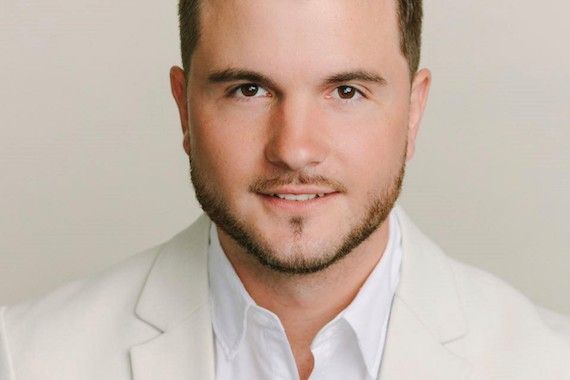
And if you had to summarize in one sentence, let's say, entrepreneurship, what would be your main advice? Manifestation, hard work, and luck. And if you were to add one more in there, it's you have to have passion. Meet Nicholas, a Chartered Professional Accountant who's reimagined financial leadership in the cannabis industry.
As Chief Financial Officer of Kinara, he brings a unique blend of big firm accounting expertise and entrepreneurial vision, driving strategic decisions from genetics to public relations. Today, he'll share insights into leadership at the intersection of finance and innovation. What do you do on a daily basis? Because you're managing like this gigantic company, like, as a CFO.
Yeah. Just look at the industry from a 20,000-foot view. There was a green rush. Investors threw a lot, a lot of money, like billions of dollars.
That got distributed. Why did you choose Quebec to make it your home? One, the CEO and I are both here. When the green rush was happening a couple of years ago in cannabis and everyone was throwing money at cannabis companies, Everyone was being built outside of Quebec.
All right, Nick, welcome to the Montreal Entrepreneur Podcast (now The Vault MTL). It's a pleasure to have you here with us. Thank you, Cathy. It's a pleasure being here.
I look forward to hearing your story and to learn more about Kinera. Absolutely. For those who don't know what Kinera does and who you are, please introduce yourself. Absolutely.
I'm Nicholas Soziak. I'm the CFO of Kinera Biotech. I've been with the company since 2019. We started the company in 2018.
We're a Quebec-based licensed producer of cannabis. So we have two mega facilities here in Quebec, one in Farnham and one in Valleyfield. 6 million square feet of cannabis operation. So pretty large-scale operation here in Quebec.
We're about 400 employees. And yeah, we are the proud creators of our brands, Tribal Nugs and Orchid CBD, where we're like the third largest licensed producer and brands in Quebec. Oh, wow. By revenue.
So we're definitely making a dent in Quebec and slowly in the rest of Canada as well. We sell across Canada, pretty much every single province. And yeah, we grow everything ourselves. All our employees are really focused on the cultivation from seed to actual sale.
So we grow the product, we make our different varieties of product in terms of vape carts and pre-rolls and hash and rosin, and yeah, we sell it in Canada. We sell it to the government, so every province is owned by a government entity. So we have SQDC for Quebec, OCS for Ontario, AGLCO for Alberta. So we sell to the government entity and then the government acts as the wholesaler who sells to the retailers.
In Quebec, it's private, so Quebec, it's government-run, so they own the retail chains, but the rest of the provinces, each retail chain is privately owned. So, yeah, we don't control the end sale to the customer, but all the way up to the actual wholesale channel and, yeah, we've been doing been doing this since 2019. We still have a lot of room to grow. What's the market share now?
1% nationwide. 9%. Oh wow. Uh, the highest market share in Quebec is around 15%, so that's great.
Hopefully this year, uh, we're gonna take that position as number one. That's one of my— that's one of my goals. 1% in the rest of— like, nationwide. 9% market share in Quebec, where marketing is restricted, we can get to that kind of percentage share nationwide.
It's just a matter of execution. With cannabis, you can't, you know, it's not just press a button and you grow cannabis, like, or, you know, you just—. How long does it take? It's a long cycle, honestly.
It's a 4-month, 5-month cycle. Okay. Since you act, from the moment you plant the seed, or the plant in our case, until you harvest it, you have to let it dry for 14-15 days, and then you put in the packaging, you get it distributed. It's, it's a 4-5 month cycle.
And what's interesting in cannabis is the consumer always wants a different product. Take the alcohol industry, right? A consumer from the alcohol industry that will find, you know, their, their hard liquor, Jack Daniel's or Bacardi, and they will be loyal to that actual— the brand, but also the actual product itself. They will keep coming back to that product.
There's not a lot of exploration that happens. Same thing with cigarettes. And in cannabis, I take those two industries and merge it with fashion, high-speed fashion, where because there's so many different experiences with cannabis, it's not one-dimensional like alcohol or cigarettes where you you get one experience all the time. With cannabis, every genetic, which is, you know, just like a tomato, a San Rafael tomato is a genetic of a tomato.
In cannabis, there's thousands and thousands, if not millions, of different genetics that provide thousands and thousands, if not million experiences. So that's— the consumer's well aware of that, and they keep— although they'll keep coming to a product, eventually their senses become used to it and they need something else. They need—. So innovation is very—.
Innovation is key. So imagine you're a tomato farmer, a grape farmer, and every 3 to 6 months you have to change the kind of grape you're growing. Yeah. And the R&D behind it and the building at scale.
So, or being at the fashion industry where, you know, every time you got to come up with a new fashion lineup, a new creative name for it, a new flavor, a new something. So that's really combined all those agricultural, the regulatory side of alcohol and cigarettes and tobacco, and then take the fashion industry and, you know—. That's a lot of moving parts. Yeah, you got a lot, a lot of moving parts.
So all that to say, it's a 5-month cycle. By the time you complete that 5-month cycle of growing the plant, your consumers already want something different. Wow. So it's really key to make sure that you're— and we spend millions and millions of dollars every year on doing this, of finding the right genetics and innovating and having a roster of different genetics, different flavours in our inventory so that we can So you're testing them again.
Exactly, testing them. What we've proven out is that when you find a good genetic, a good flavor, it will stand the test of time. Although people will switch, they will come back. Okay.
Just like fashion, right? You'll go through different cycles, but eventually you'll come back to an older fashion. So take an example, our Cuban Lynx is the one, we launched it in 2019. Cuban Lynx is the genetic, it has a lemon, haze profile.
It's a sativa genetic, so very— when you consume it, you're very creative, energetic, and it does exactly that, right? So we launched it in 2019, and 2025, it's still our top-selling genetic. Okay. So the goal for Cannara and what we're doing for our brands is to find genetics like that.
And you can't just go to a store, buy these things, right? Because this is— we're creating the industry. So that's what's really cool, is that We're part of the innovation process, the R&D process to uncover all these genetics, be the ones that can stamp our names behind it. And then do you have a big team behind the R&D department?
Yeah, we have definitely a group of PhDs. We do tissue culture as well too, so that we can preserve genetics over time without degradation. Yeah, our team is probably about 5 to 10 people, including the whole 400 other people that are part of the whole process. Supporting this whole production.
And now you have two locations, two massive locations in the province of Quebec. Why did you choose Quebec to make it your home? I mean, one, the CEO and I are both here. When the green rush was happening a couple years ago in cannabis and everyone was throwing money at cannabis companies, everyone was being built outside of Quebec.
Okay. So, there was a big opportunity in Quebec knowing, you know, that they were going to legalize and Quebec was the— is the third largest cannabis market in our country. There was opportunity for a first mover advantage in Quebec. We're from Quebec.
The barriers of entry are language, so a lot of companies, US companies or people that were doing their investment, couldn't exactly invest and create this in Quebec because of the language barrier. And ultimately, when we really decided to build a cannabis business, we looked at Quebec and saw that it had the lowest cost electricity, which is the— one of the biggest inputs in cannabis cultivation. For sure. Representing about 15— right at my cost, it's about 15 to 20% of of our cost per gram.
So we pay 4 cents a kilowatt. My competitors outside of Quebec are paying anywhere between 8 to 20 cents a kilowatt. And if my bill is right now $300,000 a month, you know, you can imagine my competitors' bills at our scale. So definitely choosing Quebec for the electricity, the first mover advantage, building a brand in Quebec for Quebec people.
You know, we didn't want other provinces' cannabis to be sold in Quebec. We really wanted to grow for Quebec, grow in Quebec for Quebec. Higher in Quebec, and that's why we chose Quebec. And how do you put that message out for people of Quebec to know, like, this is from Quebec, this is the brand?
They know. They know. So it's—. The community knows.
The community knows. I mean, SQDC is 100 stores. You know, they run the budtenders. When we launched our product, we launched as our product is today, like, high quality.
We thought about packaging. We thought about the genetics. , and we were selling it for $25, which is like just above the value, like the value pricing of cannabis. 5.
So that whole thing wrapped up in an offer to Quebec resident people really resonated. We had memes, memes, people riding out of the store carrying cans of Tribal, and it was like when we—. On social media. Yeah, exactly, on social media.
And still to this day, you know, and, and So you can't advertise in Quebec, but that word of mouth, that launch where we kept true to our product, pricing was right, it exactly met the need of the Quebec consumer, and we haven't changed that for the past 4 years, that just organically, you know, they know who Cannara is, they know who Travel is, they know what Nuggs is, and they know what Orchid CBD is. And these are your 3 major brands. Only brands. Only brands.
We created them in 2019, had $0 of revenue, and we're on track for over $100 million of revenue. Net revenue with those three, with those three brands, and continue growing with those three brands as well. So there's no point of creating a, a fourth? At this point, we, we don't see it.
No, it's really innovation comes through genetics, genetic creation. As long as your brands have a format that you can use the entire plant. And what's the difference between the three? So Tribal is my main brand, is our main brand, focused on genetics.
So hunting genetics Any new flavors that we get get introduced under Tribal. 5% flour, you can get it in pre-roll format, you can get it in vape cart format, or you can get in concentrate format, which I've never seen a company do that where you can— once you find a genetic, because yeah, a genetic is great, but everyone has a different way of consuming. Okay, so you're thinking about that too. Yeah, if you're a pre-roll consumer or flower consumer, like, but you really want that genetic, well, you have that option for Tribal.
Okay, so as long as we continue finding genetics, we automatically create 4, 5, 6 different products under the Tribal line. Got it. Under the Nuggs line, we cross over those genetics. So we either— Can.
Yeah, we can cross over, or we take a product of 2 genetics that have very, let's say, an orange flavor and a pineapple flavor, and we'll combine them and make different products. So hashish, all-in-one vape devices, infused pre-rolls, fresh frozen hash rosin. So we, we make we're more exploratory with the format. So rather try— we get the genetic, it goes into them.
People know when they would like a genetic, they get it in the select formats. Under Nugs, there's different cool things that we're creating, some mariage, you know. Exactly. And then Orchid is really focused on CBD genetics, so less THC, really the medical side.
CBD creams, topicals, pills, um, focused on CBD. That's impressive. And who decides like where you're going to put the emphasis, which, under which brand we're going to like put more money and to explore, like, I don't know, to grow it in particular. Is it something that the whole team has to come up with or?
Yeah, yeah. I have a lot of passion for cannabis, so it's, I don't stop thinking about it. So all these products, the ideas, it's all map, map coming from me, built within the team. The team gives ideas too to fit it in.
The biggest, you know, at where we are right now, the biggest factor of what's contributing to which, you know, what brand and products it goes to is really the genetics. We can't control the genetics. Yeah, for sure. We try genetic, if we get a great genetic and we feel it fits in Tribal or fits in Nugs, or it's a CBD genetic, it'll go under Orchid, and then that will continue.
But in terms of continuous product development, I mean, both, all three brands, that's why we like to keep our brands tight so that we can continue innovating. Your competitors cannot take your flavors and things like that. Okay, perfect. When did the company go public?
2019. 2019. Okay. So you started in 2018, then right away 2019 public.
Public. Yeah. January 1st financial statement, April 2019. And what does that take to take a company private to bring it public?
Definitely a lot of consultants, a lot of help, a lot of lawyers. It's not that hard. You just have to have the time and the money and the, you know, the group of people to do it. Uh, the biggest thing is raising money.
Back in, you know, when it was cannabis, it was— I won't say it was easy, but it was easy to raise cannabis, like, money. So when it was private, it was easier, you're saying? No, no, back in like 2018 when cannabis was like starting to take off, you could, you know, it was a rush, business plan, and, you know, raise money pretty easily. Usually when you build a business plan, it's not— it's hard to raise money, right?
It takes a lot of work and, and years to find that 1, 2, 3 investors that are willing to trust you, right? When it was the cannabis green rush, it was different. The investors were throwing money at you, and as long as you had a good idea, a good team, then, you know, you can execute, right? So definitely it was easier back then.
Now it's much harder to raise money in the cannabis. Like, you really have to prove— you have to have a proven business. So I wouldn't recommend— not because I'm in it, but I wouldn't recommend to get into cannabis now. Because it is—.
The market has stabilized. It stabilized, extremely high barriers of entry, and, you know, the investment community, the financing is not rolling in, so really it's a test on the companies to survive on their own, and as long as you're doing good work and profitable, it's a $7 billion market in Canada, and Canada is also a hub, only hub for international export. Which is, you know, 10, 20 times bigger than— 30 times bigger than the Canadian market. So—.
S.? , but pretty much most international countries: Australia, Germany, Israel. But most of your products you sell them here? 99%.
99%, Yeah. 99%, 100% Of our products we sell in Canada. My competitors are going to international sales. Okay.
And they're making a lot, a lot of money and a lot more money. At this point, but that's because they were not successful in the Canadian regime with the excise tax and the regulations that are imposed on us. We pay 33% of our revenues to Canadian Quebec government. Okay.
Past 3 years we've generated over $70 million of tax paid back to the government from our company, and that if you sell international you don't have to pay that. All that money goes back in your pocket. But, you know, although there's an opportunity and first mover advantage and you can make money international cannabis—. Something to explore maybe?
Something to explore, but when all my competitors are going outside, it is the opportunity to focus on Canada and make sure we were built for— like, that was our main strategy. And, you know, I think it's a prime opportunity for Cannara to become number one in Canada. When everyone's looking elsewhere to just chase the money when, you know, we really want that market loyalty, that brand loyalty. We want to be number one brand in Canada.
And where do you see the brand, like, let's say next year or three? Like, for Cannava? I think in 3 years it will be number one. Be number one?
Over 15% market share, maybe? For sure. And for the facilities that you have here, like, are you at full capacity? Because I know it does take 5— did you say 4 to 5 months for the cycle?
Yeah. So our first facility, we bought it That was when we raised money. That was our first facility. It was a warehouse, blank warehouse.
Invested $50 million into it and built out 200,000 square feet of cannabis production. That's a lot for the first facility still. Yeah. We quickly scaled that and like we're like— I think it was in our first year where we selling everything that we were producing, so we needed something else either to— it was a 600— we bought a 675,000 square foot facility, so we could expand within our facility.
But time and money for that. Stars aligned, it was 2021, stars aligned, uh, the Green Organic Dutchman, one of our competitors, had raised a billion dollars in the cannabis industry, Canadian company, and built a $300 million state-of-the-art purpose-built greenhouse in Quebec, Valleyfield. Unfortunately for them, fortunate for us, when they went to go turn on the facility, they didn't have enough money to continue the operations. So we were able to— Canara being a Quebec-based company, in order to acquire agricultural product or agricultural land in Quebec, you have to be owned 50% or more by Quebec company.
So there's not many Quebec cannabis companies that could have acquired this project, and we were one of them, and we bought it for a purchase price of $27 million. What are the odds? Yeah, so that's 10 cents on the dollar. My goodness.
That's a million square feet. A million square feet. And that's— right now we have 33% activated. So right now we're at 33%, we're over— we're going to generate over $100 million.
You can do the math of when we fully activate that in the next 2 to 3 years. It's just going to be a, you know, same ratios and same everything that we're building and just copy-pasting the rooms. It's really divided into 24 different rooms. Okay.
And we have We have about 10 rooms growing right now, and the remaining of the rooms are going to be activated over the next 2 weeks. So, right now they're just empty, those rooms, or? The remaining 14 rooms are empty. Okay.
They're fully, they're built out. There's probably about a $500,000 capex spend to turn them on. Oh, really? Yeah.
So, we're, we're going to be turning them on slowly. That's the approach, right? Instead of turning them on and then blowing all those rooms and then you have so much inventory and you can't sell them, and that's where a lot of companies Okay. Took a hit.
We're doing it the Crawl, Walk, Run approach where we see the sales increase, turn on room, sales increase, turn on room. We don't have to go look elsewhere. We have to spend $500,000 and in one year we get $10 million. So the payback is—.
It's pretty good. But you just have to balance like the demand and the production. Exactly. What do you do on a daily basis?
Because you're managing like this gigantic company, like, as a CFO. Yeah. What does your day look like? Oh my God.
You know, it's just— At this point, there's different, I guess, moments when we're growing. Like, where I want to be a lot of times is in creative mode, where I can just sit back and think about products and create products. Like, we just did that. I did that last year and created our trifecta, Tribal Trifecta, which is an infused pre-roll.
It's the most premium infused pre-roll, a necklace of it. It's, it's an infused pre-roll, um, that we take the genetic and it's the flower inside. We also put it into a concentrate form, and when you put in concentrate form, what it's made up is terpenes and crystals, which are the crystals of the THC. So we actually have a technique to separate the crystals and the sauce, which have the flavor, same flavor as the flower.
And then we introduce the sauce inside the flower, and then we coat the outside of the joint with diamonds. So you thought about all of that? Exactly. Yeah, it's just like, okay, how do we do that?
And then I go to the team the next day and they're like, what the hell are you talking about? I'm like, we can do this. And then, you know, a month later they give me a product. I'm like, shit, we're— it was like 90% there and we just continue R&D.
Wow. So yeah, so that like creativity is definitely where I'd love to be, but on a daily basis it's just— I mean, I'm juggling finance, so finance 20-30% of my time. That's, you know, we're doing cash flow, invoicing, negotiating contract negotiating, cash flow, or doing our financial statements, MDA, public statements, all that stuff, our auditors. Then, you know, the other time is just operations, sales and marketing.
You're wearing all the hats. You know, helping with the marketing team, approving different designs, this, that. I'm on social media, so I'm doing Instagram videos and this and that. I don't sleep.
Yeah, this is a passion. Yes, it has to be a passion for sure. Passion for sure. It's I'm a CPA, so like I did my schooling in accounting and marketing, but I always had a passion for cannabis.
So when I had an opportunity to like merge my passion with my work, it was like a huge blessing. Exactly. It's seamlessly. And like I put everything I know into this company, into the products, and I see the love that people are having for our products.
I see the appreciation. I've always wanted to walk into a legal dispensary and buy a product and be like, wow, this is amazing, and feel like a winner. 'Cause you didn't pay an arm and a leg. You go to the US and you get products like brands that are like good cannabis brands and then you go try their product and it's nowhere near what they've been advertising and you spent $70 US and it just, you don't feel like you won, right?
And I want to make Canadians feel like they're winning when they buy our product. That's interesting. And do you get that a lot, like as a CPA and all the, you're worrying, it's like you want entrepreneurs, like you're a CPA entrepreneurs basically because you love the creativity, You're in sales, you're in operations. Yes, you're in the finance, like you're a little bit everywhere.
When people meet you, do they say, well, you know, I thought CPAs were supposed to be like with the numbers only, like that type of personality. Definitely. I think anyone that meets me will be like, you're not, you know, you're not the typical CFO. But I, I find that a blessing 'cause I was in real estate before.
Yeah. I was in the VP CFO position and, you know, I was doing the VP CFO position where, you know, you public statements, accounting, like really deep dive into it. But at the end of the day, you're getting suggestions from other people and you're working with limited information that is impossible to validate. You can't.
It's like you can have a good feeling, but you're just getting information from different sources. You're not an expert in that source. So in my example, building a condo building for $100 million, I get a budget, I see that the revenues, I see the, you know, all the cost lines, but do I know what a cost is to, you know, a chair, and do I know what a cost is for a project manager, do I know what a cost is for the lawyers of this? No, but hopefully these people do, right?
And 99% of the time they don't. If you don't have a good team, if you didn't build the team yourself, unless you're in a good company, like, you're relying a lot of trust on other people. And, you know, as I'm— I like to control and make sure that my work— I'm doing good work and I'm controlling my work. So there I didn't feel what I feel today.
Yeah. Because I couldn't— like, although I did the work and I was excelling at the work, you know, projects would fail if— but not because of the finances, because of, you know, false information, revenue, you know, the sales and marketing said we can get $200 a square foot, well, we're getting $100 square foot and all that goes to waste, right? Compared to here where I think of the product, I create the product, I source the product, I'm sourcing the packaging in China, I know what the prices are, I know what the gross margin is, I know every single detail, I know the yields of the plant, I know which genetics I'm talking about, so when I get an offer or when I'm looking, compiling, I ask my team, okay, give me a product, have an idea. They give me a sheet.
I know every single line and if it's right or wrong. So I know at the end of the day, my financial statement that I'm posting is going to be great. Yeah, I guess that's your competitive advantage in this because you have that perspective from a, you know, CFO and then you also in the front end analyzing everything in the sales and— Yeah, for sure. And what about the operations?
How much of your time goes to the—. Yeah, so the hands-on operations, like if— like I can only do what I do because of what Zohar, our CEO, and the rest of the team do. But Zohar is extremely special as a CEO. I mean, he started the company.
He's the one that had the idea in Quebec, raised the money. He had the contacts. You know, he had—. How did you guys meet?
So he was a pilot. And I had a friend who was his co-pilot. You had a friend, okay. Yeah, and I was in— I was doing the real estate stuff and cannabis was legalizing and I was just like, I was applying my CVs to everywhere, going to like, you know, BC and Ontario.
I was going to move my family. I was like, I need to go in the cannabis industry. And then Cannara was starting to raise the money as a like starting their initial raise, finding investors, and I got the deck.. And then I found out it was my friend who knew the CEO from the, you know, as pilots.
Okay. And then we had an introduction and they refused me the first time. They said I was overqualified. But then when they, like, we were about to go public and we needed financial statements, they called me up.
They said, okay, we need help. So I, I got into there and as a typical, like, that was back in the early days, you know, uh, we relied on, you know, legacy growers to kind of teach us or teach Zohar like what's good and what's not. Okay. But what we quickly realized is like no one's grown in the— in that facility of that kind of scale.
Like there's no expertise out there from the legacy market or—. Yeah. No one's done this before. So—.
Trial and— a lot of trial and error. Yes. And what's special about Zohar is that he took that hands-on. Okay.
So he never grew a plant in his life. He never consumed cannabis in his life. But he started this venture and he, um, he just started growing the first plant and he learned. That was the best learning exercise because he had— we had to harvest a week for a whole year, 52 harvests every week.
So, wow. And it's the same trial and error. So after 52 times of doing the same thing and having PhDs and scientists and THC results and this and that, how many were you at the beginning? We were a good 25 people.
25 People. And then to this day, like, just every month I see him, you know, he's at our facility 8 hours a day. He drives to both facilities. So in terms of operation, he's the one that's just making it flow.
I call him my master chef. I come up with the idea, the seeds, the beans, I give it to him. He makes it happen. He's the vegan master chef.
" I like that analogy. We make the product. Yeah, you're a great team. We're honestly— it's been a lot of working together, but over the past, we've really solidified a great working relationship, partnership between each other.
He takes care of the operations. I take care of everything else. And so far, so good. It's a great match because he can't do what you do and vice versa.
So yeah, definitely. Wow. And then you've been working since 20— did you join 2019, right? Just about when they were about to raise more money.
Yeah. Amazing. And what about the facility management? Because it's a huge facility, 1 million square feet.
Like, do you have in-house team to take care of, I don't know, the management? Yeah, we're fully staffed. Like, I don't think we hire many consultants that— we're trying to build an IP. There's not any cannabis company in the world that can say that they've scaled cannabis, premium quality cannabis that consumers want, profitably.
There's not one cannabis company in the world. So we're really trying to achieve that where we are growing quality premium cannabis, we can scale it, we can scale it indefinitely, and it's in a profitable way that consumers want. So that's really our objective. Amazing.
And what about for people that want to invest in the company? Like, how do they go about doing that? Yeah, so we're a public company ever since 2019. We're listed on the TSX-V, the Toronto Stock Exchange.
Our ticker is LOVE, L-O-V-E, and it's as simply as, you know, just going on your registered stock market and, you know, investing in the stock. I think if I were to like just look at the industry from a 20,000-foot view, there was a green rush. Investors threw a lot, a lot of money, like billions of dollars. That got mistreated.
It got mistreated? Mistreated. If you look at the industry and the kind of the companies that got that money, they no longer exist. Wow, it wasn't that long ago.
It wasn't that long ago, but companies had billion— a billion dollars, $500 million, $250 million, and we're sitting here with $5 million, $10 million. Why do you think they fail? Because they didn't know the formula. They, they thought they can buy expertise.
Okay. In most industries you can, mature industries you can. You can't buy expertise in a new industry. It's impossible.
So unfortunately, the old saying of money buys you everything, it doesn't buy you everything. In cannabis, it didn't buy you the expertise. Cannabis, since the age of time, there's this passion that it needs to thrive. So you think they missed that?
Yeah, because of that high pay, you have to understand what consumers want, the genetics, the this, the products, and you know, you can't just— there's no playbook to, okay, which products do I create? And you'll get 10,000 different answers, so you really have to know the business, the consumer, and if you don't, then invest your time. Build it, build that expertise, and we don't know everything, but we are investing our time and building our expertise in-house. Do you have newcomers into the industry, like new companies or no?
It's really— that's what I'm saying. It's like now like there's a big green rush. A lot of money wasted. The companies that had this money are no longer there.
Okay, um, now investors and new money are— it's hard to come, it's hard to gain back that trust, right? For sure. But if you're to look at, like, I feel like strongly that the market bottomed out for cannabis and it's, it's going to go in the other direction because now it's still like the market has continued growing. So cannabis in general in Canada has continued growing.
It didn't have the blips that—. How was it during COVID Continued growth. Okay, growth, growth, quarter over quarter, month over month. So it's not the market that caused the failure of these companies.
The demand is there. It's themselves, right? And chasing revenue and chasing this and chasing that without really spending the actual time to build it out. And I think now an investor can look at the cannabis industry, know that, look at where the market's going and, you know, how much value is getting created, and look at now— before there was a huge array of companies that had promises and this and that, which was extremely hard to, you know, figure out who's going to be the winner.
Now if you look at the top 10 market share, it's very clear. There's no new companies coming because money's not coming in. It's like AI now, right? Yeah.
Like, who's out of these top 10? Like, it's very clear to look at their financial statements, look at their management team, do, you know, your proper due diligence on a handful of companies that are going to take that $7 billion market share. And then you look at the market cap and you can make your own good guess versus back then you had— you didn't have that information. And I think investors are starting to realize that now.
20. And that's just, you know, I think investors really realizing where— what the potential is. Yeah, for sure. For the Canadian cannabis industry as well as Canara.
Amazing. So the future is looking good. It's looking good. I mean, it's not by any means just sit down and relax.
It's continued grinding, hard work. We have to be the forefront of the industry. We have to be the trendsetters, the market innovators. So yeah, we have the plan in place, but there's still execution.
And in terms of team members, or maybe you grow— you're a growing company, you will need more talent. Who are you looking for? And what is the culture like at Kinera? Yeah, so we're always looking for people.
Culture at Kinera, it's very loving, very passionate, hardworking, fun. It's a family. So we're 400 people, but people feel like we're a family. We're very proud of what we're creating and the products that people are seeing on social media and feedback of the products that we create.
So that's trickled down to, you know, the trimmer that trims the required, right? So, I think, you know, that's really important to create a good culture within our company, and I think we're achieving that. And then in terms of talent, I mean, we have a website which is showing all our online hires, but it's from all areas of our business: marketing, operations. We're growing month over month, right?
So, we need more talent. And yeah, we need passionate people that are ready to work hard and want to make a dent in an industry, in the Canadian industry that's just getting created. Yeah. Well done.
I'm very impressed with, in such a short period of time that you were able to scale that fast. Feels like an eternity. I know, because of all the work that is involved, you know, all the moving parts for sure. But it's, it's a true example of what entrepreneurship is like because you are an entrepreneur and your partner as well, building this company, especially in Quebec.
It's not, it's not something that is common, I would say. So yeah, I don't know. Do you have any advice? Do people, do people come to you, younger people?
They ask you for advice? Yeah. What are some of the questions they normally ask you? I'm finance major, so they always ask, you know, if it's, you know, what direction in studying they go to.
I mean, I didn't know where I was going to be, where I am now, but I kind of lucked out by, you know, studying accounting and marketing and being— that's exactly what I'm doing today. So, I mean, when you're— if you're in the younger generation, I'd say when you're choosing your, you know, your bachelor's or whatever, like, really choose what you feel like you're good at and you want to do. Don't focus on exactly what job you think you're going to get. I feel like what— where do you want to go?
And you have to— it's about manifestation and working hard, and you got to do both. And there's always luck. You can manifest really hard, you can work extremely hard, and if you don't have that luck component—. Yeah.
Like if I didn't have that pilot friend that, you know, hooked me up with Zohar,, you know, that wouldn't have happened. And then if I had the luck of doing that, but, you know, you can imagine a first-year accountant coming into a company with, you know, growers and a CEO and a COO and a CFO, and they're just creating a cannabis company, and you have this accountant coming with these cannabis seeds and saying, hey, grow my seeds, you know, try these seeds, these, these are going to be the ones that are going to make us millions and millions of dollars. They told me, you know, for sure, right? But I kept coming back.
I kept coming back. The drive to the point where I was planting the seed myself in the facility. Um, and yeah, so that was the hard work part, right? And then the manifestation is just like, you— there's always days in the point where you're working hard, you acknowledge the luck that you got, but it just feels like forever away.
Um, and that the work— and are you doing the right things? Are you doing that? Is it gonna work? Is it gonna work?
And you know what, you just you got to say it's going to work. Because if you have— if you let your doubt, then you just wasted time. And why are you doing this? And just start from something else, right?
So you just got to keep working until it either works or it doesn't work. Did you do— did you seek any mentors, or are you just— I don't know, is that something that you believe in, or mentoring, uh, or was it mostly with you? I don't have a mentor. I'm very, uh, intrinsic.
I'm extrinsic, extrinsic, but intrinsic as well in terms of like sharing my thoughts of like how, what I'm doing and how I'm thinking and this and that. I think the best thing is to trust yourself. A mentor, like there's, I've talked to people, everyone has different opinions, right? So I'm of the spec like, yes, there's experience and you take that experience and you, you know, when you have a roadblock or something, I'll go talk.
I don't have a mentor per se, but I'll be like, okay, I have this problem. Who is the main out of my network. Who do I think I, I can get a good answer from or a good, you know, good direction from? Yeah, I take the answer, I take that, and then ultimately I, I don't say, oh, okay, that guy gave me that answer, so I'm gonna go with it, because at the end I can't blame that person.
I gotta blame myself for taking that decision. So I take those feedback and then I make a decision with my internal analysis and then say, okay, this is the way we're gonna go, and then manifest it, and then If it works, it works. If it doesn't, try something else. And if you had to summarize in one sentence, let's say, entrepreneurship, what would be your main advice?
One sentence? It could be two or three. You know, take your time. I really think it's those three keywords.
It's manifestation. I forgot my words, but manifestation, hard work, and luck. And if you were to add one more in there, it's you have to have passion, right? Like, it might not be a passion for the actual product you're selling or the service you're selling.
You could have just a passion for making money or a passion for the end goal business or passion for something, right? Yeah. You can't just be directionless— direction— not have direction. Yeah.
Um, towards, uh, with entrepreneurship. You really have to believe in something and say, you know what, I'm going to be happy if I achieve that. And that's that. That hopefully is the formula too.
Hopefully. Exactly. Oh my goodness. It was a really nice conversation, Nick.
I really appreciate that. Thank you for being on the Montreal Entrepreneur Podcast (now The Vault MTL). And until next time. Thank you for having me, Catherine.
No problem.
 Denny Chared
 Colin Worrell
 Lora Cerulli