Machine-generated transcript, lightly edited for readability. It may contain transcription errors.
How do you help people today, like when your patients—. I think people come to me because they're feeling, um, something missing. Yeah. In either the medical system, in their families, or in their workplace.
They feel that they're not getting the best out of their situation and they want to feel better, period. So when it comes to people who are ill, I think the most important thing to do primarily is to really listen. What is it that they're saying, or what can't they say? What is their body language showing, and what are they not giving themselves permission to feel?
And you have many, many people who feel that if they don't try hard, then they're going to hurt themselves if they have any negative thoughts. This whole thing about negative thoughts really drives me crazy, because a thought is just A Thought. All right, Susan, it's a pleasure to have you on the Montreal Entrepreneur Podcast (now The Vault MTL). Welcome.
Thank you. It's— I'm so excited to be here. Great. We're going to have a very meaningful discussion, especially about your book and about you as well, your journey, and how that can encourage or inspire others.
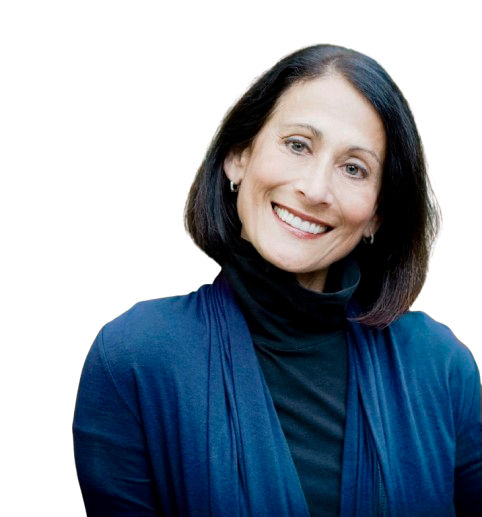
For those who don't know who you are, please introduce yourself. I'm Susan Wiener. I am a 72-year-old mother of 3 daughters and a grandmother of 8. Wow.
Which is, which is really exciting. Um, I say that because, you know, 36 years ago when I was first diagnosed with cancer, I wasn't even sure that I would get to see my kids graduate from high school. Let alone be a grandmother and be able to be here today to sit and to talk to you. But for whatever reason, my journey led me here.
And I have to tell you, I'm healthy, strong, proud, and actually really honored to be here. I'm glad. And you wrote the book Resilience. Mm-hmm.
I did. I'm curious about how the book came about. What triggered you to publish the book? First of all, that little flower that's in the front of the book is— it's almost like a flowering weed that grew through the cracks of the asphalt in my driveway.
And I thought, I remember thinking when I was looking for the idea of a cover, I thought, what could be a better cover than something that decided with such strength and determination to just live, that against all odds was able to crack through the foundation in my driveway. That's interesting. And thrive. And that's why I took a picture of that, put that at the COVID of the book.
And I think that all of us have the ability to be able to crack through obstacles that face us and to not just survive, but to thrive. I wrote the book many, many years after the diagnosis of cancer because I think that when you first are ill and sick, it's very easy to have an emotional impact and to impact other people who are listening and paying attention to get them to feel exactly the way you felt. But what would happen years and years later? Do those learnings that you learned initially still follow through?
What is the impact on your family 20 or 30 or 40 years later? How has that helped shape not only your future, but the lives of those that are closest to you. And I wrote that book from a bit of a different perspective once I was healthy and well for many, many years, because since the first diagnosis, it has been 36 years. The second diagnosis was something a little bit different.
I was first diagnosed with lung— with colon cancer at the age of 36. Very young. It was very young and it really threw me because I had danced ballet until I was 27. So I was very structurally oriented and I had to have my knees fixed, my lower spine fused, my feet done.
And then at 35 I had a hysterectomy and I thought, okay, these are just things that are structures and structure can be fixed. But at 36, when I developed colon cancer, it was a whole new ballgame.. And it wasn't just structure and it wasn't something that could just be fixed. I had volunteered and worked in palliative care from the time I was 28 years old.
Really? And that came after a near-death experience at 18. I thought, okay, so that's why you joined. That's why I started to do that, because something happened to me during that time.
, but I was aware that I lifted myself away from my body and then I was looking down from the ceiling, spread wide open like the clouds at this scene unfolding before me. And there was this young 17 and a half, 18-year-old woman who was dying. And I thought, but nothing hurts anymore. This is so cool.
There's probably something more to this than I need to that I even could possibly know. So I figured one day I would work with people who are sick. Okay. And that's how my journey started.
And then when I was 28 and I worked in palliative care, I loved it. I, I knew that it was something I had to do. You know, when I was a little girl, I would climb onto my father's best friend's lap and he'd say, oh, it's only Susie. I don't have to put on my leg because I wouldn't even notice that he didn't have a leg.
None of it bothered me. I just loved the person and I loved the work. I thought, oh my God, they, they trusted me the most sacred time of their lives. No, nothing covering up their feelings.
They are so open and honest and they trusted me and I loved it. But when I got sick, I thought to myself, oh my God, did I, was I preparing myself for my own demise? Was this work preparing me for my death? And it actually really shocked me.
And I remember thinking I'd studied vibrational medicine. I studied all kinds of things. Is it possible that if you work in an environment that vibrates with a certain frequency, that you can catch that frequency? I read that in the book, that, that part stayed with me.
It was like, ooh. But think about it. Think about when you choose to be with people who are happy. Don't you almost automatically feel that joy?
And when you're in a position, whether it's home, family, or work, where people are really unhappy, you feel that too. Yes. So the energy that we bring to one another, I think, affects our health in so many ways and our sense of wellbeing. Is it— I do.
You do. So you think that's true? I think— do I believe that that's why I got cancer? Mm-hmm.
I think that I was a person who held a lot of my emotions in my gut. Okay. And I don't know until I became ill that I truly knew how to express sadness, despair, pain. I sucked it up the same way that I did when I was dancing.
You learned, you know, stand straight and it doesn't matter if it hurts. You kind of do it anyway. But you were a happy little girl because that's—. Yes, I was.
I was, my brother used to call me sweet sucky Susie, you know? And I wasn't just like that in order to get things. I truly, by nature, I seem to have been born on the sunny side and I really am. And I could turn anything around.
I have a story about anything. It doesn't matter what situation you give me, I could flip it. And have the ability to find something incredible that comes out of it. Wow.
You know, you fall apart, you— life just throws you a really, really horrible curveball. And sometimes you don't duck, but sometimes if you get really hit hard over the head, you learn that the next time you will duck. And it gives you an opportunity to say, what happened to me? And think, And we need to learn how to think and how to manage ourselves so that we have the ability to help ourselves through the next difficult time.
Because life is just going to be like that. It's up and down. But to go back to what you said earlier about you did not know how to manage your emotions. So through the illness, is that something you were able to, let's say, fix, quote unquote?
You know, it was very hard because if you're really gonna take care of yourself, mm-hmm, then you become a little bit selfish. And illness by nature is narcissistic because if you can't take care of yourself now, when are you gonna do it? Yeah. So I was that person who always gave to everybody first.
It was my kids and it was my husband and it was the people around me and it gave me pleasure to do it. But it was until I got sick, I never knew that there was more that was out there that maybe I was missing because I didn't have the awareness. Yes, okay. So I think that we are where we're supposed to be at all times, but life situations could give us an awareness and open doors that we never even knew existed, were possible.
You know, I remember thinking, if I die, what's my life like? Because it's very normal. Even though I was given a great diagnosis the first time around, you know, colon cancer will be caught at 95% chance, you'll never be sick again, go live your life. And why wasn't I happy?
What was going on in my body that made me feel unsettled and unhappy? And I guess the questions were, how did it come to be? It's not like something that just from the moon landed in my body. I had to set something up, some kind of, I guess, disharmony somewhere.
Yes. Okay. And it wasn't my fault that I got ill, but isn't it my responsibility now to figure out what I can do with this so that I could really stay strong and healthy? And well.
And so I had to learn to take care of self first. And I remember I wrote it in the book, something like my husband said, whatever happened to the sweet little girl I married? And I sort of said, she's dead. And this strong, independent woman you never knew you wanted is the one taking her place.
And I really meant it. And I really felt it. And in some ways I felt guilty because I neglected my children. I neglected my husband and I took care of me.
Was that during the illness or after? It was during the time that I was diagnosed and in between the two cancers. And you know, all the way through, all the way through, I went back to school. Yes, you did.
I went to learn, I went to study. How could my mind affect my body? How could my body work with my mind? Because you want to be in alignment now.
And medicine is just linear. You know, but there were so many things that it didn't deal with. It didn't deal with my emotions. It didn't deal with my fears or my worries.
It dealt with the colon. It dealt with the sickness. Some of the medicines made me sick that, you know, I have some issues for the rest of my life with. And I mean, you did them.
And I remember my mother saying to me, like, if chemotherapy is poison and if you have a 95% chance of never being sick again, why would you do it? She said that. Yeah. And I said to her, if God forbid cancer comes back in the future and I didn't do it, could I live with myself?
Yeah. That was a pretty heavy discussion. Definitely. It's, uh, and she could not support the chemotherapy.
And I said to her, I love you with my soul. I don't want to talk to you while I'm going through treatments. Because I barely spoke to her for 6 months. 'Cause I needed to only surround myself with that which would support me and help me move through.
Going back to that sentence you said earlier, what you said to your husband, that sweet little girl is gone. I wonder at what point in time did you realize, oh, you're not the same person anymore? I think almost immediately. Immediately.
I remember, I do think that people who are ill, know that they're ill before they're actually diagnosed. So I think there was something going on in my body that felt unsettled. I couldn't really explain it or put my finger on it, but it was an unsettling feeling. And I went to the doctor because I had hemorrhoids that were bleeding and I thought, oh, okay, it was just a hemorrhoid.
No big deal. Go home. You're fine. And then it wasn't just a hemorrhoid.
It was what brought me to the doctor. But 'cause at 36 you don't often have colon cancer. Yeah. And it was something not in my family.
So I think, I think that, you know, that there's something that's not right. And I ran away with my 3 daughters to the country while I was waiting for the results. My husband was out of town and I figured this silly girl thought to herself, well, cancer won't find you in the country 'cause it doesn't know the address. I remember really sitting there beside the telephone waiting for a call from the doctor.
And all of a sudden my husband showed up and I thought, oh my God, the doctor called him, not me, which mortified me because it was my body and you're supposed to call me. And he wanted to be there to make sure to take care of me. It's really nice. And I don't remember anything after that in terms of going home.
I just know somehow You got home. We got home. But I felt from that moment on as though a moat separated me from those people around me. I felt like there was something different.
I couldn't explain it. I didn't really understand it, but I felt like we were different and we were separate. And, you know, it was, it was a very hard thing to go through because you have to play the role. Chemotherapy for me, I didn't have a lot of time.
3 Days between diagnosis and, and, uh, I mean, going to the doctor and finding out what my prognosis was or my diagnosis. And then the next week starting chemotherapy, I had very little time to process any of it. So I kind of lived through the treatments, fell apart, and then lived in between, you know, went through the treatments, was very ill, and then lived in between. And that was my life.
I just, just like that. And I do believe that it's when treatment ends is when healing starts to begin. Because you say to yourself, as much as you may hate the treatment, is it protecting me? And if you're not there, what's going to be there to protect me?
What will fill in the gap? I didn't want it to be a wait-and-see game. Let's wait and see what might happen to you. I wanted to somehow take charge, and it was hard because initially I did not want to take charge.
Give me a pill, make it better, take care of me. I don't even want to think about it. That was the sweet little girl. That was a sweet little girl.
The second time around, I was not a sweet little girl. I used a lot of bad words. The new woman came out. I was angry.
I've never really dealt with the anger before. I was angry and I was frustrated. And you know, you have a doctor say, don't don't worry, I'll take care of you and I'll make it better. Who are you to tell me that?
How can you tell me it's going to be okay? First time around, you know, you told me 95%. Second time around, I had a right lung removed and they told me 25% to live 1 to 5 years. Wow.
So what am I supposed to believe? So I decided, you know what, forget it. I'm going to live my way. I'm going to live my way.
I'm going to die my way, but I'm going to do it my way. Do you ever miss that little girl or no? I still have her. She shines.
I find that I look at the sunshine and I put my head up to the sky and I giggle and I laugh. I walk every single day, rain or shine, and I just smile from the inside out. I never put on earphones or listen to music. I listen to the wind and to the sky and to the noises of the people and the trucks and the cars.
And I just, I find there's magic all around. So the little girl is there, she's just different. She's taken care of. She's a wiser little girl.
Wiser, but still joyful. Great. What were some of the limiting beliefs that you had to, let's say, burn in order to become the new you, to deal with the same? I don't think I'm a new me.
I think I'm an expanded me. Expanded. I like that. Okay.
Because I think the essence of who we are is perfect. No matter who you are, It's perfect. But I think we have the capacity to expand upon ourselves. I never thought I was smart enough.
I never thought I was bright enough. I never thought that I had the capacity. I had dreams that I wanted to be a teacher, a history teacher. " Day one I walked into university, I found my husband.
You know, I tried to study all of this stuff, but I had to work really, really hard. School was not, easy for me. It was— I thought differently. I wasn't a linear thinker, I was a circular thinker.
And I found that school was complicated. And when I went to high school, I never realized that in elementary school my teachers thought, well, she's really one of the sweetest little things, but does she have any brains between her ears? And when I heard that, I was so offended. She said that in front of you?
I thought— well, to my mother. My mother I heard her repeat it to my father. But, you know, I was so offended because I just did not understand why I needed to know about Banga in Malaya. If I could learn about Susan in Ville Saint-Laurent, well, that would make a lot more sense to me.
And I just, I didn't have the teachers that inspired me. When I got to high school, I worked, I really worked my tail off and I got into any university and then started studying education, which inspired me. I loved school. And I loved university and I did really, really well to my surprise.
But I graduated 5 months pregnant. Oh, you did? 7 Months pregnant, actually. Oh, wow.
And I wondered, did I become pregnant so I wouldn't have to prove that I could teach? And I remember I was so shocked when I got 9 teaching offers. Oh, you did? I did.
But I didn't teach. I raised my family. Yes. And it was after the experience of cancer I ended up teaching.
Teaching tools and strategies of how to live life well. Funny. It was your calling. It was my calling.
Are you still being a teacher? Exactly. That's amazing. And then how do you help people today?
Like when your patients, how do you help them? I think people come to me because they're feeling something missing in either the medical system, in their families, or in their workplace. They feel that they're not getting the the best out of their situation, and they want to feel better, period. So when it comes to people who are ill, I think the most important thing to do primarily is to really listen.
What is it that they're saying, or what can't they say? What is their body language showing, and what are they not giving themselves permission to feel? And you have many, many people who feel that if they don't try hard, then they're gonna hurt themselves. If they have any negative thoughts, this whole thing about negative thoughts really drives me crazy because a thought is just a thought.
It comes to us like a wave, boom, boom, boom, boom, boom. You have to feel it through your body, whether you judge it as negative or positive, feel that thought, feel the emotion, what it does to you. The difference is I help teach people how to let it go. Once they feel it.
But it's only what you attach to that thought that really creates the quality of your life. What's attached to that thought? So if you attach, I am taking chemotherapy and it's poison, you're going to have a much harder time than somebody who chooses to do the same medicine or regime of medicines who feel that it's a magic elixir. Going to the cancer cells or where it needs to go.
Because somebody who doesn't believe in it will feel all the pain in their gut and in their body, and they'll throw up and they'll feel terrible. But somebody who truly is in alignment with what they're doing will end up saying, wow, look, it's working. That's why I have these symptoms or these feelings. And I think it's really important, number one, to be in alignment with with all the things you choose to do and to learn how to do it.
Because, you know, as I said to you before we started this podcast, the brain, the brain doesn't really know the difference between fantasy or reality. It only knows what it's told. Yeah. And it's really important until the day arrives that the diagnosis is in front of you.
All that time before that you suffered, was it fantasy or was it reality? And where would you have spent the better— what could have been better for you to have spent your time thinking about? Yeah, you know, we, we tend to go down, dive really down into that rabbit hole, and I think it's important to visit. I really do.
I always tell my clients, visit down in the rabbit hole, go down. Just don't take up residence there. Visit, feel crappy, feel horrible, feel disgusting, feel what you feel until you know it's time to get out of there. And let me tell you, it's not easy.
The second time around with lung cancer, I was really pissed. I was not allowed to be alone for 3 months. I had to sleep on my left side so that my heart wouldn't move over too much. I became, I went from the, an athlete to a 95-year-old woman overnight.
And my husband, it was summertime. My husband moved me to the country. The kids were all grown up. They were moved away to summer camps and he was working on the property like this gazelle.
He's a big man. He eats and drinks and does whatever he wants and he's running around. And I was this person who was always taking care of myself, I thought. And I almost resented him.
I was not a happy person. Yeah. And I need space and I need time alone. And I didn't have any time alone.
There was always somebody hovering. Coming up, checking up on you. I'm not good with hovering. I mean, you know, if I need something, I'll call you, but like, leave me alone.
So it took me about 3 months of being down that rabbit hole to finally decide what it was that I wanted. And it was really incredible. My husband, had, um, fixed our whole country home. Mm-hmm.
And he, he brought me there to recover and he was so proud of everything that he had done. And I remember walking in the door and saying, it's very nice. You know, your new wife will probably really like it because there's nothing of me in here. And I couldn't believe as soon as I said that, I looked at this poor man's face.
Yeah. Who was so crushed. I bet he was so crushed, but I didn't care. It was almost like I had to say what I had to say.
I held so much in my life inside that it had to come out. It's a good thing that people love you and they stick with you. And then there was noise all the time. And he was—.
They were doing the gardens and they were doing the waterfalls and they were doing things and planting trees and everything else. And one day I just got so mad. I said, I want everybody out of the house. I want everybody gone.
Everybody. And he said, but I pay the men by the hour. And I said, I don't care. And he said, what about me?
I said, you're going too. I want everybody gone. I need to be alone. And I went outside and I pounded the ground and I realized for the first time that he was building a forest for me, trees so I could breathe.
And I cried and I cried and I cried and I fell into a deep sleep on the grass. And I woke up then and I said, I'm alive and I will help determine my future. I put on my running shoes and I never took them off. Wow.
Yep. So we need to be able to have permission also fall apart so that we can fall together. Yeah. And I can't tell you, I'm proud of some of the things I said to my poor family, like that were not necessarily kind or nice, but I think that there's an element of honesty that sometimes we just have to say the things that we need to say.
Because living at them inside, yes, get them out of our body. So I teach people to write, okay, and then to sometimes some of the ugly things they don't like, to burn them, flush them down the toilet, find ways to express some of their pain, some of their anguish, and some of their fears. And I also help teach them to die well, that you can still be happy even though you're dying, that you could still find your moments and times of joy even while you're dying. But how do you do that?
Like, are you using techniques, like tools? Like, you, you know, at this point I don't really know what I do anymore, but I think I use a lot of visualization. Mm-hmm. That to me seems to be my go-to.
I believe that we create stories, stories that self-soothe because we all need things to self-soothe. You know, baby sucks its thumb. What do we do? To make us really self-soothe.
I mean, for me, I do breathwork, I put on my running shoes, I have my bath for an hour every morning. I'll wake up at 4 if I have to leave the house by 5:30 just to have that bath because it puts me in that position where I just go, ah, and I could start my day. I know that, you know, you need to eat well, you need to eat foods that are nourishing to your body, but treats are nourishing to your soul. Treats are fun.
You know, I just asked my granddaughter, I'm going to Vancouver for my daughter's 50th birthday. And I said to my granddaughter, you know, you know, this sponge toffee covered in chocolate at Rocky Mountain Factories, could you go get me a bag? And she's like, here, here's your bag, Bubby. I can't wait to see you.
Treats are fun and we need to be able to do those things. You can't be so perfect in everything that you do. You don't have fun, you know? So In terms of your health and wellbeing, I teach them that do that 70/30 or the 80/20 rule where, you know, you think I don't go out and eat french fries.
I love french fries, but you don't have to do it every day. Yes. Because there was a time you said in the book that you became very strict on your diet. Oh my God.
I became a vegan for 5 years. And I'm telling you, I was the most miserable vegan and nobody wanted to come home for dinner anymore. My house used to be filled with all the kids and nobody would come there. And my husband will never eat a bean as long as he lives again.
After 5 years, when I got the second diagnosis, I remember running upstairs to him and I was hysterically crying and he was so worried. I mean, what's wrong? What's wrong? What's wrong?
And I said to him, I just ate a whole barbecue chicken in the closet. And that's how I stopped being a vegan. But 5 years is a long time. 5 Years.
Oh my God. You did great. I think I bargained with God. I kind of said, okay, if I'm a vegan, maybe you won't let me get sick again.
So you kind of have these little, bargaining things that you play in your mind, but that did not work. So now you realize it's about balance. I had to learn about balance and I had to, I was miserable. I was probably nutrient deprived, nutrient deprived vegan.
But now I know that if I need a piece of meat in my body, you could almost feel it right away. You feel better. And I need to eat eggs and cheese. And I mean, my God, life without cheese, how could there be life without cheese?
You know? Yeah, because in the book you did break down health into 3 pillars: what we feed our bodies, moving, exercising, and then our minds. Thoughts in our minds. Thoughts, yes.
That's the hardest one. Would you say the people that you help, this is the main thing? Thoughts in your mind. Yeah, how can you think something a little bit differently?
Yeah. You know, how do you reframe a situation that doesn't make sense to you? How can you reframe it? So here's an example.
I'm just playing with you now, 'cause I never thought about this before this moment, but diagnosis, second diagnosis of cancer. I went into the hospital 'cause I had a bowel obstruction. Yeah. And they had to put a tube down my nose into my stomach.
And when they took the x-ray, the doctor came back and said, you have far greater things to worry about than a bowel obstruction. You have 3 tumors sitting in your right lung. Oh, wow. And I looked at him.
So that's how you found out? That's how I found out. " I said, "How do you know it's not tuberculosis? " I just went on and on.
" I mean, I don't know where this came from. " But I had to stay there for 10 days because I had a bowel obstruction before they could do anything. You know, to, and he ultimately was right. And ultimately in the end, you know, chose to refer patients to me, but he was very nice.
Yeah. So that's how you found out. Wow. That's how I found out.
So I had 10 days to sit there and to really think about it. How could I change this? 'Cause a diagnosis, the first diagnosis, you have a chance of saying, okay, you'll get better. People get better.
But a second diagnosis and such a big one, that's metastatic stage 4 disease according to them. That's, that's a tough one. And what will happen? And I think the way I reframed it was I made that a really big decision that I would do surgery and I would not do any other medical treatment because the first time around they were wrong.
And this time around, maybe they'll be wrong again. So I'm going to live life my way. And I literally went into the whole field of alternative medicine that I had studied for 4 years in between the 2 cancers. And I chose to basically try other things that were out there.
And I'm not advocating alternative or complementary medicine. I'm saying that there is more to the human body than one thing. And I think that some of the healing modalities from around the world, whether they're Ayurvedic medicine or Chinese medicine or folklore medicine or anything that's out there, when you go into a lot of the tribes in Africa, the Amazon jungle, they know what to feed themselves and how to help themselves. I think that we just don't have the awareness of everything that exists out there.
So why would you want to limit yourself to just one thing? And that was a very, very tough decision for me because the whole world was against me. The whole medical community was against me. They thought I'd lost my marbles and I was nuts.
And even my husband looked at me sometimes and you know, as I'm doing injections in my groin every day for 9 months and things like that. And he's like, oh my God, are you okay? And I'm like, doing my thing, you know. And I did crazy things.
I did crazy things. I ate placenta. I did. I drank my own urine.
I did all kinds of different things that I, I'm just lucky that I didn't get killed by some of the things that I tried. And there are a lot of charlatans out there and there are a lot of people who would question You know, the credibility of what I did. And I think, I think I was so desperate at that time that I tried everything. Today I'm much more critical and I encourage people to, to look at the skills of the people that they go and see and to check out where they went to school and where they studied and how they studied and how you can use all the different modalities for wellness.
And I, I work with doctors too. And I mean, I do sometimes, you know, grand rounds and tumor boards for people where I'll, I'll teach them things and teach them to talk to your patients. Because if you don't have communication and honesty, you'll never know what your patients are doing and you'll never know the true effectiveness of the medicines you think they're taking versus the medicines they really are taking on their own because they're too afraid to tell you. But that's also a great recognition for you to be on the board.
At the hospital. I feel very lucky. The team that I'm with is extraordinary. And the doctor who invited me over 20 years ago is just an incredibly remarkable, remarkable, open man.
And I found my place and makes me, you know, really, really happy. I'm grandfathered into the Canadian Guidance and Counseling Association. I don't have the typical trajectory of education. That some of the people might need today, whether it's a master's or PhD in what you need.
But I was grandfathered in for all the different things that I did do from the 1990s, you know, up until today. And I still have my licensing and try and keep learning and doing the studying and education. But I can't say one size fits all. Definitely.
And I think you have to have a belief too. You know, we talked a little bit before about the belief system and what could be helpful and what can't be helpful. I think no matter what field you're in, you also have to learn about your culture. What is your culture?
Where'd you come from? What are the beliefs that you grew up with? You know, in my home, chicken soup was it if you had a cold. And around the world, you'll hear people often saying chicken soup, this is what you do.
But what about other cultures? What about if you're really sick in your stomach and you, you need something like congee, which is like a watery rice that, that's eaten in China, or some of the different herbs that you have that are really, really good for you in India, or, or, you know, you go out into the jungle and you tap on a tree and the ants crawl all over your arm and you rub them and that's what becomes citronella. And you know how to use those plants, those herbs and those medicines. We need to understand what our cultural beliefs are, what our religious beliefs are.
Do you believe in God? Do you believe in a possibility of God? I had no belief in God. I grew up in an atheistic family where my dad said, if there was a God, how could there have been a war?
How could, you know, mommy have lost half her family in the Holocaust? That kind of thing. So I created my own construct of God because I needed something that nobody could take away from me. I needed to self-soothe.
And I created the idea of God with things that were important to me, my tiny hand in my father's great big paw. Made me feel safe. Well, that was going to be part of my God. The glistening eyes that looked back at me with endless possibility, that was going to be part of my God.
The ability for me to hold myself and rock myself like I did my babies, that's the feeling I wanted of being held. But I never created God to fix me. I never did that. How important was that in your healing process?
It was my foundation. Foundation. And how do you help somebody that's going through that? Well, talk about beliefs.
I think you have to talk about a belief system, especially if you're, you know, you might be dying imminently from this. And if they don't have God, what do they believe in? Do they believe in energy? Do they believe in— they always believe in something.
Always, always. Okay. So you help them find and navigate their way towards that belief. You know, I remember I had a client call me and I was up north in Laurentians and she said, I'm ready to die.
' And I said, 'Yes, but it's gonna take at least an hour to get there,' because I'm up north. And I got there and she asked her family to leave the room, and I crawled into bed with her and I sort of spooned her with all these little tubes, and we talked and we talked. And she was really ready to have the angels pick her up. These were the things we talked about in the story she wanted to create.
That's how she would imagine how she would die, on the wings of the angels who would carry her up to heaven. And she said, 'I'm finally ready. ' and I'm ready. And then she said, but why aren't I dead?
And I said to her, because your body needs time to catch up to the decisions you've made in your mind. She died that night. Oh, she did die. She did.
Wow. But that's how you can still have fun even as somebody is leaving the world. So the stories we tell ourselves, so reframe the way we see life. Everything is a story.
Is it? Yeah. We tell ourselves a lot of lies. Might as well make some good stories.
Yeah. You might as well make some good stories. I mean, what's the story you told yourself before I came in to do the podcast? Yeah, a lot of them.
Yes. Because there's always a good side to things if you put things into perspective. Yeah. And the truth is, Kathy, we're all going to die at one point or another.
Yes. But how we live, it's what's important. I always am amazed at the cemeteries where they have the date of birth, they have the date of death and the tiny dash and the whole life is in that tiny dash. Yeah, it should be a bigger dash.
I think we have to expand the dash. That's a good one. I like that one. Yes, because a lot of things happen in that dash.
Yes. You mentioned that you said your back was against the wall, and then that triggered for you to find comfort, support, and to the idea of God or have more faith. Would you say a lot of people, do you notice more people, they turn towards faith or God during those last days? Moments.
I think people want something, something, and they want to just feel better. Yeah. Do you ever feel at the end of a meal you'd like that piece of chocolate or a bite of a cookie or something sweet? Yeah, more salty girl, but I'm more salty too.
But you want something to end that meal, right? And I think that when, even when your back is up against the wall, you want something that just feels better. Yeah, I think very often we go into really a lot of addictions because we choose to feel better, whether it's drugs, whether it's overeating, whether it's drinking, that it just takes away some of the frustration and the pain that we feel. And all of us want to feel better.
So some addictions are better than others. Maybe I have an addiction to God. Maybe I have an addiction to, uh, walking. Maybe I walk too much.
Maybe I have addiction to the way I reframe or the way I self-talk. I mean, some addictions seem to be healthier than other addictions, but I think we all have them. We all have something that we lean towards. And I'm going to tell you that there are times when I'm really feeling blue that that bag of chips comes out.
I could usually, I can only eat 3 or 4 or 5, but I can eat that entire bag when I'm really feeling blue. And in a way, I'm trying to find something. But I do find that people who don't have a belief seem to suffer more. Wow.
In the years that I've worked in palliative care, so since I'm, you know, 28 years old and I'm 72 now, it's a lot of years. I find those people seem to suffer more. They—. So we try to create a belief.
We try to create, what do you want? How would you like to imagine? How would you like to be remembered? What kind of legacy do you think you'd leave?
And you know, it doesn't have to be that you made a million dollars. Or a billion dollars or built a fabulous building. It could be that you touch the soul of one person and that you'll be remembered. And I think there's always a way to find something to help self-soothe.
I had somebody come to me once because he was working in a job that he hated. He hated it. He couldn't stand going to work, but he paid the bills. And we did a whole reframe where I said to him, this is just a means to an end.
This doesn't have to be your life work. This is your work at the moment, at this moment, to get you to where you want to go, to get you to be able to feed your family and do the things you want to do. It's not your story. It's not your life.
It's just a part. It's like being on a moving train. And we worked that way, and he was able to do that, and he was able to look at it differently. And he actually put in more hours to make more money to eventually leave and do what he wanted.
And how long did that take, that process? It took him about 2 years. 2 Years? 2 Years.
But he didn't do it miserably. Okay. He did it because he knew, he loved that line, a means to an end. It's just a means to an end.
I don't think there's any job in the world that's a bad job. I know people will look at other people who will clean the streets, will pick up the garbage, will wash the toilets. I think those are parts of the pillars and foundations of a good society. Every job is a good job and every human being needs to be respected.
No matter what they do, because we're all the same. And I'm telling you, you cut into that body, we all bleed the same. You mentioned that guilt is such a useless emotion, but how do you let go? How did you free yourself from that guilt?
Because it's a part in the book, you talk a lot about guilt. I think I felt badly that I was not necessarily there for my children or my husband at times in a way that I thought I should be there for them. I felt that, especially with my youngest child, she didn't have enough of me. I remember her saying something when I was interviewed, when she was interviewed, they did a little tribute for me.
She said, how should I feel about my mom? My mom's always been sick. I just go up to her bed, do my homework. My mom's always been sick.
And I felt really sad that she didn't get the best of me. The other girls at least got, you know, some years where they just had mommy that was just fine, but she didn't.. And I felt, I felt sad. I thought, is this the legacy I leave my children?
Are they going to be the ones who end up with a hysterectomy at 35 or colon cancer? Or did I set them up for something? Did I create this gene pool that they're going to have to follow? Or the fears of being tested from the time they were 16 years old on and all of this stuff that they had to do.
And I had to work really, really hard to say what a gift that was. That they could be tested so that they would never have to go through this. You know, I remember the hospital would say, ask me if I would do genetic testing. And I said, no.
And they said, well, why wouldn't you do genetic testing? And I said, are you going to give my children therapy for the rest of their lives if you discover that they may have a gene that could possibly lead them towards a colon cancer or possibly not? Because not everybody who's got a genetic predisposition actualizes that. Exactly.
That outcome. So are you gonna give them therapy for the rest of their lives? And they said no. And I said, and even if they had the gene, what could you do for them?
Well, we can do the blood tests, we could do the colonoscopies, we could do this. I said, aren't you doing that anyway? They said, yes. I said, exactly.
There was no point. Yeah. Very powerful. Well, so I think that the guilt that I had I wrote each of them a letter at one point when they were in early university.
And I told them how sorry I was for what they may have— I may have put them through a lot of the pain and insecurity, but that I was giving it over to them now. And that it was now their responsibility to take up the role of self-care and to make sure that they handle their own futures, presents and futures, because I no longer am going to carry that burden for them. Okay. And all of my daughters ended up going much more into the field of, of health and well-being than my husband's field of real estate, much to his dismay, because he has nobody.
The 3 girls followed me. Which field did they go into? Kind of one of them is, has a master's in Chinese medicine and acupuncture. She is a life coach and she's a therapist with the Canadian Guidance and Counseling Association and a Kundalini yoga teacher.
Wow. And she teaches life through body movement. Life. And her therapy is all done through movement, which is amazing.
Another one of my daughters ended up being a massage therapist. She also got a degree in acupuncture and Chinese medicine. She studies Eastern, Western nutrition, and she's a Qigong teacher. And the other one is a behavioral analyst who works in the field of autism, and she places adults on the spectrum with jobs.
Impressive. And it's really— they're three incredible women who are very, very wise and smart and self-sufficient, and they've learned how to handle stress and the challenges that life throws at them. They're not perfect. We all fall apart at different times.
Of course. But the difference is that you learn how to pick yourself up faster and you move forward more quickly. You must be very proud. I'm so proud of them.
Yeah. I'm so proud of them. I mean, they are incredible women. Each one of them I'd want to be a good friend of.
If the Susan before the illness was a caterpillar, what kind of butterfly did you expand into? A blue morph. And I have the blue morph butterfly etched. It's the only thing that in my bathroom has color.
It's etched into the glass of my window. Why that one? Butterflies have always been so important for me in, in their role of transformation to become something so mundane into something so incredibly exquisite shows the process that we have to go to through, I guess, to become our true selves. And I think we all start off in a way like those little caterpillars as we grow and we expand and we learn.
And I love the idea of The healing powers of the blue morph butterfly. There's stories about that butterfly and how it has properties to heal. And I had, I had a client who was a very young girl. She died of liver cancer when she was in her early 20s.
And when I went to, I was in Alaska when she died, and I always looked at her like she was a butterfly. And after she died, passed away, I went home and there was something in the Jewish religion called an unveiling where you unveil the tombstone.. And it was done April 1st, so there was still snow on the ground. And when they took off the piece of cloth, there were white butterflies that just came out of nowhere and flew all around her.
Oh, really? And I thought, oh my God. And I etched a butterfly at that time in as handles in some of my drawers in my home. And I had a beautiful story about this woman Mariposa.
Who I had seen as a client who, you know, she named her daughter Mariposa. Mariposa was a butterfly. And when she always thought she could die, she remembered the stories of the butterflies. And it was incredible.
I, she wasn't Mariposa. I apologize. Her daughter, she named her after she almost lost her in pregnancy as Mariposa because she too always loved the butterfly. And she imagined that's what pulled her through a really, really tough difficult time.
And there's something about the butterfly, the magic of the butterfly, and when it breaks through, it finally feels free and it could do so much more than ever could have imagined itself doing as a caterpillar. Amazing. I will definitely look into the blue morph and maybe show it to my, uh, my son. He likes to learn more about the animals and things like that.
Yeah, we'll watch a little documentary on on it for sure. There's a movie about the Blue Butterfly. I can't remember the name of it, but you have to look it up about this little boy who was dying, who went in search of it with his family. Wow.
Yeah. Amazing. If someone listening right now and they feel stuck, illness, family, business, what are some of the steps or practical steps should— that you would tell them to start with? Yeah, I think, I think It's always a good idea to get a piece of paper and pen and to make a list.
On the left-hand side, say things that I like, things that fill me. And on the right-hand side, things that drain me, things that tire me, things that exhaust me, things I don't like. And you may find that on both lists, you'll have some commonalities. You can't necessarily get rid of family members, but for those things you cannot change, And I help teach them how to reframe them.
For those things that can change, let them go. Let them go. Let them go. You know, there are a lot of things that we do in this world that make us miserable.
Why are you doing it? If it's a means to an end, then you gotta change your story. But why are you doing it? If you don't wanna make dinner that night, why are you making dinner?
You don't think people will find dinner? They, they could. People, people find what they need to find. You know, I learned a long time ago, that you don't want to be the voice of another, because what it does is it stops people from finding their own voice.
Yes. And I had to learn how to find my own voice. And sometimes that comes out very harshly, almost dramatically, you know, but eventually you find that beautiful balance. And you also don't want to take on what's not yours, because then it becomes yours.
And it's a really hard lesson. My daughter Jacqueline taught me that lesson. I remember when she was going through a terrible divorce. And she said to me, I said something like, did you sleep last night?
She said, no. I said, neither did I. And she turned to me and said, then how could you ever help me if you become me? And I thought, whoa, did I ever lose my objectivity there?
You know, so you don't want to take on what's not yours. You know, my husband will come home sometimes in a horrible mood. Something really terrible may have happened at work and he's cranky and crabby and not particularly nice. And I'll just look at him and say, you know, have a bad day, hun?
And he'll sort of, ah, and I'll say, I love you, but I'm going for a walk. And out I go. You know, I'm not taking this on. Well, you don't want to take it on.
Yeah. And it's not yours. Okay. And it's a hard thing for people to actually start to get because they think you're not being nice, you know, especially in a family setting, not being empathetic.
But then after I'll come back and say, let's talk about what happened. And I promise you, if you think I'm perfect, I'm not. Sometimes I get really bad too. It It happens.
As you, as I heard, as I told you about the poor country house and my poor husband. Yes. You know, so I think you have to start with what do you like? What do you don't like?
Like what fills your bucket? What drains your bucket? Yeah. And you know how we all have in a kitchen, a junk drawer?
We have to start cleaning out our junk drawer, get rid of the things that are not necessary because we need to make room for a lot of the things that are. Because if you don't make room, new things cannot come in. They can't come out. They can't come out.
You just keep trying to fill it. And I think you have to find some mantra that makes sense to you. Like, my— one of the mantras that I use— a mantra is a statement or words that have meaning that you repeat over and over again. " I repeat it over and over.
I've done it almost since I was 36 years old. I can, I shall, I will, I am able. I can get through this, I shall get through this, I will get through this, I'm able to I'm gonna get through this. You fill in whatever it is.
And because I've created a belief in God for me, it's I'm healthy, I'm strong, I'm safe. God is with me. And if you don't believe in God, you say I'm healthy, I'm strong, I'm safe. The universe supports me.
Okay. I mean, if you find a way of self-soothing. Yes. Because these are all positive words instead of saying I can't, I'm trying.
Well, trying. I always like the word trying, try and pick up that that glass. I said try. Don't— I didn't say pick it up.
I said try. I don't think trying works. I think trying is a silly thing. And guilt, I think, is a useless emotion.
We talked about guilt. It doesn't do anything for you. What about fear though? Fear is— you need fear.
I mean, if saber-toothed tiger is coming your way, you better be on high alert, you know. But I don't think you want to be in a state of fear on a regular basis because that ends up draining You become afraid of everything. And anger is a good emotion. It motivates you.
Yes. It could really propel you and push you forward. But you know, it's like I used to feel more sad than I would feel anger. So the sadness, what do you do with sadness?
You keep it inside. You hold it in. I don't feel that same sadness anymore. If something bothers me, I think of the clouds.
Here they come. You know, broom. And they go through my body and they're like the clouds, there they go. But you know, we're much more than the clouds, we're the vastness of the sky, and we are that blue sky that is above the clouds.
Clouds come and go, they're always moving, but the constant is that beautiful blue sky up there. So your problems, your worries, your fears go there. I heard a wonderful story once that I was told by a rabbi about Something happened in the rabbinical synagogue and he had a student with him and they had a horrible week. Major congregants died who contributed.
The synagogue was falling apart. They didn't know if they would have a place to worship or not. And the rabbi invited the young rabbinical student home with him for dinner. And he walked in his house and he was as happy as could be.
It was Shabbat, the day of, you know, the Sabbath. They were so happy and he was joyful. And the poor rabbinical student was miserable the entire night. And when he left, he said to the rabbi, I don't get it.
We just had the worst week of our lives. And you walked in like a schizophrenic person. And all of a sudden you're joyful in your home. Whatever happened?
He said, do you see the tree across the street? He said, yeah. He said, that's my worry tree. I leave my worries there when I come home and I know exactly where they are.
The next day, should I wanna pick them up? And I never forgot that story, the story of the Worry Tree and however you wanna spin that in whatever, doesn't matter what race or religion you believe in, but wouldn't it be great to have a Worry Tree outside of your home so that your home becomes that safe, sacred space? And the same way my bath for me, when I'm upset, just gives me that, ah, We need to each find something that works for us, whether it's gardening or picking flowers or walking a dog or looking at the lake or seeing a sunrise or a sunset. And I don't meditate that well with my fingers up like this and my legs crossed and I sit there like a Buddha.
I meditate while walking. Yeah. So walking meditations for, for businessmen or women are terrific. You just do left, left, left, right, left, and the brain can't get a lot of information in because it's always being busy with left, left, left, right, left.
And, and that's why in the army they issue a command and boom, everybody's on the same page because they've learned how to meditate like that. Sometimes I meditate, I'll walk and I'll think I'm just going to be my eyes today. And what do they see? Or my ears and what do I hear?
Or my feet and what do I feel? Interesting. And it's just a different way of finding something that everybody can do. People who can't be physical, they can imagine, they could wonder, they can dream.
You know, when I was a little girl, we didn't have a lot of money, and my father would cut out places that he'd want to visit in the world and put them in a brown envelope. And every Sunday I'd sit on his lap and we'd imagine what these places would be like, and we were so happy. And you can imagine, you could use your mind for all kinds of things. You don't need to have a lot of money.
To be happy. You have to have that sense of internal peace. And that's why some of the poorest people in the world are the most generous and the kindest within their communities. And they share everything they have because why wouldn't they?
And then you have the opposite end where people are so stingy and they don't, they don't. And I, you know, you have to figure out what really makes you happy. What fills your coffers? How do you want to be in this world?
What's really important? What's really important? The building you build, as I said, or the life you've touched. It's all up to each individual, and one is not better than the other.
It's your choice. At least be happy with your choices and know that you can always change and shift them. Reflexes are your choice. Yeah.
You know, Viktor Frankl was a mentor of mine. He was a psychiatrist and he was in the Holocaust, and he said that the last of our human freedoms, only thing that cannot be taken away from any of us, is our ability to choose how we respond to the things that happen to us. So I think that all of us have a chance to be able to choose how we respond, shift our thinking, fix something that is, that doesn't even seem fixable by creating a possibility and a magic and knowing that as long as there's a tiniest crack, there's hope. And just like that flower that grew from the asphalt of my driveway, how did it know how to do that?
There is magic in this world. There's not a record that hasn't been broken. There's not a threshold that hasn't been crossed. You don't need to climb the highest mountain or swim across the deepest sea to be a success.
You have to feel good in your soul and to remember that you're not alone and that you don't have to do it alone. Yes, we need to know how to reach out to people and how to be the honest people that we can be, to say, I like you, or I need help, or I want guidance. Can you hold my hand? Can you walk beside me and help me move through And what else is there?
So you have our world right now, it's upside down. There's so much hatred and anger and violence and ugliness in the world. " So I am so fortunate that I have a roof over my head, clothes on my body, and food in my belly, and that I can give to others. How could I not embrace that?
Even though The world has gone crazy. I think when we're grateful for what we have, we think about that a lot. It helps us to keep that positive attitude because like you said, we have a roof over our head, we eat, we sleep, we have our family, health. That's wealth.
Yes. What else is there? That's it. My coffers are full.
Well, Suzanne, your story is amazing and all the wisdom that comes. I feel like it's radiating Throughout the room. I think my cheeks are so red. Are they red?
As I feel it, I'm thinking, wow, I've spoken a lot. You did amazing, and I'm very happy that I've had you on the podcast today. Thank you so much, Kathy. It was a pleasure meeting you.
Until next time.
 Nicholas Sosiak
 Colin Worrell
 Lora Cerulli